Employee Productivity Measurement: How Can Companies Measure Productivity Effectively?
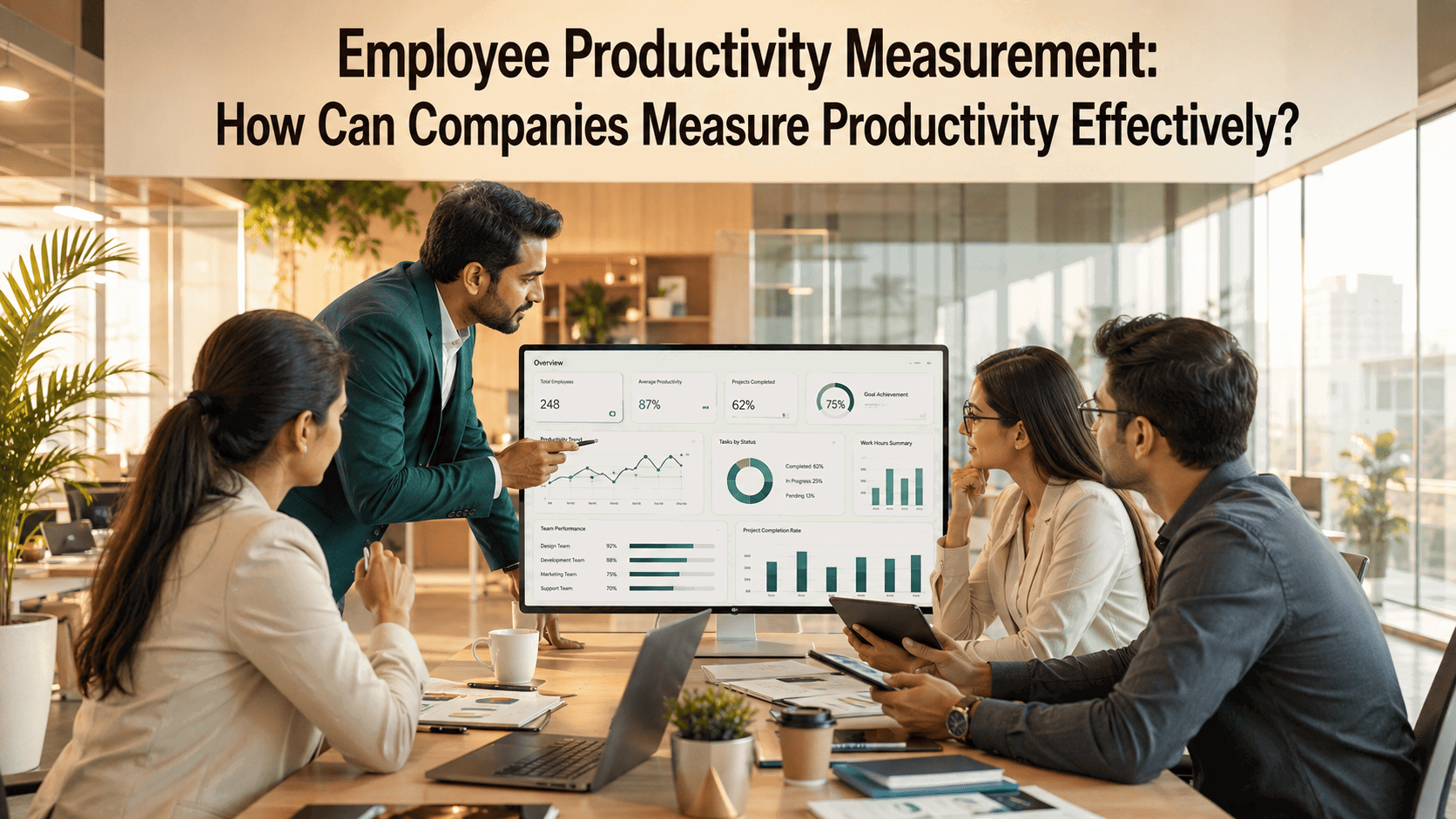
How do you know whether your employees are truly productive? Is working longer hours a sign of higher performance, or does productivity depend more on the quality and impact of completed work? Employee productivity measurement is the process of evaluating how effectively employees use their time, skills, resources, and available tools to achieve defined business objectives. Effective measurement goes beyond counting hours worked. It combines measurable outputs, quality standards, efficiency indicators, and progress toward meaningful goals. For companies, the goal is not simply to determine who works the most. It is to understand what helps employees perform well, identify operational obstacles, and create an environment where teams can consistently deliver valuable results.
Why Is Measuring Employee Productivity Important?
A structured approach to productivity helps organizations make better decisions about workflows, staffing, training, and resource allocation. Key benefits include:
- Identifying inefficiencies: Managers can recognize processes that consume time without producing meaningful results.
- Improving resource allocation: Productivity data can show where additional people, technology, or training may be needed.
- Supporting performance management: Clear metrics make performance discussions more objective and constructive.
- Improving business outcomes: When teams understand priorities and expectations, their work can align more closely with organizational goals.
- Recognizing strong performance: Reliable metrics can help managers identify employees and teams that consistently deliver valuable results.
The most useful measurements connect individual contributions to broader business outcomes rather than focusing on activity alone.
What Metrics Can Companies Use to Measure Employee Productivity?
There is no single metric that works for every organization. The right indicators depend on the employee's role, industry, responsibilities, and objectives. Common productivity metrics include:
1. Output per Employee
Organizations can compare completed work against the available workforce or working hours. Examples include completed projects, resolved customer requests, processed transactions, or units produced.
2. Goal Achievement
Tracking progress against clearly defined goals can reveal whether employees are delivering expected outcomes within a specific period.
3. Quality of Work
High output does not necessarily indicate high productivity if the work contains frequent errors. Quality scores, customer satisfaction, rework rates, and error frequency can provide valuable context.
4. Time Efficiency
Businesses can examine how efficiently employees complete recurring tasks. This is especially useful for identifying unnecessary administrative steps or inefficient workflows.
5. Project Completion Rates
For project-based teams, measuring milestones completed on schedule can provide a practical view of productivity and execution.
6. Customer-Focused Metrics
For sales, support, and service teams, customer satisfaction, response times, resolution rates, retention, and conversion rates can be more meaningful than hours worked.
What Challenges Do Companies Face When Measuring Employee Productivity?
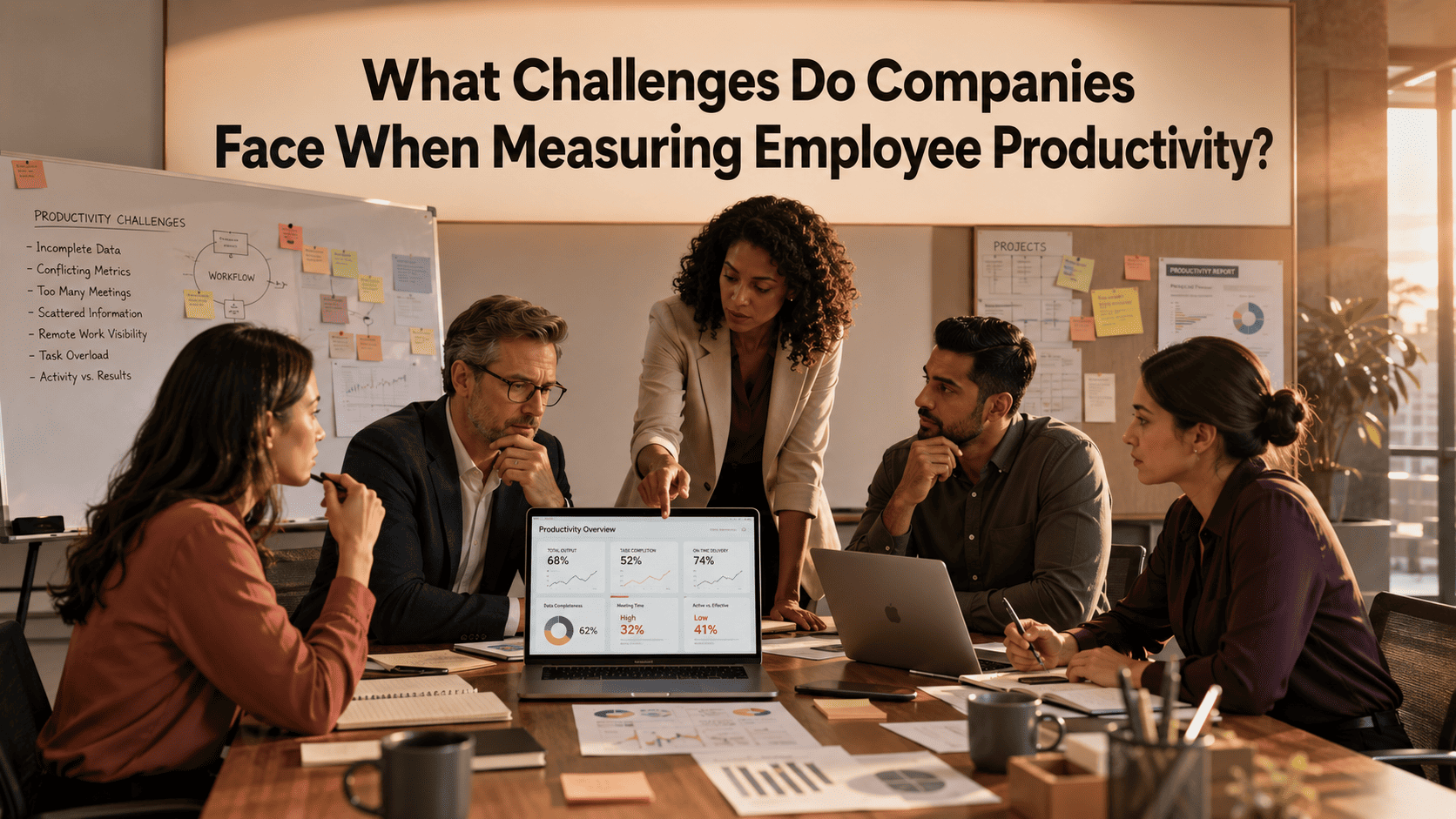
Measuring productivity sounds straightforward, but organizations often encounter significant challenges.
Choosing the wrong metrics: Measuring everything can create excessive reporting without producing useful insight. Metrics should reflect actual job responsibilities and business priorities.
Focusing on activity instead of outcomes: Time spent online, messages sent, or meetings attended may show activity but cannot automatically demonstrate meaningful productivity.
Ignoring differences between roles: A developer, salesperson, designer, and customer-service representative produce different types of value. Applying identical measurements across every role can create misleading conclusions.
Poor-quality data: Incomplete records, inconsistent processes, and inaccurate reporting can undermine productivity analysis.
Employee resistance: Workers may perceive measurement systems as surveillance if organizations fail to explain their purpose. Transparency and clear communication are essential.
Short-term thinking: Productivity can fluctuate because of training, complex projects, seasonal demand, or temporary workload changes. Managers should examine trends rather than judging performance from isolated data points.
How Does Productivity Measurement Affect Employee Relations?
A thoughtful measurement system can strengthen employee relations when workers understand what is being measured, why it matters, and how the information will be used. Managers should establish clear expectations before collecting performance data. Employees should also have opportunities to discuss obstacles that affect their results, such as outdated tools, unclear priorities, excessive meetings, or unrealistic deadlines. The strongest systems encourage collaboration rather than fear. Instead of asking, “Why did this employee take so long?” managers can ask, “What prevented this task from being completed efficiently?” This approach turns productivity data into a starting point for problem-solving.
How Can Businesses Build Better Productivity Measuring Strategies?
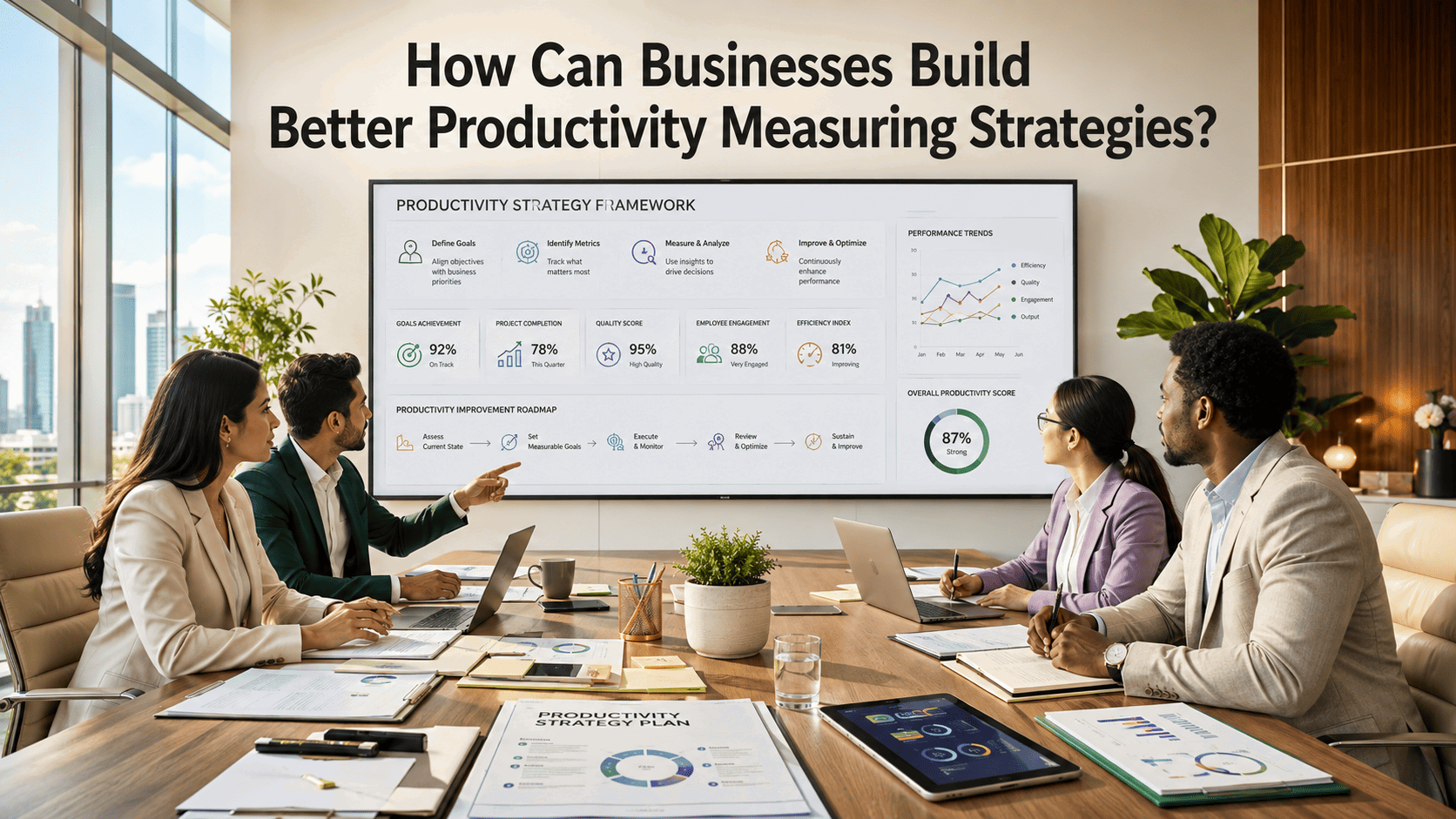
Organizations can create a more reliable framework by following a structured process:
- Define the desired outcomes. Establish what successful performance looks like for each role.
- Select relevant metrics. Choose a small number of indicators that genuinely reflect value and efficiency.
- Combine quantitative and qualitative data. Numbers should be supported by context, quality assessments, and manager or customer feedback.
- Set realistic benchmarks. Compare performance against appropriate historical, team, or role-specific standards.
- Review results regularly. Look for patterns rather than reacting to isolated changes.
- Act on the findings. Use insights to improve processes, training, workload distribution, and technology.
- Communicate transparently. Explain how productivity information supports both business performance and employee development.
Technology can make this process easier by consolidating performance information, tracking project progress, automating reports, and highlighting workflow bottlenecks. Effective productivity measuring strategies include using KPI dashboards to monitor key performance indicators in real time, implementing OKR (Objectives and Key Results) frameworks to align goals, using time-tracking and workflow analytics to identify inefficiencies, and automating performance reporting for consistent data. However, technology should support managerial judgment rather than replace it.
Best Practices for Sustainable Productivity Tracking
A sustainable approach should focus on improvement rather than constant monitoring. Companies should:
- Measure outcomes alongside activity.
- Customize metrics for different roles.
- Protect employee privacy and handle data responsibly.
- Review metrics periodically to ensure they remain relevant.
- Give employees visibility into expectations and results.
- Use productivity insights to remove barriers, not simply criticize performance.
- Recognize improvements and meaningful contributions.
When employees see that measurement leads to better tools, clearer priorities, and fairer expectations, they are more likely to view the process positively.
You can also watch this video: How to Download & Check Employee Productivity Reports With EmpMonitor | EmpMonitor How-To Tutorial
Summary
Effective Employee Productivity Measurement is not about determining who stays busiest throughout the day. It is about understanding how efficiently employees transform time, skills, and resources into meaningful results. A strong measurement framework combines output, quality, goal achievement, efficiency, and role-specific performance indicators. Businesses should also account for employee experience, workplace conditions, and the complexity of individual responsibilities. Ultimately, the most valuable approach uses productivity data to identify opportunities for improvement, support employees, and align everyday work with strategic business goals.
Frequently Asked Questions
What is the purpose of measuring employee productivity?
The purpose is to understand how effectively employees contribute to business objectives, identify inefficiencies, and improve processes, resources, and performance.
What is the best productivity metric?
There is no universal best metric. The most useful indicator depends on the employee's role and should generally combine output, quality, efficiency, and goal achievement.
Does working more hours mean higher productivity?
Not necessarily. Longer working hours can increase activity without increasing valuable output. Sustainable productivity focuses on results and quality rather than time alone.
How can companies avoid making productivity tracking feel intrusive?
Organizations should be transparent about what they measure, explain why data is collected, protect employee privacy, and use information primarily to improve workflows and support performance.
How often should productivity be reviewed?
Regular reviews are useful, but the frequency should match the type of work. Weekly, monthly, or quarterly trend analysis can help organizations identify meaningful patterns without overreacting to short-term fluctuations.
