How Can Businesses Prevent Insider Threats and Data Loss Effectively?
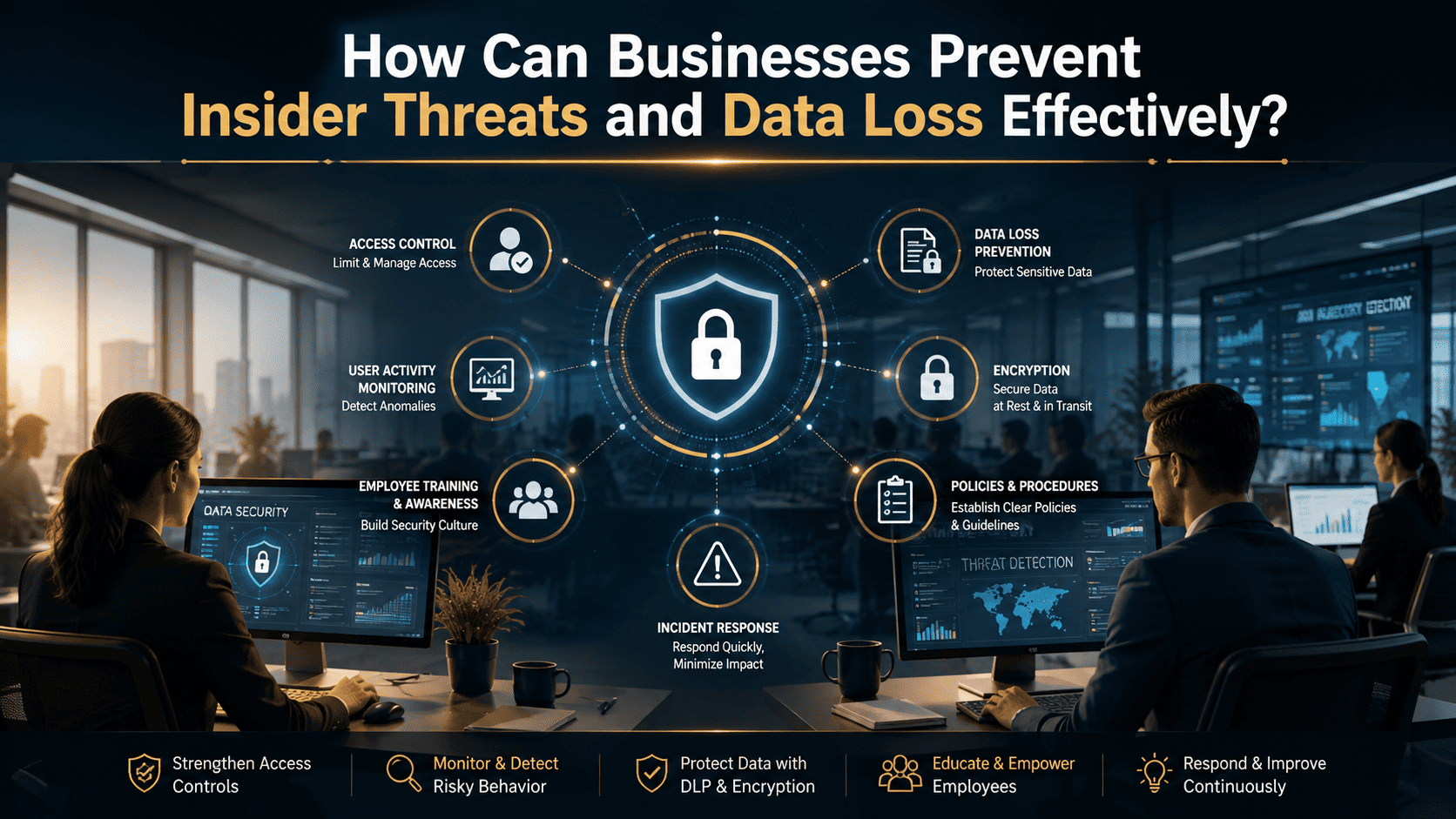
Could a trusted employee, contractor, or privileged user accidentally expose your company's most valuable information? These strategies help organizations identify risky behavior, control access to sensitive information, and reduce the chances of confidential data being stolen, leaked, or misused. An insider threat does not always involve a malicious employee. Data can also be exposed through accidental email attachments, weak passwords, unauthorized cloud sharing, compromised accounts, or careless handling of confidential files.The short answer: Companies can protect sensitive data by combining least-privilege access, data loss prevention controls, user activity visibility, employee training, behavioral analysis, and clearly defined security policies. The goal is not simply to watch employees but to identify unusual activity early and prevent sensitive information from leaving authorized environments.
What Is an Insider Threat?
An insider threat occurs when someone with legitimate access to an organization's systems, applications, or data uses that access in a harmful or unauthorized way, which is a key concern in Insider Threat and Data Loss Prevention. Insider threats generally fall into three categories:
- Malicious insiders: Employees or contractors intentionally steal, expose, or misuse information.
- Negligent insiders: Users accidentally create security incidents through unsafe actions.
- Compromised insiders: An attacker's access to an employee account allows unauthorized activity.
Because insiders already have legitimate credentials, traditional perimeter security alone may not detect suspicious behavior quickly enough.
What Is Data Loss Prevention?
Data Loss Prevention (DLP) is a security approach designed to identify, monitor, and protect sensitive information throughout its lifecycle. DLP controls can help organizations:
- Detect sensitive information before it is transferred.
- Restrict unauthorized file transfers and downloads.
- Monitor movement of confidential documents.
- Prevent sensitive information from being copied to unauthorized locations.
- Apply policies to email, cloud storage, endpoints, and removable devices.
- Generate alerts when potentially risky activity occurs.
When combined with insider-risk detection, DLP provides both visibility and preventive controls.
What Are Effective Ways for Organizations to Safeguard Sensitive Data Against Insider Threats?
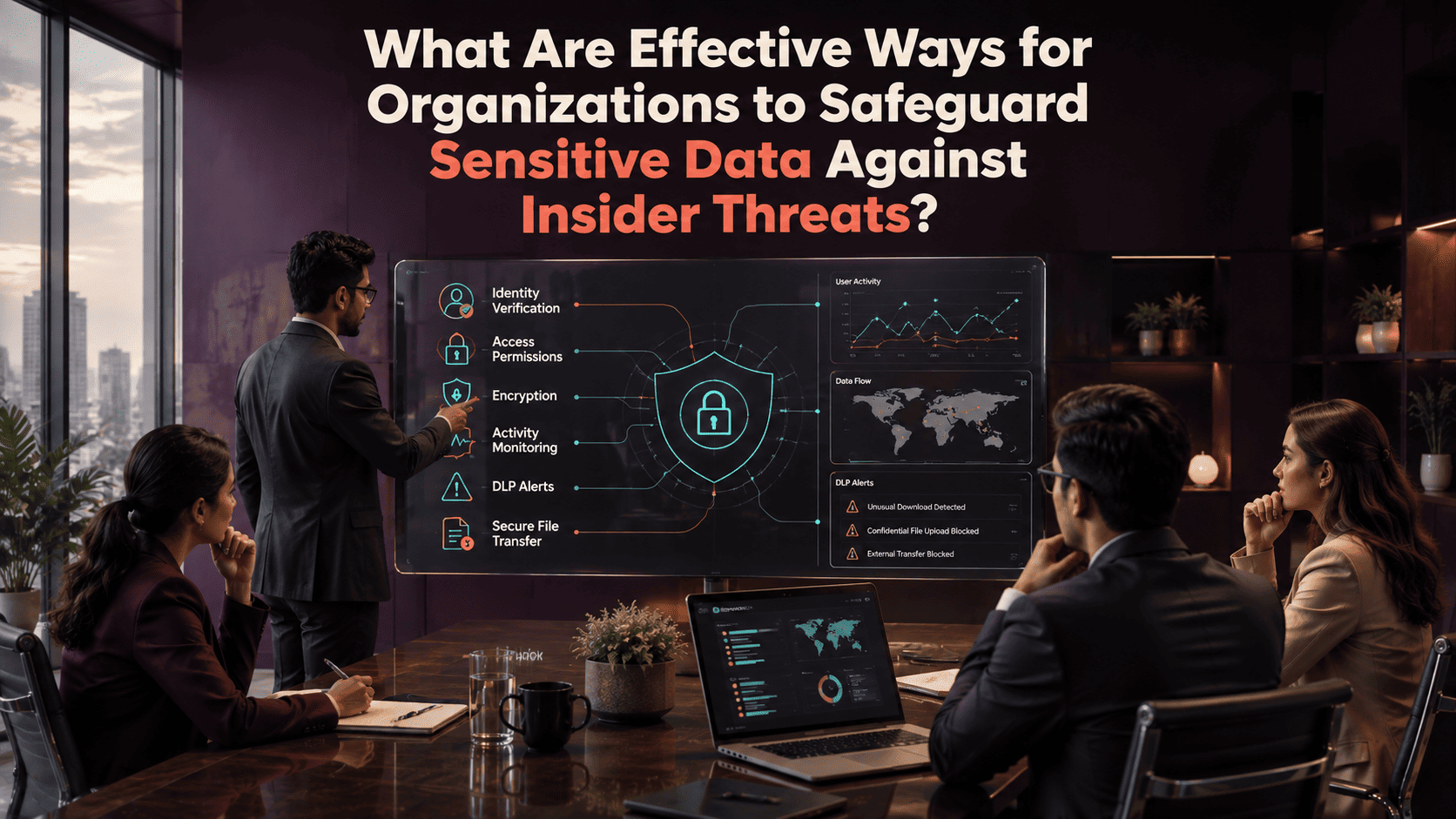
A strong protection strategy should combine technology, policies, and employee awareness rather than relying on one security control.
1. Apply Least-Privilege Access
Employees should receive only the permissions required to perform their responsibilities. Limiting unnecessary access reduces the amount of sensitive information an individual can reach. Organizations should regularly review:
- User permissions
- Privileged accounts
- Shared credentials
- Inactive accounts
- Contractor access
- Access to confidential repositories
Access should also be removed promptly when employees change roles or leave the company.
2. Monitor Sensitive Data Activity
Security teams need visibility into how sensitive information is being accessed and transferred. Unusual behavior may include downloading unusually large numbers of files, accessing information outside normal responsibilities, or transferring documents to unfamiliar destinations. Monitoring should focus on meaningful security signals rather than collecting unnecessary information.
3. Use DLP Policies to Prevent Unauthorized Transfers
DLP policies can automatically identify sensitive information and enforce rules around how it can be used. For example, a company could create policies that flag or block:
- Customer records sent to personal email accounts
- Confidential files uploaded to unauthorized cloud services
- Source code copied to removable storage
- Financial information shared externally
- Sensitive documents transferred outside approved applications
Organizations should test policies carefully to reduce false positives and avoid disrupting legitimate business activities.
4. Protect Intellectual Property and Source Code
Source code is among the most valuable forms of intellectual property for many technology companies. Unauthorized access or transfer can expose proprietary algorithms, credentials, product designs, and business logic. To Prevent source code theft, organizations can combine repository permissions, multifactor authentication, audit logs, DLP policies, secure development practices, and alerts for unusual repository activity. Developers should receive access only to the repositories and branches they actually need. Organizations should also monitor suspicious downloads, unusual repository cloning, and attempts to move code into unauthorized environments.
5. Strengthen Employee Security Awareness
Technology cannot eliminate every insider-risk scenario. Employees should understand how their everyday decisions can create security problems. Security awareness programs should cover:
- Phishing and social engineering
- Safe file sharing
- Password and authentication practices
- Approved cloud applications
- Handling confidential information
- Reporting suspicious activity
- Remote-work security
Training should be ongoing rather than limited to a single annual session.
6. Establish Clear Offboarding Procedures
Employee departures can create elevated data-security risks, particularly when departing users have privileged access. A structured offboarding process should include:
- Disabling accounts promptly.
- Revoking application and cloud access.
- Recovering company devices.
- Reviewing recent access to sensitive resources.
- Transferring business-owned files appropriately.
- Rotating credentials when necessary.
These steps reduce opportunities for unauthorized access after employment ends.
7. Use Workforce Visibility Responsibly
Organizations can also use workforce monitoring software to understand user activity and identify patterns that may indicate security risks. When implemented responsibly, such tools can provide visibility into application usage, file activity, access patterns, and other relevant workplace signals. However, monitoring should be transparent, proportionate, and aligned with applicable privacy requirements. Companies should clearly define what is monitored, why it is monitored, who can access monitoring data, and how long information is retained. The purpose should be security and operational improvement—not unnecessary surveillance.
Why Do Insider Threat and Data Loss Prevention Strategies Work Better Together?
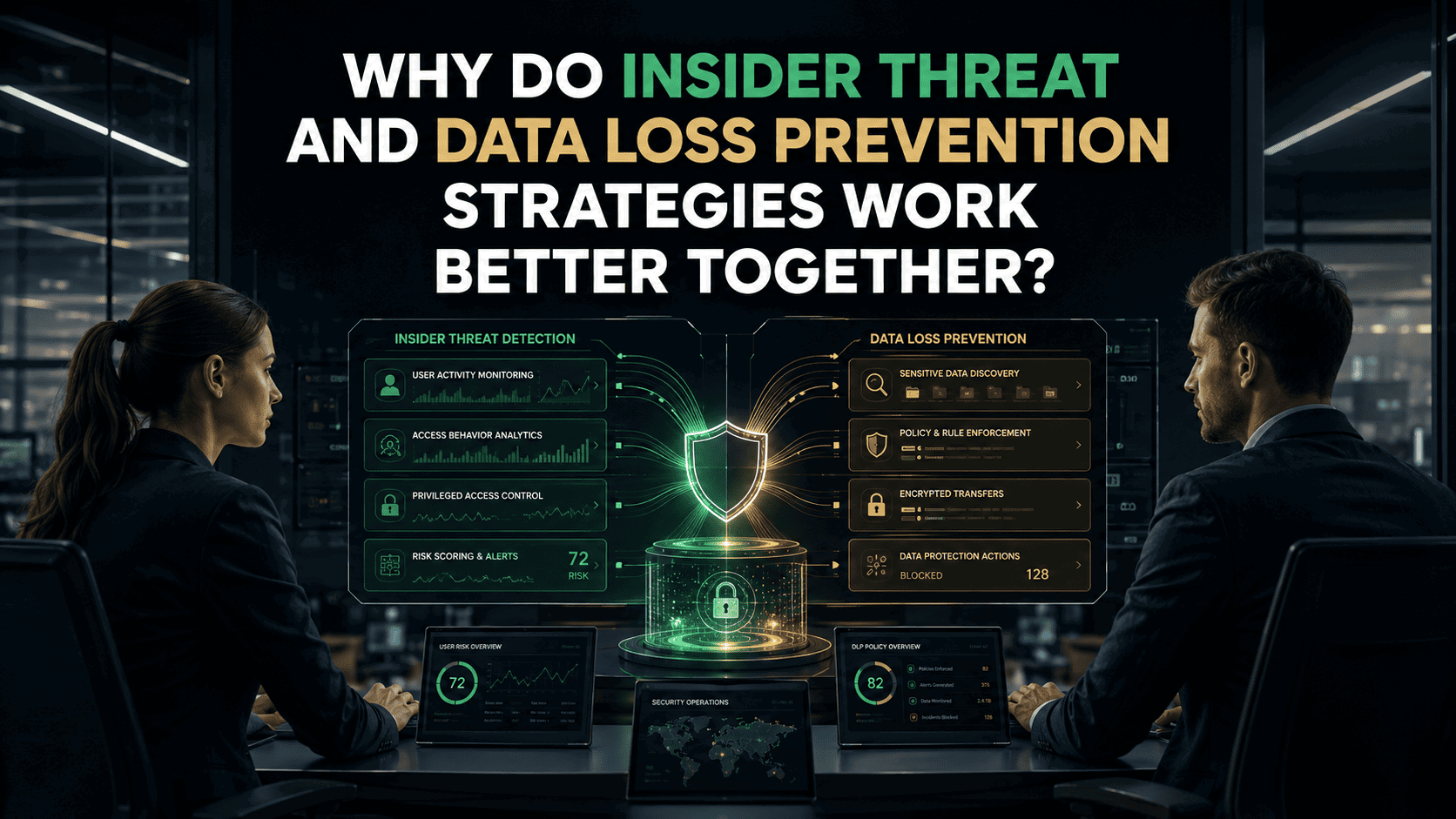
Insider Threat and Data Loss Prevention address complementary parts of the same security problem.Insider-threat controls help organizations understand who is behaving unusually and why the activity may be risky, while DLP controls help determine what sensitive information is involved and whether it should be allowed to leave the organization.Together, they can create a layered defense that supports:
- Early risk detection
- Sensitive-data protection
- Faster security investigations
- Reduced accidental exposure
- Better compliance visibility
- Stronger protection of intellectual property
Best Practices for Building an Effective Strategy
For better results, organizations should:
- Classify sensitive data according to business importance.
- Apply least-privilege access.
- Monitor high-risk activity and sensitive-data movement.
- Establish practical DLP policies.
- Review privileged accounts regularly.
- Train employees on security responsibilities.
- Maintain documented incident-response procedures.
- Review and improve controls based on emerging risks.
You can also watch this video: EmpMonitor - Best Time Tracking Software | Productivity Management
Summary
Insider Threat and Data Loss Prevention is essential for protecting sensitive business information from malicious intent, human error, and compromised credentials. Organizations can reduce this risk by combining access controls, DLP policies, security awareness, activity monitoring, and strong employee lifecycle procedures. The most effective approach is layered: limit unnecessary access, understand user behavior, protect sensitive information, and respond quickly when unusual activity occurs.
Frequently Asked Questions
What is an insider threat?
An insider threat is a security risk created by someone with authorized access to an organization's systems or information. The person may act maliciously, make an accidental mistake, or have a compromised account.
How does DLP prevent data loss?
DLP identifies sensitive information and applies rules that can alert, restrict, or block unauthorized transfers through channels such as email, cloud storage, endpoints, and removable devices.
Can insider threats be completely eliminated?
No security strategy can guarantee complete elimination of insider threats. However, organizations can significantly reduce their likelihood and impact through layered controls, continuous monitoring, access management, employee training, and incident response.
What is the most important step in preventing insider data loss?
Start by identifying sensitive information and limiting access to only those employees who genuinely need it. From there, organizations can add monitoring, DLP controls, training, and response procedures to strengthen protection.
