How Can Companies Improve Employee Productivity Through Better Measurement?
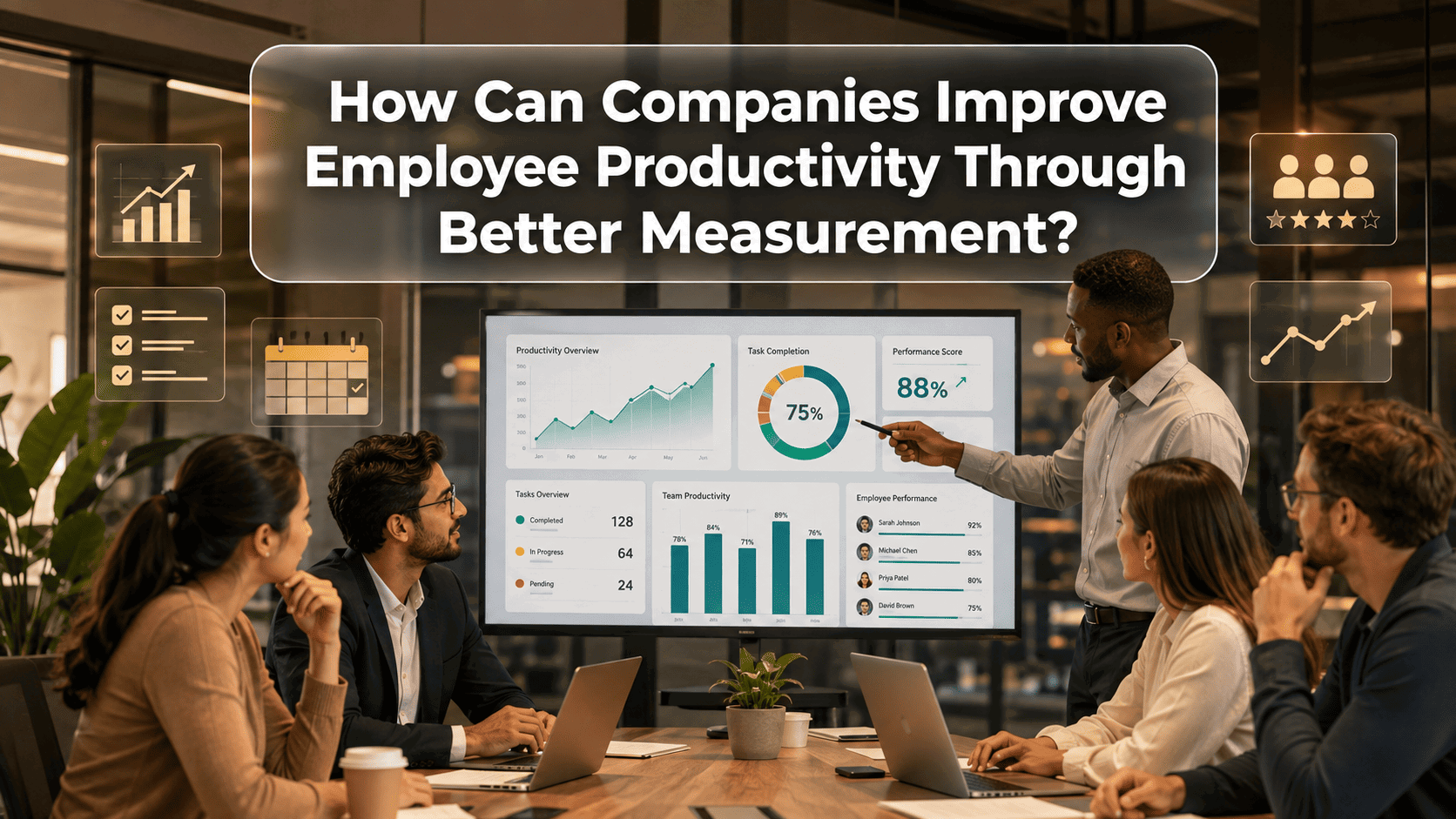
How can companies know whether employees are truly productive rather than simply busy? Are long working hours actually improving business outcomes? And how can managers measure performance without creating unnecessary pressure? Employee Productivity Measurement helps organizations answer these questions by evaluating how effectively employees convert time, effort, skills, and resources into meaningful results. Instead of focusing only on hours worked, effective measurement considers output quality, completed objectives, efficiency, collaboration, and business impact. A strong measurement approach gives managers actionable insights while helping employees understand expectations, identify obstacles, and improve performance. The goal is not to monitor every minute but to understand what enables people to perform at their best.
What Is Employee Productivity Measurement?
Employee Productivity Measurement is the process of assessing how efficiently employees contribute to organizational goals. It combines quantitative and qualitative indicators to create a more complete view of performance.
Common measurements include:
- Tasks or projects completed
- Quality and accuracy of work
- Time required to complete assignments
- Progress toward individual goals
- Customer satisfaction
- Revenue or business outcomes
- Collaboration and communication
- Attendance and schedule adherence where relevant
The most effective approach measures outcomes rather than activity alone. For example, counting keyboard activity may show that someone is active, but it does not necessarily prove that valuable work is being completed.
Why Does Measuring Productivity Matter?
Without reliable performance data, managers may depend heavily on assumptions or subjective impressions. Measurement provides evidence that can support better workforce decisions.
Key benefits include:
- Identifying bottlenecks: Managers can discover processes, tools, or workloads that slow employees down.
- Improving resource allocation: Data can reveal where additional staff, training, or technology may be needed.
- Setting realistic goals: Historical performance data helps organizations establish achievable targets.
- Recognizing strong performance: Consistent results can provide a clearer basis for recognition and rewards.
- Supporting employee development: Performance trends can highlight skill gaps and training opportunities.
- Improving business planning: Productivity insights can contribute to workforce forecasting and operational decisions.
Measurement is particularly useful when it leads to action. Collecting large amounts of data without using it to improve processes only creates administrative complexity.
Which Metrics Should Companies Track?
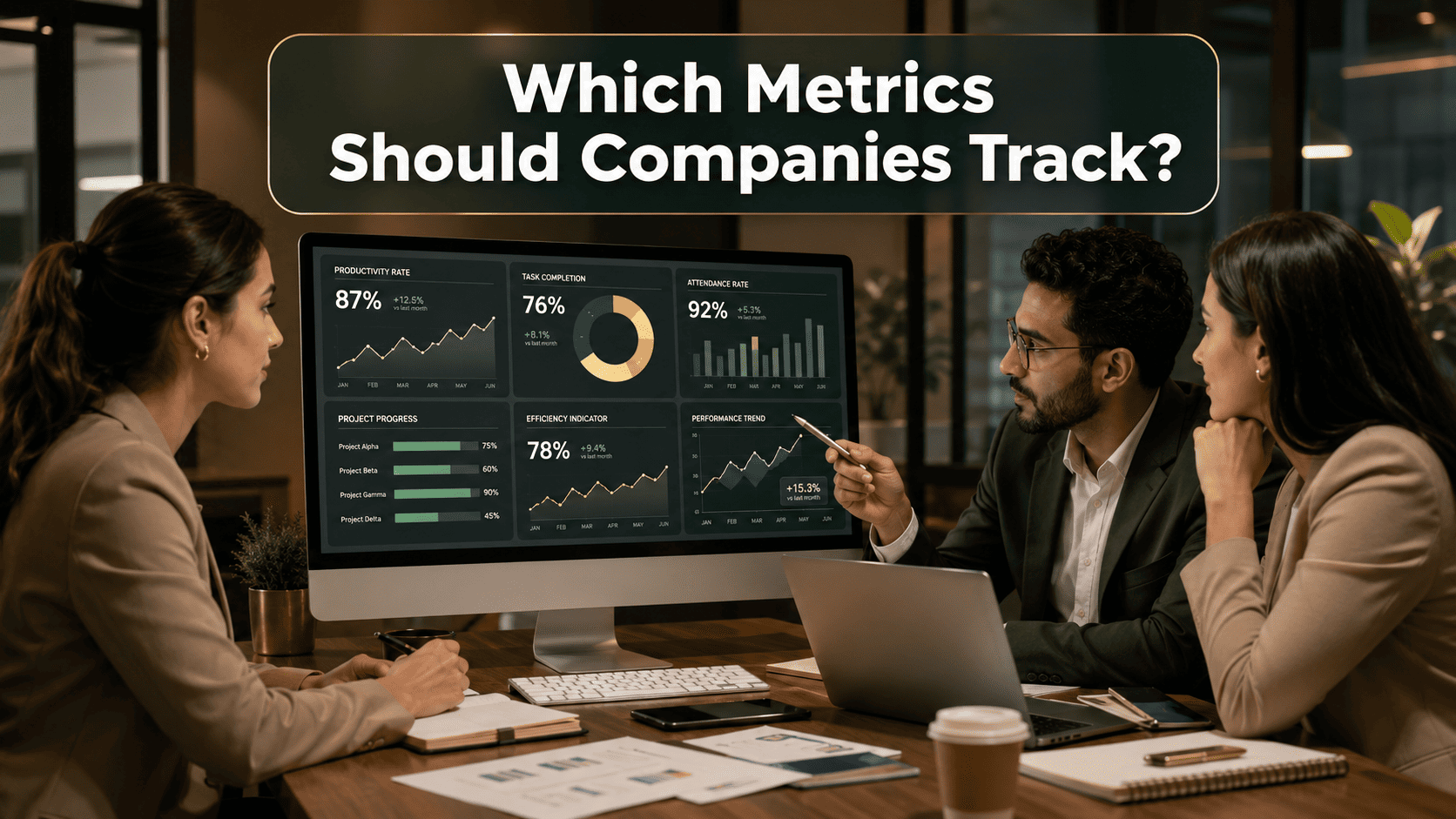
There is no universal productivity metric because different roles produce different types of value. A sales representative, software developer, customer-service employee, and creative professional should not necessarily be evaluated using the same formula.Companies can consider a combination of:
Output Metrics
These measure completed work, such as projects delivered, tickets resolved, sales generated, or cases processed.
Quality Metrics
Output alone can be misleading. Quality indicators such as error rates, customer feedback, rework, and compliance help determine whether completed work meets expectations.
Efficiency Metrics
Efficiency examines how resources are used to achieve results. Relevant indicators may include completion time, process cycle time, or resources required per outcome.
Goal-Based Metrics
Individual and team objectives provide context for performance. Managers can evaluate whether employees are progressing toward agreed targets rather than simply counting activities.
What Are Effective Productivity Measuring Strategies?
Companies should build a measurement framework around business objectives instead of tracking every available employee activity. Key productivity measuring strategies include:
- Define role-specific KPIs aligned with business goals
- Set clear SMART objectives
- Focus on outcomes over activity
- Use balanced scorecards (quality, efficiency, output)
- Conduct regular feedback and review cycles
- Leverage productivity and project management tools for visibility
Start by defining what successful performance looks like for each role.A practical approach includes:
- Define clear objectives for individuals and teams.
- Select role-specific metrics that reflect meaningful outcomes.
- Establish measurable benchmarks using historical or industry data.
- Combine quantitative and qualitative feedback for balanced evaluation.
- Review results regularly rather than waiting for annual performance cycles.
- Use insights to remove obstacles, improve workflows, and provide support.
- Communicate measurement policies clearly so employees understand what is collected and why.
The strongest systems also allow employees to participate in goal setting. When workers understand how their contributions connect to organizational objectives, measurement becomes a development tool rather than merely a monitoring mechanism.
How Can Technology Improve Productivity Tracking?
Modern workforce platforms can simplify data collection and performance analysis. Time tracking, project management, task management, workforce analytics, and performance management tools can bring relevant information together. However, technology should support—not replace—managerial judgment. Organizations should avoid treating metrics as absolute proof of productivity. For example, an employee may spend less time completing a task because they have developed an efficient process. Another employee may spend more time on a complex assignment that produces significantly greater business value. Therefore, managers should interpret data within the context of role complexity, workload, experience, collaboration, and business priorities.
How Does Flexible Work Affect Productivity Measurement?
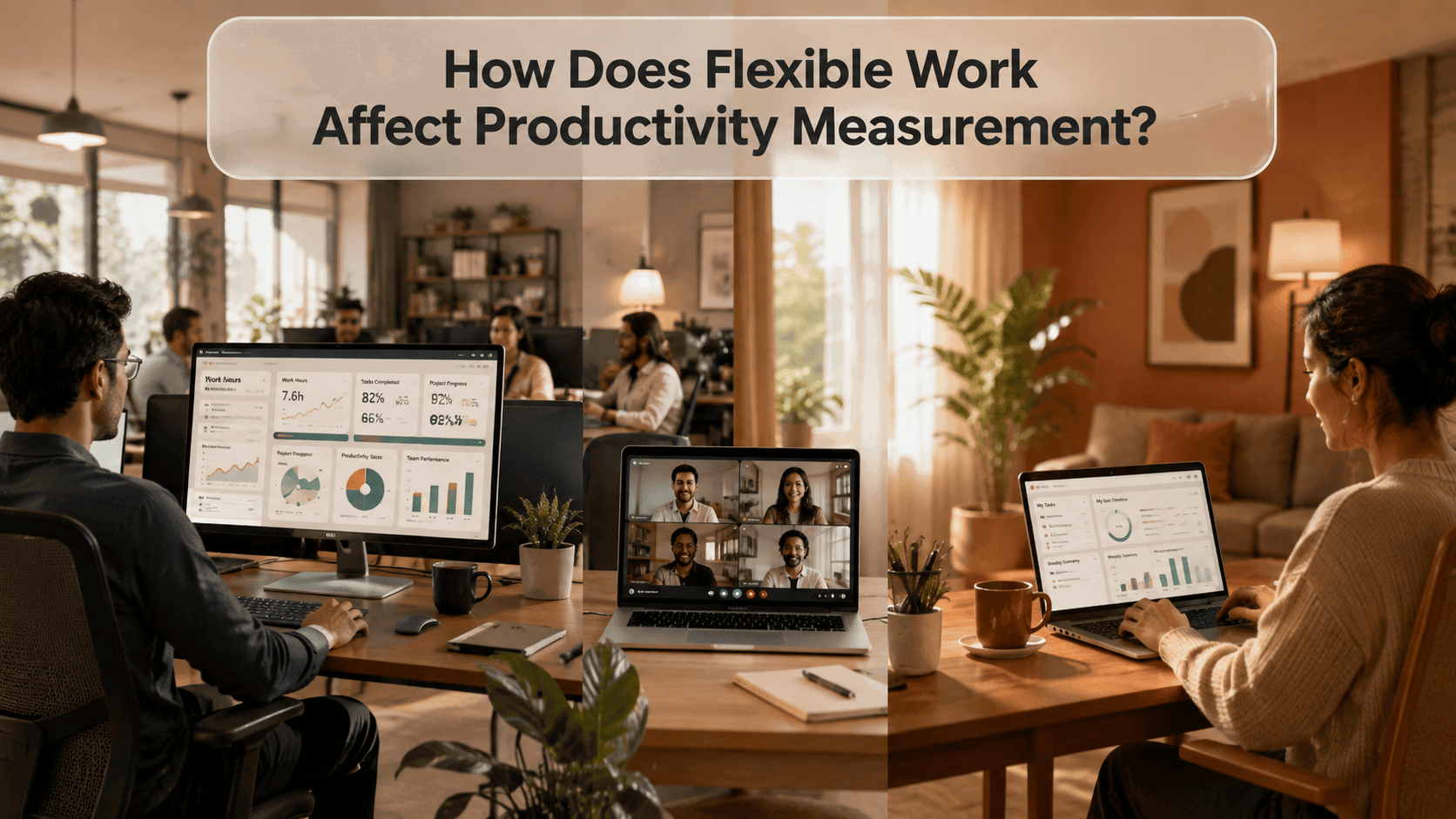
Remote and hybrid work have made traditional productivity assumptions less reliable. When employees work different hours or locations, physical presence and desk time become weaker indicators of performance. This is where flexible work schedule management becomes important. Companies should establish clear expectations around availability, deadlines, communication, and deliverables while allowing reasonable flexibility in how employees organize their working time. Effective measurement in flexible environments should prioritize:
- Completed objectives
- Quality of deliverables
- Responsiveness to important communication
- Project milestones
- Customer or stakeholder outcomes
- Team collaboration
- Reliability and accountability
This approach gives employees flexibility while maintaining clear standards for performance.
What Are the Challenges of Productivity Measurement?
Poorly designed measurement systems can create unintended problems. Excessive monitoring may reduce trust, encourage employees to optimize for metrics rather than outcomes, and create unnecessary workplace stress. Common challenges include:
- Choosing irrelevant metrics
- Comparing fundamentally different roles
- Focusing too heavily on quantity
- Ignoring work quality
- Collecting excessive employee data
- Failing to explain how metrics are used
- Treating short-term fluctuations as long-term performance trends
To avoid these issues, companies should keep measurement transparent, proportional, role-specific, and focused on meaningful outcomes.
How Can Companies Improve Employee Productivity Through Better Measurement?
Organizations can improve productivity by turning measurement into a continuous improvement process. Instead of asking only, “Who is performing well?” managers should also ask, “What is helping or preventing this team from performing well?”A sustainable framework should:
- Connect metrics directly to business goals.
- Give employees clear performance expectations.
- Review productivity trends over time.
- Use multiple indicators instead of a single score.
- Provide regular coaching and feedback.
- Identify workflow problems before blaming individual performance.
- Protect employee privacy and maintain transparency.
When measurement reveals that a team is consistently missing deadlines, the solution may not be additional monitoring. The real issue could be unclear priorities, excessive meetings, outdated software, insufficient staffing, or unrealistic workloads.
You can also watch this video: How to Manage Employee Reports | EmpMonitor How-To Tutorial Series
Summary
Effective Employee Productivity Measurement is about understanding valuable outcomes, not simply tracking employee activity. Companies should select meaningful, role-specific metrics that combine output, quality, efficiency, goals, and business impact. The best systems use data to support better decisions, remove workplace obstacles, recognize strong contributions, and guide employee development. When combined with transparency and thoughtful management, measurement can improve both organizational performance and the employee experience.
Frequently Asked Questions
What is the best way to measure employee productivity?
Use a combination of output, quality, efficiency, goal achievement, and business-impact metrics rather than relying on hours worked alone.
Should companies track employee activity?
Activity data can provide context, but it should not be treated as a direct substitute for measuring meaningful outcomes.
How often should productivity be measured?
Organizations should review relevant metrics regularly, while avoiding excessive monitoring. Monthly or quarterly trend analysis can be useful alongside ongoing feedback.
Can productivity measurement improve employee performance?
Yes. When measurement identifies obstacles, clarifies expectations, and supports coaching, it can help employees improve efficiency and achieve better results.
What makes a productivity measurement system effective?
A successful system is transparent, role-specific, outcome-focused, privacy-conscious, and connected to clear organizational goals.
