How Can Companies Protect Sensitive Data From Insider Threats?
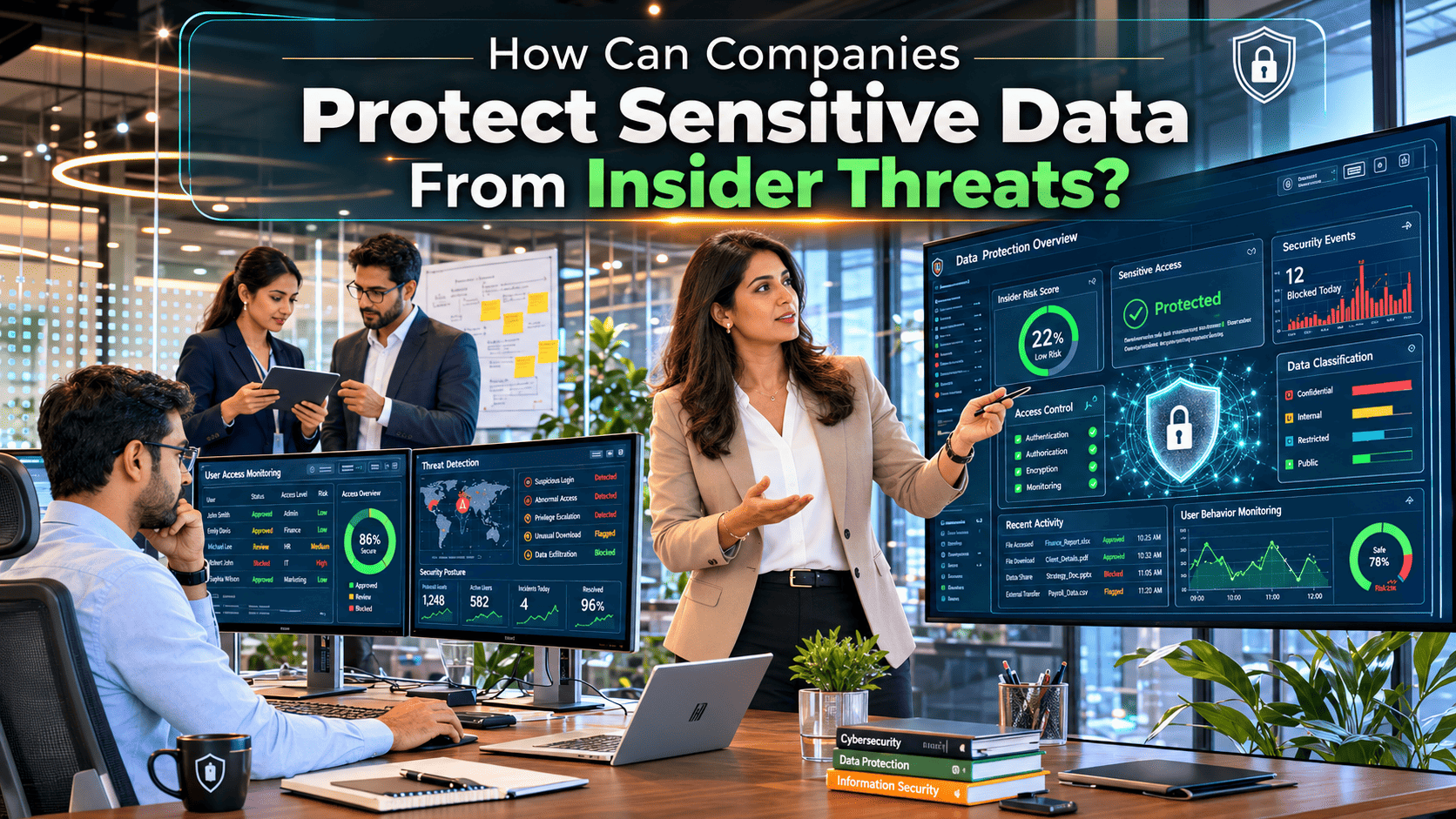
Could a trusted employee, contractor, or partner unintentionally—or deliberately—put your company’s most sensitive information at risk? As organizations rely increasingly on cloud applications, remote work, mobile devices, and distributed teams, protecting data requires more than defending against external hackers. Insider Threat and Data Loss Prevention focuses on identifying risky internal behavior and preventing sensitive information from leaving authorized environments. In practice, effective protection combines access controls, employee awareness, activity monitoring, data classification, behavioral analysis, and automated security policies. For organizations handling customer records, intellectual property, financial information, credentials, or regulated data, this approach helps answer three critical questions: Who can access sensitive information? What are they doing with it? And how can risky activity be stopped before data is exposed?
What Is an Insider Threat?
An insider threat occurs when someone with legitimate access to an organization's systems, applications, or data uses that access in a harmful way.Insider threats generally fall into three categories:
- Malicious insiders: Employees or contractors intentionally steal, leak, alter, or misuse information.
- Negligent insiders: Authorized users accidentally expose information through mistakes such as sending files to the wrong recipient.
- Compromised insiders: An employee's credentials or device are taken over by an external attacker and used to access company resources.
The danger is that insiders already have some level of legitimate access. Traditional perimeter security may therefore fail to identify suspicious activity quickly.
What Is Data Loss Prevention?
Data Loss Prevention (DLP) is a collection of technologies, policies, and processes designed to prevent sensitive information from being improperly accessed, shared, copied, transferred, or exposed. A DLP strategy can monitor and control activities involving:
- Confidential documents
- Customer and employee records
- Financial information
- Intellectual property
- Source code
- Authentication credentials
- Regulated or personally identifiable information
DLP tools can identify sensitive content and enforce rules when users attempt actions such as uploading confidential files to unauthorized cloud services, copying information to removable media, or sending restricted data externally.
What Steps Can Organizations Take to Safeguard Sensitive Data From Insider Threats?
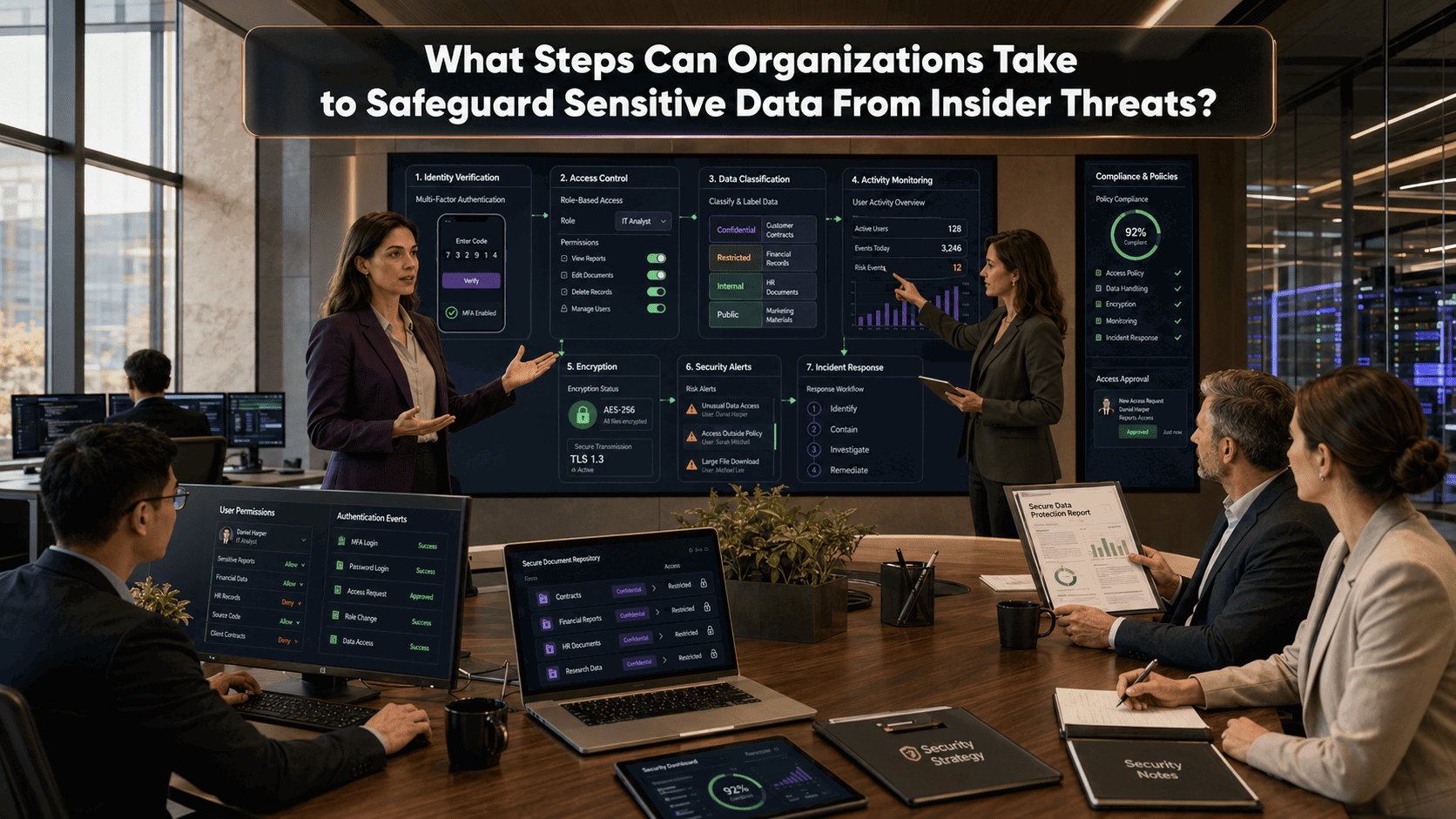
Companies can reduce insider-threat risk by combining preventive controls with continuous monitoring and rapid response.
1. Apply Least-Privilege Access
Employees should receive only the permissions required for their responsibilities. Restricting unnecessary access reduces the amount of sensitive information that could be exposed if an account is misused or compromised.Regular access reviews are equally important. Employees change roles, projects end, and contractors leave organizations. Permissions should change accordingly.
2. Classify Sensitive Information
Organizations cannot effectively protect data they cannot identify.Create clear classifications such as:
- Public
- Internal
- Confidential
- Highly restricted
Once information is classified, security policies can determine who may access, download, copy, print, or share it.
3. Monitor Unusual User Activity
Behavioral monitoring can reveal warning signs that traditional access controls miss.Examples include:
- A sudden increase in file downloads
- Access to unusual systems or repositories
- Repeated attempts to bypass security controls
- Large transfers of confidential information
- Activity outside normal working patterns
- Attempts to upload sensitive files to unauthorized services
The goal should not be indiscriminate employee surveillance. Instead, monitoring should focus on meaningful security signals and transparent, policy-based controls.
4. Use Automated DLP Policies
Automated controls can identify sensitive information and take predefined actions when a policy violation occurs.Depending on the organization's requirements, a DLP system may:
- Detect sensitive content.
- Evaluate the attempted action.
- Apply the appropriate policy.
- Block, quarantine, encrypt, or flag the activity.
- Alert security personnel for investigation.
Automation reduces response time and helps security teams manage large volumes of activity.
How Does Employee Activity Monitoring Support Data Protection?
Security teams need context to distinguish ordinary work from potentially dangerous behavior. Activity monitoring can provide that context by connecting users, devices, applications, files, and events. For example, a single download may be completely normal. Hundreds of confidential files downloaded shortly before an employee leaves the organization could require investigation. This is where a performance tracking system can sometimes complement broader workforce analytics by providing operational context. However, productivity information and security monitoring should remain clearly governed by separate policies, with privacy, transparency, and legitimate business purposes built into the program.
Why Is User Behavior Important in Insider Threat Detection?
Technology alone cannot eliminate insider risk because human behavior is constantly changing. A strong program examines behavioral patterns rather than relying solely on static rules. Risk indicators may include unusual access times, abnormal data movement, privilege changes, or attempts to circumvent established controls. Organizations should also establish clear escalation procedures so that security teams know what to do when suspicious activity is detected.
How Can Organizations Reduce Accidental Data Loss?
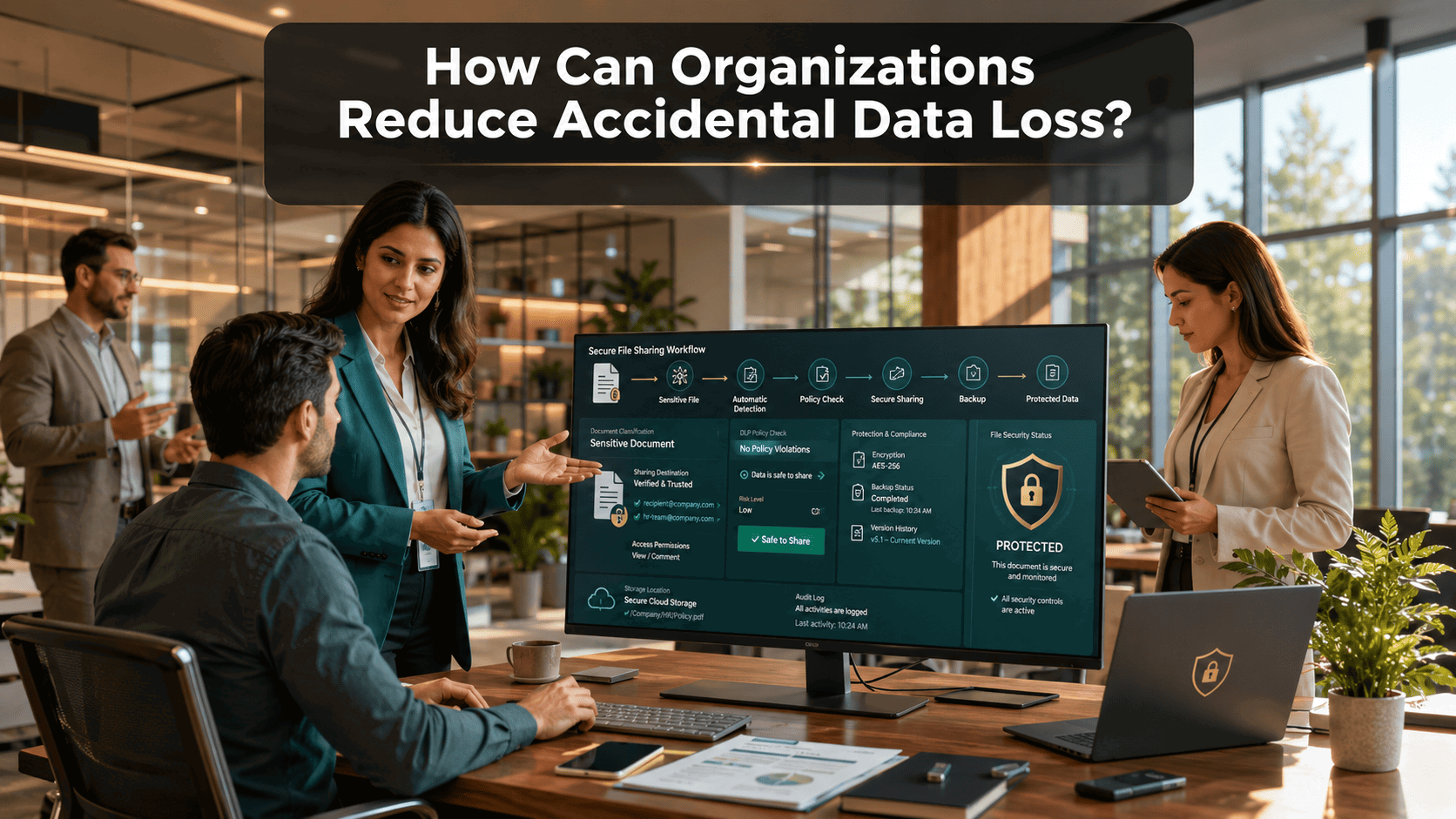
Not every insider threat is malicious. Human error remains a major source of data exposure.Companies can reduce accidental loss through:
- Security awareness training
- Clear data-handling policies
- Email and file-sharing controls
- Multifactor authentication
- Automatic encryption
- Secure cloud-storage configurations
- Regular phishing simulations
- Data classification guidance
- Simple reporting procedures for mistakes
Employees should understand not only what is prohibited, but also why specific security practices matter.
How Should Companies Build an Effective Insider Risk Strategy?
A practical strategy can follow these steps:
- Identify critical data and determine where it resides.
- Map access permissions across users, applications, and devices.
- Define acceptable behavior through documented policies.
- Deploy monitoring and DLP controls around high-risk data.
- Establish behavioral baselines to identify unusual activity.
- Create incident-response procedures for confirmed violations.
- Review controls regularly as employees, applications, and business processes change.
Organizations with mobile or distributed workforces should also consider how operational platforms interact with security policies. For example, field force management software may handle employee locations, schedules, customer information, work orders, and mobile-access data. These environments should receive the same attention to authentication, permissions, encryption, and data governance as traditional office systems.
What Are the Benefits of Combining Insider Threat Detection With DLP?
When behavioral monitoring and DLP work together, organizations gain a more complete view of data risk.Key benefits include:
- Earlier detection: Suspicious behavior can be identified before major data exposure occurs.
- Reduced accidental leakage: Automated policies can prevent common mistakes.
- Better incident investigation: Security teams can understand who accessed information and what happened.
- Improved compliance: Consistent controls support data-protection and regulatory requirements.
- Stronger security awareness: Clear policies help employees understand their responsibilities.
- Lower operational risk: Automated enforcement reduces dependence on manual intervention.
The most effective programs balance security with employee trust. Excessive monitoring can create privacy concerns and undermine workplace culture, while insufficient visibility can leave organizations unable to identify serious risks.
You can also watch this video: How To Stop Insider Threats? | EmpMonitor Insider Threat Prevention

Summary
Insider Threat and Data Loss Prevention is most effective when organizations treat data security as a combination of people, processes, and technology. Least-privilege access limits exposure, data classification identifies what needs protection, behavioral monitoring highlights unusual activity, and DLP controls can prevent sensitive information from leaving approved environments.The objective is not simply to watch employees. It is to create a secure, transparent framework that protects valuable information while allowing legitimate business activity to continue efficiently.
Frequently Asked Questions
What is the difference between an insider threat and data loss?
An insider threat describes the risk created by someone with legitimate access to organizational resources. Data loss is the actual or potential exposure, deletion, theft, or unauthorized transfer of information. Insider threats are therefore one possible cause of data loss.
Can DLP prevent insider threats?
DLP can significantly reduce the risk of data exposure by identifying sensitive information and blocking or controlling unauthorized actions. However, DLP works best when combined with access management, behavioral monitoring, security training, and incident response.
What are common signs of an insider threat?
Potential warning signs include unusual access patterns, unexpected bulk downloads, attempts to bypass security controls, unauthorized data transfers, access to systems unrelated to a user's role, and unusual activity involving sensitive information.
How can companies protect employees' privacy while monitoring security risks?
Organizations should establish transparent policies, collect only necessary information, limit access to monitoring data, define legitimate security purposes, and comply with applicable privacy and employment regulations.
Why is insider-threat prevention important?
A single compromised account, careless action, or malicious employee can expose valuable business information. Proactive controls help organizations identify risky behavior earlier, reduce data exposure, and strengthen overall information security.
