How Does a Performance Tracking System Improve Employee Productivity?
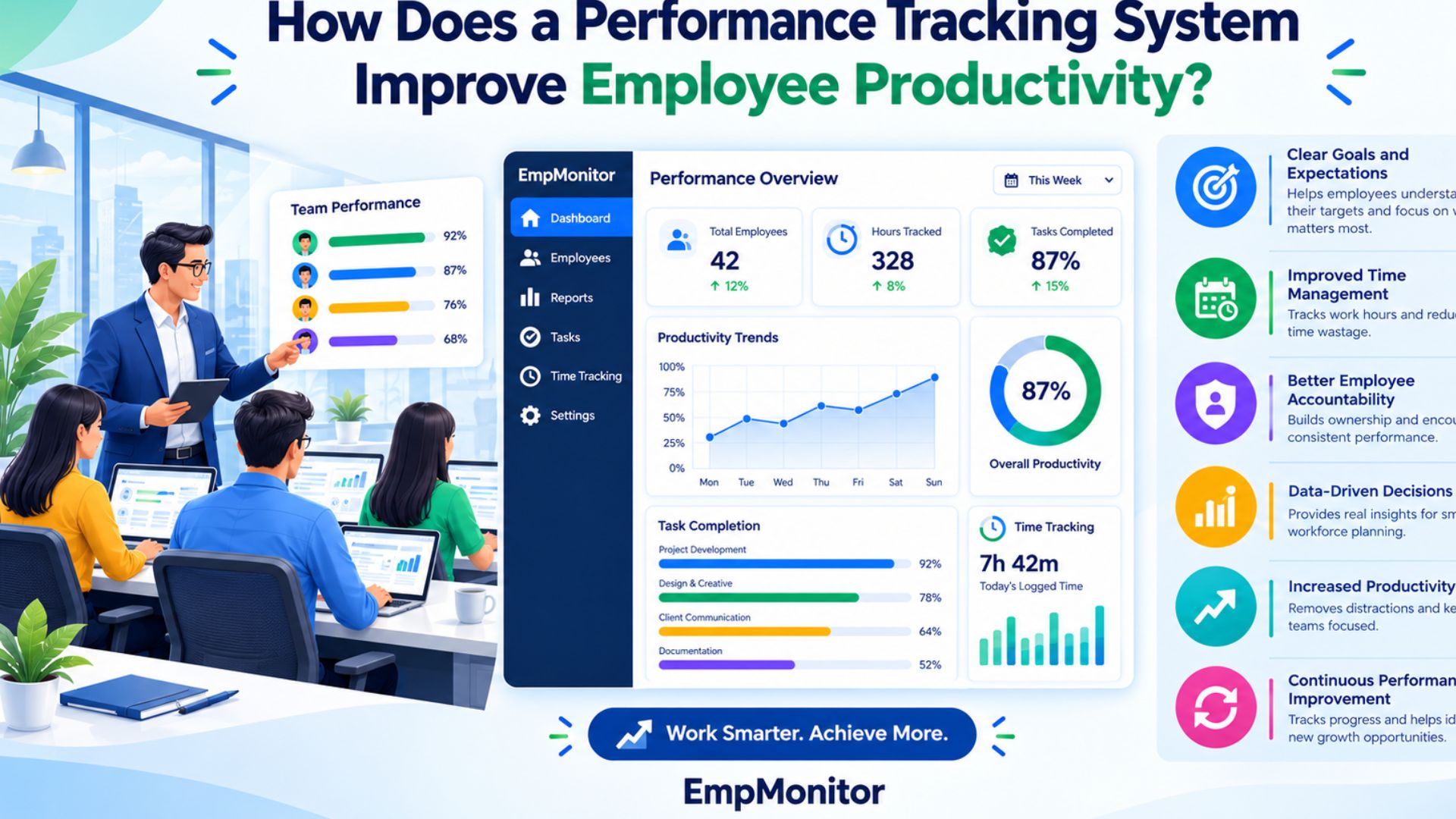
How can businesses improve employee productivity without increasing workloads or micromanaging their teams? The answer often lies in setting clear goals, tracking progress, identifying inefficiencies, and providing timely feedback. A structured performance tracking approach helps organizations understand how work gets done and where improvements are needed.A performance tracking system improves employee productivity by helping businesses set measurable goals, monitor task progress, identify skill gaps, manage time effectively, and make data-driven decisions. It also encourages accountability, strengthens collaboration, and helps managers support employees with actionable feedback.For organizations like EmpMonitor, combining performance insights with practical productivity strategies can help teams work smarter, stay focused, and achieve better results.
What Is a Performance Tracking System?
A performance tracking system is a tool or process that measures employee progress, work outcomes, and productivity against predefined goals and key performance indicators (KPIs). It gives managers and employees a clearer understanding of achievements, challenges, and opportunities for improvement.Depending on the organization's needs, it may include features such as:
- Goal setting and progress monitoring
- Task and project tracking
- Productivity reports and dashboards
- Performance reviews and feedback
- KPI measurement and analysis
- Time management insights
When used transparently, these capabilities help businesses evaluate outcomes, identify bottlenecks, and build a more productive workplace.
How Does It Improve Employee Productivity?
Here are eight practical ways this approach can help employees and organizations perform better.
1. Sets Clear Goals and Priorities
Employees perform better when they understand what they need to accomplish. Clearly defined objectives help individuals prioritize important tasks instead of spending time on activities that contribute little to business goals.Managers can establish measurable targets, assign responsibilities, and review progress regularly. This clarity reduces confusion and helps employees direct their energy toward meaningful results.Example: A marketing team can set weekly content delivery targets, making it easier to monitor deadlines and maintain a consistent publishing schedule.
2. Improves Time Management
Poor time management can lead to missed deadlines, unnecessary meetings, and unfinished tasks. Tracking work patterns helps employees recognize how they allocate their time and where adjustments could improve efficiency.Managers can use these insights to identify excessive administrative work, recurring interruptions, and unrealistic workloads. Employees can then organize their schedules around high-priority responsibilities.The goal is not to monitor every minute but to help people use their working hours more effectively.
3. Encourages Accountability
When responsibilities and expectations are clearly defined, employees can take greater ownership of their work. Progress updates make it easier to understand which tasks are complete, which require attention, and where additional support is needed.Accountability should focus on agreed-upon responsibilities and measurable outcomes rather than punishment. This approach builds trust while encouraging employees to meet commitments and communicate challenges early.
4. Identifies Skill Gaps and Training Needs
Productivity challenges do not always result from a lack of effort. Employees may need additional training, better tools, or clearer instructions to complete tasks successfully.Performance insights can reveal recurring difficulties, inconsistent results, or areas where employees need development. Managers can use this information to recommend targeted training, mentoring, or skill-building opportunities.By addressing the underlying causes of poor performance, organizations can help employees improve their confidence and capabilities.
5. Provides Timely Feedback
Annual performance reviews may not address problems quickly enough. Regular feedback helps employees understand what they are doing well and what they can improve.Managers can use progress reports and one-on-one discussions to recognize achievements, clarify expectations, and resolve obstacles before they affect larger projects.Effective feedback should be:
- Specific: Identify the behavior or result being discussed.
- Constructive: Explain what could be improved.
- Timely: Address issues while they are still relevant.
- Actionable: Provide practical next steps.
Consistent communication helps employees make improvements without waiting for formal review cycles.
6. Strengthens Team Collaboration
Team productivity depends on more than individual performance. Employees also need to coordinate responsibilities, share information, and complete interdependent tasks on time.Tracking project progress helps managers identify delays, overlapping responsibilities, and communication gaps. Shared goals and progress updates make it easier for team members to understand how their work contributes to broader objectives.As a result, teams can coordinate more effectively, reduce duplicated effort, and maintain smoother workflows.
7. Supports Data-Driven Decisions
Managers sometimes make decisions based on assumptions rather than evidence. Reliable performance information provides a clearer picture of what is working and what needs attention.For example, managers can compare project completion rates, workload distribution, and quality indicators to identify recurring bottlenecks. They can then adjust staffing, revise processes, or provide additional resources where necessary.Data should be interpreted in context. Productivity metrics are most useful when combined with employee feedback, work quality, and the complexity of assigned tasks.
8. Measures Progress and Recognizes Achievements
Employees are more likely to stay motivated when they can see their progress and understand how their contributions matter.Regular progress reviews help organizations recognize milestones, celebrate achievements, and identify opportunities for further improvement. Suitable KPIs may include task completion rates, project delivery times, customer satisfaction, and error rates.Recognition should reflect meaningful contributions rather than raw activity counts. This encourages sustainable performance without creating unnecessary pressure.
How to Choose the Right Productivity Tracking Tool
Selecting suitable software requires understanding your organization's goals, workflows, and employee needs.Consider these essential factors:
- Relevant reporting: Choose tools that measure meaningful outcomes instead of collecting unnecessary data.
- Ease of use: Make sure employees and managers can understand reports without extensive training.
- Goal and task management: Look for features that connect daily responsibilities with business objectives.
- Privacy and transparency: Explain what information is collected, why it is needed, and who can access it.
- Actionable insights: Prioritize reports that help teams solve problems and improve processes.
- Scalability: Select a solution that can support your organization's future growth.
A suitable tool should support employees and managers alike, creating opportunities for improvement rather than encouraging excessive supervision.
Best Practices for Improving Productivity With Performance Tracking
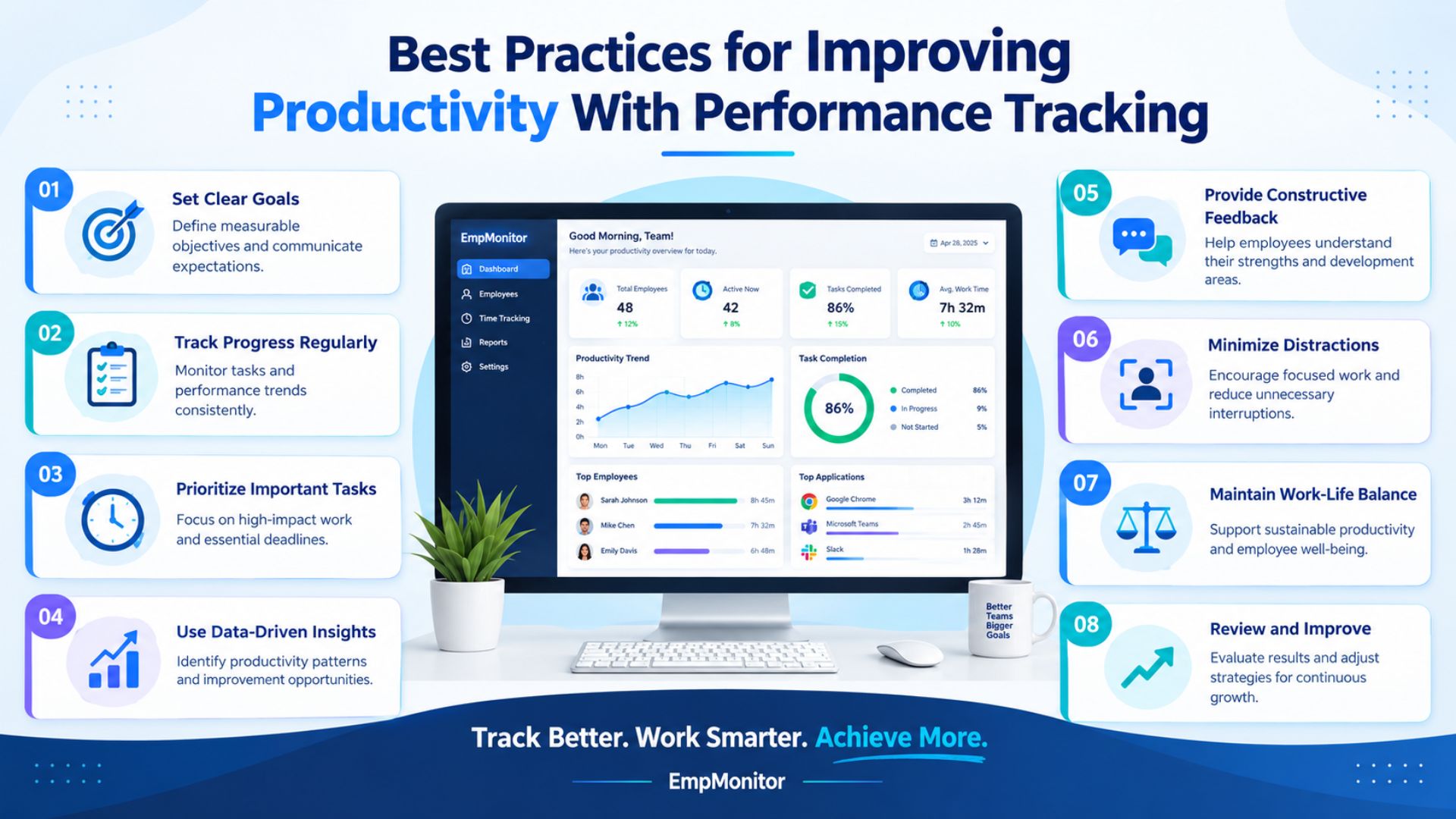
To get meaningful results, businesses should establish a clear and employee-focused implementation plan.
- Define measurable objectives: Set realistic goals aligned with business priorities.
- Choose relevant KPIs: Measure quality, timeliness, and outcomes alongside productivity.
- Communicate expectations: Explain how tracking works and how the information will be used.
- Review progress regularly: Discuss achievements, obstacles, and improvement opportunities.
- Act on the findings: Adjust workflows, provide training, and remove unnecessary barriers.
- Protect employee privacy: Follow applicable data protection requirements and establish clear access controls.
Remember that tracking alone does not improve performance. The real value comes from using insights to make thoughtful changes and provide the right support.You can also watch: EmpMonitor: All-In-One Workforce Management Solution | Employee Monitoring Software
Conclusion
A performance tracking system can improve employee productivity by clarifying goals, strengthening accountability, improving time management, identifying training needs, and helping managers make informed decisions. When organizations combine meaningful metrics with regular feedback and employee support, they can build more efficient and collaborative teams.For EmpMonitor, the key message is simple: productivity improves when businesses understand work patterns, address obstacles, and help employees achieve their goals. A transparent, balanced approach makes performance tracking a valuable part of long-term workplace improvement.
Frequently Asked Questions (FAQs)
1. How does performance tracking improve employee productivity?
It helps employees understand their goals, monitor progress, manage time, and identify areas for improvement. Managers can use performance insights to provide timely feedback and remove workplace obstacles.
2. What are the key features of employee performance tracking software?
Common features include goal setting, task tracking, KPI dashboards, progress reports, productivity insights, and performance feedback. Available features vary by software provider.
3. What KPIs should businesses use to measure employee productivity?
Useful KPIs include task completion rates, project turnaround time, work quality, error rates, customer satisfaction, and goal achievement. The right metrics depend on each employee's role and responsibilities.
4. Can performance tracking improve employee engagement?
Yes. When used fairly, it can improve engagement by clarifying expectations, recognizing achievements, and identifying opportunities for professional development. Excessive monitoring, however, may reduce trust.
5. How often should managers review employee performance?
Managers should provide feedback regularly, with the frequency depending on the role and project. Weekly check-ins or monthly reviews can help teams address issues before they become larger problems.
6. Is employee performance tracking suitable for remote teams?
Yes. It can help remote teams coordinate tasks, monitor project milestones, and maintain visibility into shared goals. Clear expectations, outcome-based measures, and respect for employee privacy are essential.
7. What is the difference between performance tracking and employee monitoring?
Performance tracking focuses primarily on goals, results, and progress. Employee monitoring may involve observing work activity or system usage. Some tools offer both, so organizations should clearly communicate their practices and use data responsibly.
