How Does Employee Productivity Measurement Help Businesses Improve Performance?
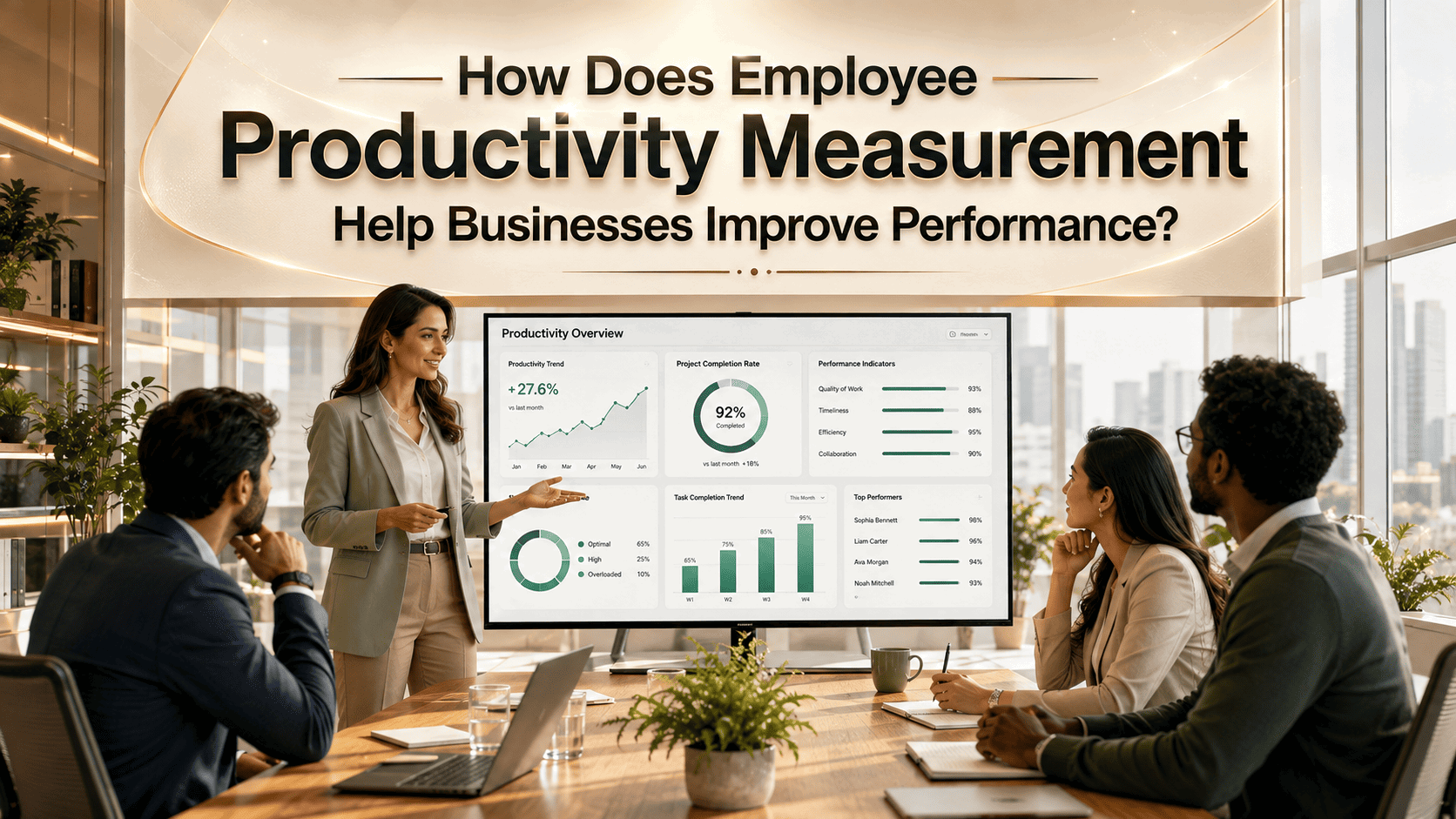
How can businesses know whether employees are working efficiently, projects are progressing as planned, and teams are using their time effectively? More importantly, how can managers identify productivity challenges before they affect business results? Employee productivity measurement helps organizations evaluate how effectively employees use their time, skills, and resources to achieve measurable business goals. By tracking meaningful indicators such as task completion, output quality, time utilization, and goal achievement, companies can identify bottlenecks, improve workflows, and make better workforce decisions. The goal is not simply to monitor employees. Effective measurement provides actionable insights that help managers support teams, remove obstacles, and create an environment where people can perform at their best.
What Is Employee Productivity Measurement?
Employee productivity measurement is the process of evaluating an employee's or team's output against the time, resources, and objectives involved in producing that work. A useful measurement approach considers both quantity and quality. For example, completing a large number of tasks does not necessarily indicate high productivity if the work contains errors or requires extensive rework. Businesses commonly evaluate:
- Tasks completed within a specific period
- Project and goal completion rates
- Time spent on productive activities
- Work quality and accuracy
- Customer satisfaction
- Attendance and schedule adherence
- Revenue or business output per employee
- Efficiency across different workflows
The right metrics depend on the employee's role, business objectives, and type of work.
Why Is Employee Productivity Measurement Essential for Business Success?
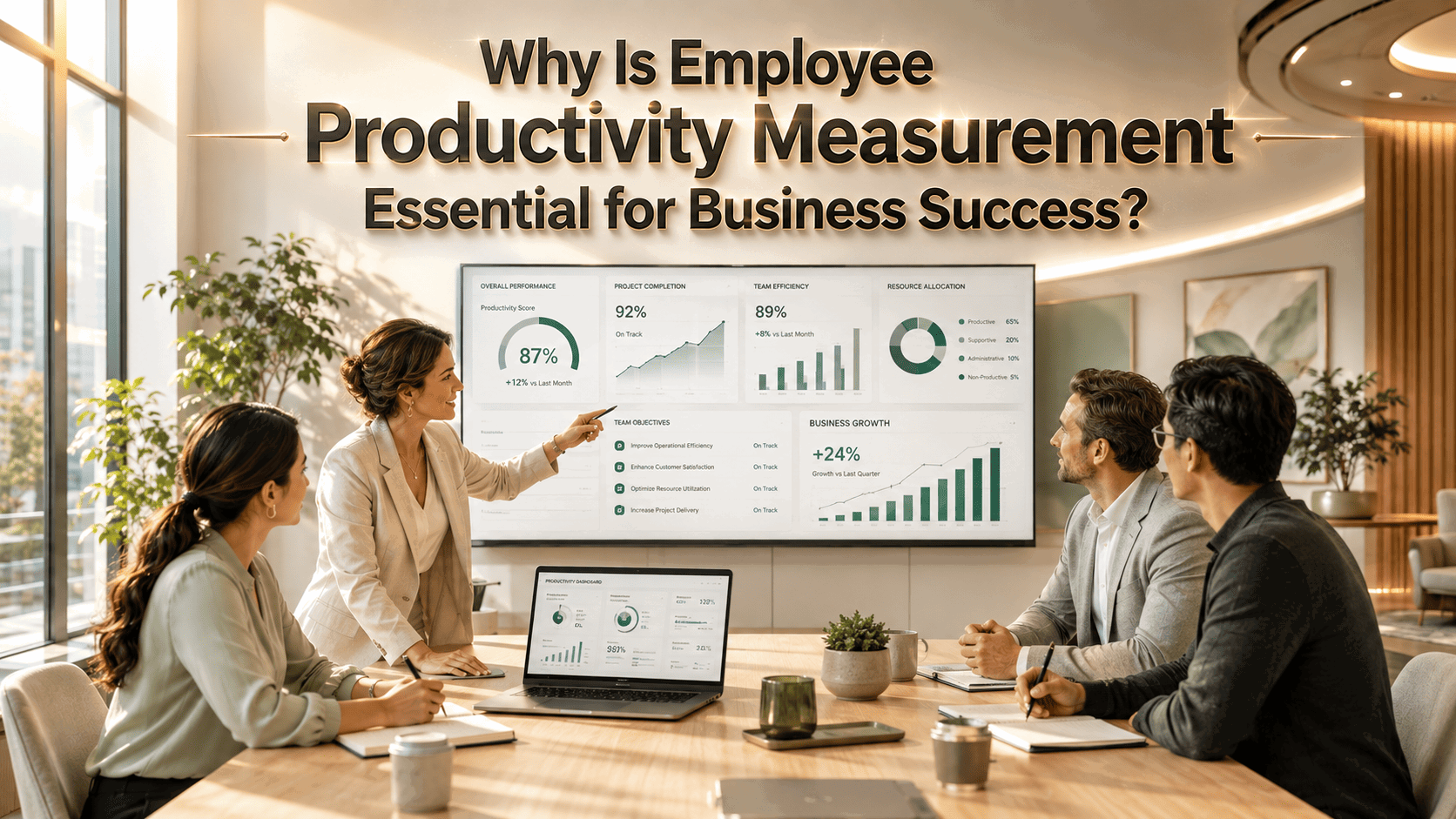
Effective productivity measurement gives businesses visibility into how work gets done and where improvements are needed. Instead of relying entirely on assumptions or subjective evaluations, managers can use objective information to make better decisions.
1. Identifies Performance Gaps
Productivity data can reveal where employees or teams are struggling. A consistent decline in completed tasks, delayed projects, or excessive time spent on routine processes may indicate training needs, inefficient workflows, unclear priorities, or resource constraints. Identifying these issues early allows managers to address their underlying causes rather than simply judging the final result.
2. Improves Resource Allocation
When managers understand workload patterns, they can distribute responsibilities more effectively. Productivity insights can show which employees are overloaded, which processes require additional support, and where automation could reduce repetitive work. This creates a more balanced workload while helping teams focus their effort on high-value activities.
3. Supports Better Goal Setting
Clear metrics make performance expectations easier to communicate. Employees can understand what success looks like when objectives are connected to measurable outcomes. For example, instead of setting a vague goal such as "work faster," a manager might establish targets for project milestones, response times, quality standards, or completed deliverables.
4. Helps Maximize Productivity
Organizations can use productivity insights to identify high-performing processes and replicate them across teams. When employees have clear priorities, appropriate resources, and efficient workflows, they can spend less time dealing with unnecessary administrative barriers. The objective should be to maximize productivity without encouraging unhealthy workloads or sacrificing work quality. Sustainable performance comes from improving systems, not simply asking employees to work longer.
Which Metrics Should Companies Track?
Not every metric provides meaningful insight. Businesses should prioritize indicators that directly connect employee activity with organizational objectives. Important metrics include:
- Task completion rate: Measures how consistently assigned work is completed.
- Goal achievement: Shows progress toward individual and team objectives.
- Time utilization: Helps identify how working hours are distributed.
- Quality rate: Evaluates accuracy, reliability, and rework.
- Project completion: Tracks whether projects meet expected deadlines.
- Revenue per employee: Provides a broader view of workforce contribution.
- Customer outcomes: Connects employee performance with customer satisfaction.
- Absenteeism and attendance: Helps identify workforce availability patterns.
Managers should avoid evaluating performance using a single metric. A balanced set of indicators provides a more accurate picture.
How Can Businesses Improve Their Measurement Strategy?
A strong measurement strategy starts with defining what the organization actually wants to improve.
Set Clear Objectives
Before collecting data, establish specific goals. These might include reducing project delays, improving service quality, increasing output, or identifying workflow bottlenecks.
Choose Relevant Metrics
Select metrics that reflect the responsibilities of each role. A customer support employee, software developer, salesperson, and warehouse worker should not necessarily be evaluated using identical measures.
Combine Data With Context
Numbers tell only part of the story. Managers should consider workload complexity, unexpected challenges, collaboration requirements, and quality of results before making performance decisions.
Provide Regular Feedback
Productivity measurement becomes more valuable when employees receive constructive feedback. Regular discussions allow teams to understand what is working, where improvements are needed, and what support is available.
Protect Employee Trust
Transparency is essential. Employees should understand what information is being collected, why it is collected, and how it will be used. Responsible measurement should focus on outcomes and improvement rather than intrusive surveillance.
What Role Does Technology Play?

Modern workforce and productivity platforms can automate the collection and analysis of performance-related information. Depending on business requirements, organizations may use time tracking, project management, workforce analytics, workflow automation, or activity monitoring tools.Technology can also help organizations identify unusual behavior and protect sensitive business information. For companies handling valuable data, Insider threat detection software can complement productivity and security strategies by helping security teams identify potentially risky activity while maintaining appropriate governance and privacy controls.However, technology should support managerial judgment rather than replace it. Automated data needs human interpretation before it becomes a meaningful performance decision.
Best Practices for Measuring Productivity
Businesses can make productivity programs more effective by following a few practical principles:
- Measure outcomes, not just activity.
- Use role-specific performance indicators.
- Balance productivity with quality.
- Explain measurement policies clearly.
- Review metrics regularly and remove irrelevant ones.
- Use data to identify problems and provide support.
- Avoid creating incentives that encourage unhealthy work practices.
- Protect employee and company data through appropriate security controls.
You can also watch this video: How to Use Live Screen Monitoring in EmpMonitor | Step-by-Step Guide

Summary
Effective Employee Productivity Measurement helps businesses understand how work is performed, identify inefficiencies, allocate resources, and improve organizational performance. The most successful approach combines measurable outcomes with quality, context, employee feedback, and transparent policies. Rather than using productivity data simply to rank employees, organizations should use it to improve processes and remove barriers to effective work. When measurement becomes a tool for continuous improvement, both employees and businesses can achieve more sustainable results.
Frequently Asked Questions
What is the purpose of measuring employee productivity?
The primary purpose is to understand how effectively employees and teams achieve business objectives, identify inefficiencies, and improve workflows and performance.
What are the most important productivity metrics?
Common metrics include task completion, goal achievement, work quality, project completion, time utilization, customer outcomes, and revenue generated.
How often should productivity be measured?
It depends on the business and role. Continuous data collection can provide useful trends, while formal performance reviews may occur monthly, quarterly, or annually.
Can productivity measurement improve employee performance?
Yes. When used transparently and constructively, productivity data can highlight obstacles, clarify expectations, identify training needs, and help employees improve their workflows.
Should businesses measure activity or outcomes?
Businesses should prioritize meaningful outcomes while using activity data selectively. Measuring activity alone can create misleading conclusions about actual performance.
