How Does Talent Management Help Businesses Attract, Develop, and Retain Employees?
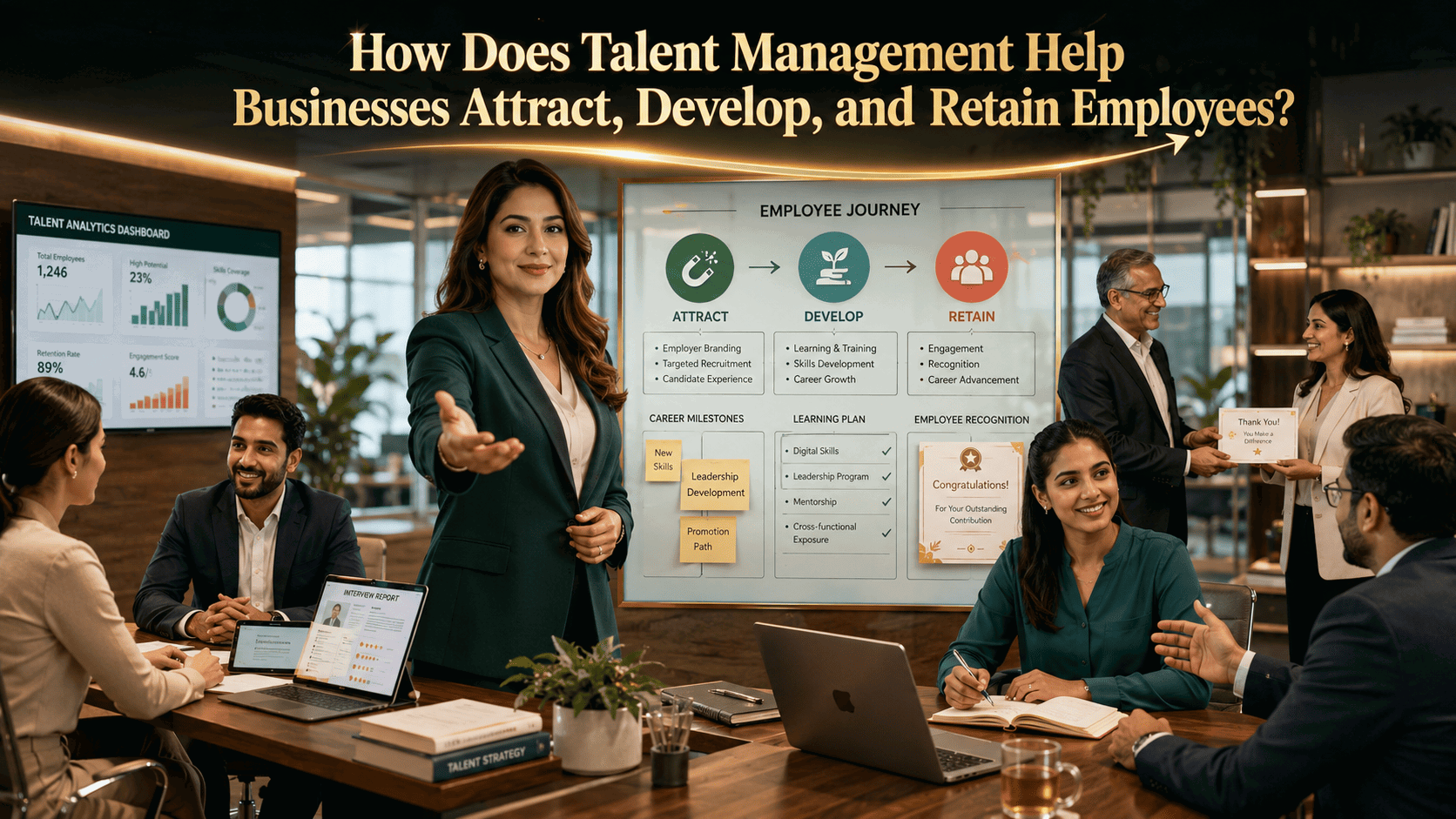
Why do some businesses consistently attract skilled professionals while others struggle to keep their best employees? What makes people choose to stay, grow, and contribute for the long term? The answer often comes down to how effectively an organization identifies talent, develops capabilities, supports career growth, and creates an environment where employees can succeed. Talent management is the strategic process of attracting, developing, engaging, and retaining employees whose skills and potential support business objectives. Rather than treating recruitment, training, performance, and retention as separate activities, organizations can connect them into one continuous workforce strategy. In simple terms, effective talent management helps businesses put the right people in the right roles, give them opportunities to improve, recognize their contributions, and prepare future leaders.
What Is Talent Management?
Talent management refers to a coordinated approach to managing an organization's workforce throughout the employee lifecycle. It begins before an employee joins the company and continues through development, performance management, career progression, and succession planning. A strong approach typically includes:
- Workforce planning
- Recruitment and talent acquisition
- Employee onboarding
- Learning and professional development
- Performance management
- Career planning
- Employee engagement
- Leadership development
- Succession planning
- Employee retention
The goal is not simply to hire talented people. Businesses must also create conditions that allow those employees to apply their abilities effectively and see a future within the organization.
Why Is Talent Management Important for Businesses?
A company can have excellent products, technology, and financial resources, but its results ultimately depend on people. A structured workforce strategy helps organizations align employee capabilities with business priorities.
1. Attracting the Right Employees
Competitive hiring begins with understanding what the business actually needs. Organizations can define important skills, establish realistic job requirements, and communicate meaningful career opportunities.Candidates increasingly evaluate employers based on factors such as:
- Career growth
- Workplace flexibility
- Company culture
- Learning opportunities
- Leadership quality
- Recognition and rewards
- Meaningful work
A clear employee value proposition can therefore help companies attract candidates who are both qualified and culturally aligned.
2. Developing Employee Skills
Hiring someone with strong skills does not mean those skills will remain relevant indefinitely. Technology, customer expectations, regulations, and business models continue to change. Organizations can support development through:
- Mentoring and coaching
- Technical training
- Leadership programs
- Cross-functional projects
- Professional certifications
- Internal learning platforms
- Individual development plans
Continuous development benefits both sides. Employees gain opportunities to advance their careers, while businesses build capabilities internally instead of depending entirely on external hiring.
3. Improving Employee Performance
Performance management becomes more effective when employees understand what success looks like. Clearly defined objectives allow managers and employees to discuss progress using meaningful outcomes rather than vague expectations. Regular feedback can help employees identify:
- What they are doing well
- Where improvement is needed
- Which skills they should strengthen
- How their work contributes to organizational goals
Managers should also distinguish between performance problems caused by capability gaps and those caused by unclear priorities, inadequate resources, or unrealistic workloads.
How Does Talent Management Improve Employee Retention?
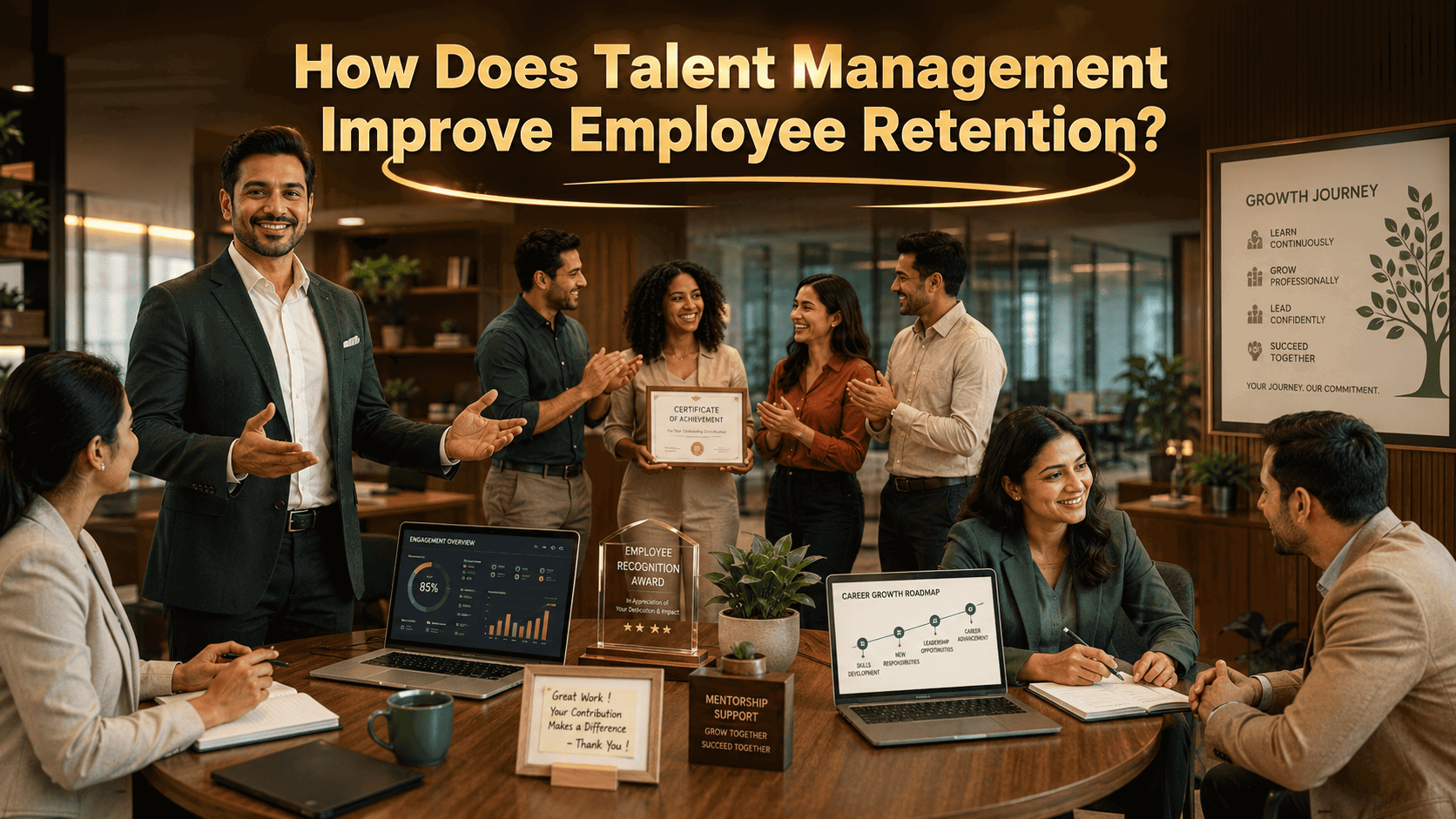
Retention is strongly influenced by whether employees believe they have a future within an organization. Competitive compensation matters, but it is only one part of the equation.Employees are more likely to remain when they experience:
- Fair recognition
- Career progression
- Supportive leadership
- Opportunities to learn
- Reasonable workloads
- Open communication
- A sense of purpose
- Trust and autonomy
Businesses can strengthen retention by conducting regular career conversations instead of waiting for annual reviews. Managers can ask employees about their aspirations, identify potential development paths, and connect employees with relevant opportunities.Retention strategies should also be personalized. A high-performing specialist may want deeper technical responsibility, while an emerging leader may want management experience. Treating both employees identically could limit their growth.
What Role Does Technology Play in Workforce Management?
Modern organizations increasingly use digital tools to improve visibility and coordination across teams. Technology can help managers organize responsibilities, monitor workflows, identify bottlenecks, and make decisions using reliable information.
For example, teams task management tools can help employees understand priorities, deadlines, ownership, and project progress. When responsibilities are clearly assigned, managers can identify workload imbalances and determine whether additional resources or training are required. Technology can also support employee development by bringing performance information, learning resources, goals, and feedback into more connected workflows.
However, technology should support human decision-making rather than replace meaningful conversations between managers and employees.
How Can Businesses Build an Effective Talent Strategy?
Organizations can develop a practical strategy by following these steps:
Step 1: Identify Critical Skills
Determine which capabilities are essential to current operations and future growth. This creates a foundation for hiring and development decisions.
Step 2: Assess Existing Capabilities
Evaluate current employees based on skills, performance, experience, and potential. This can reveal internal strengths as well as capability gaps.
Step 3: Create Development Pathways
Give employees clear opportunities to acquire new skills and progress toward future roles. Development plans should connect individual ambitions with business needs.
Step 4: Strengthen Manager Capability
Managers have a major influence on engagement and retention. Train them to provide constructive feedback, recognize contributions, manage workloads, and conduct productive career conversations.
Step 5: Measure Outcomes
Businesses should track meaningful indicators such as retention, internal mobility, employee development, time-to-productivity, engagement, and succession readiness.
How Can Employee Productivity Be Supported Without Micromanagement?
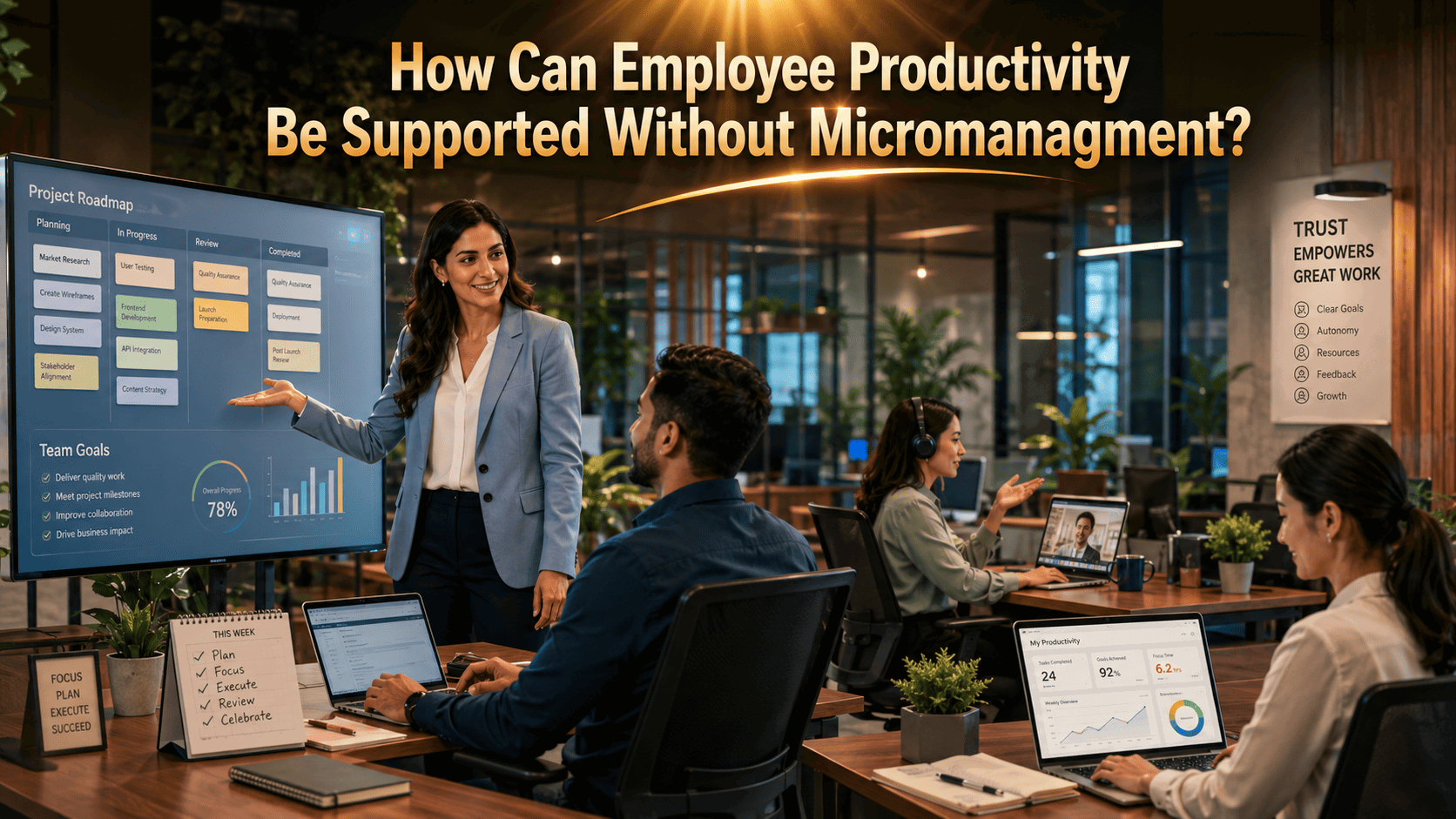
Productivity should be evaluated through outcomes, priorities, quality, and sustainable performance rather than constant observation.For distributed and hybrid teams, employee time tracking software can provide organizations with information about working patterns, project allocation, attendance, or billable activity when those measurements are genuinely relevant. Used responsibly, such tools can support workload planning and operational efficiency.The important factor is transparency. Employees should understand what information is collected, why it is collected, and how it will be used. Technology becomes more effective when it strengthens trust instead of creating unnecessary surveillance.
What Are the Benefits of a Strong Talent Strategy?
A well-designed workforce strategy can contribute to several business outcomes:
- Better hiring: Organizations can target skills that directly support strategic priorities.
- Higher retention: Employees can see clearer opportunities for growth.
- Stronger leadership pipelines: Future leaders can be identified and developed internally.
- Improved workforce agility: Employees can acquire capabilities needed for changing business conditions.
- Better succession planning: Critical roles can have prepared internal successors.
- Greater employee engagement: People are more likely to contribute when they feel supported and valued.
- Lower recruitment costs: Developing internal talent can reduce dependence on repeated external hiring.
Common Challenges Businesses Face
Implementing a workforce strategy is not always straightforward. Common obstacles include inconsistent manager practices, unclear career paths, limited development budgets, poor workforce data, and difficulty connecting individual goals with business objectives. Another challenge is treating every employee as though they have identical motivations. Effective organizations combine consistent principles with personalized development and recognition. Leadership commitment is equally important. If executives prioritize talent only during hiring campaigns but ignore development and retention, the strategy will have limited long-term impact.
You can also watch this video: How To Manage All The Employee Workplace Activities | EmpMonitor How-To Tutorial Series

Summary
Effective talent management is about much more than recruiting skilled employees. It creates a connected approach to attracting capable people, developing their skills, improving performance, preparing future leaders, and encouraging valuable employees to stay. Businesses can strengthen their approach by identifying critical skills, investing in employee development, supporting managers, creating clear career pathways, and using technology responsibly. The strongest strategies balance measurable business outcomes with the human needs of employees.
Frequently Asked Questions
What is the main purpose of talent management?
Its primary purpose is to ensure that an organization can attract, develop, engage, and retain people with the capabilities needed to achieve its business goals.
How does it help employee retention?
It improves retention by providing career opportunities, development, recognition, supportive leadership, and clearer pathways for professional growth.
Is talent management only important for large companies?
No. Small and mid-sized businesses can also benefit because retaining skilled employees and developing internal capabilities can have a significant impact on growth and operational stability.
How can technology support it?
Technology can organize workforce information, track goals and progress, support learning, improve project coordination, and provide insights for workforce planning. Its use should remain transparent and appropriate to the business need.
