How Does Time Management Help Employees Meet Deadlines?
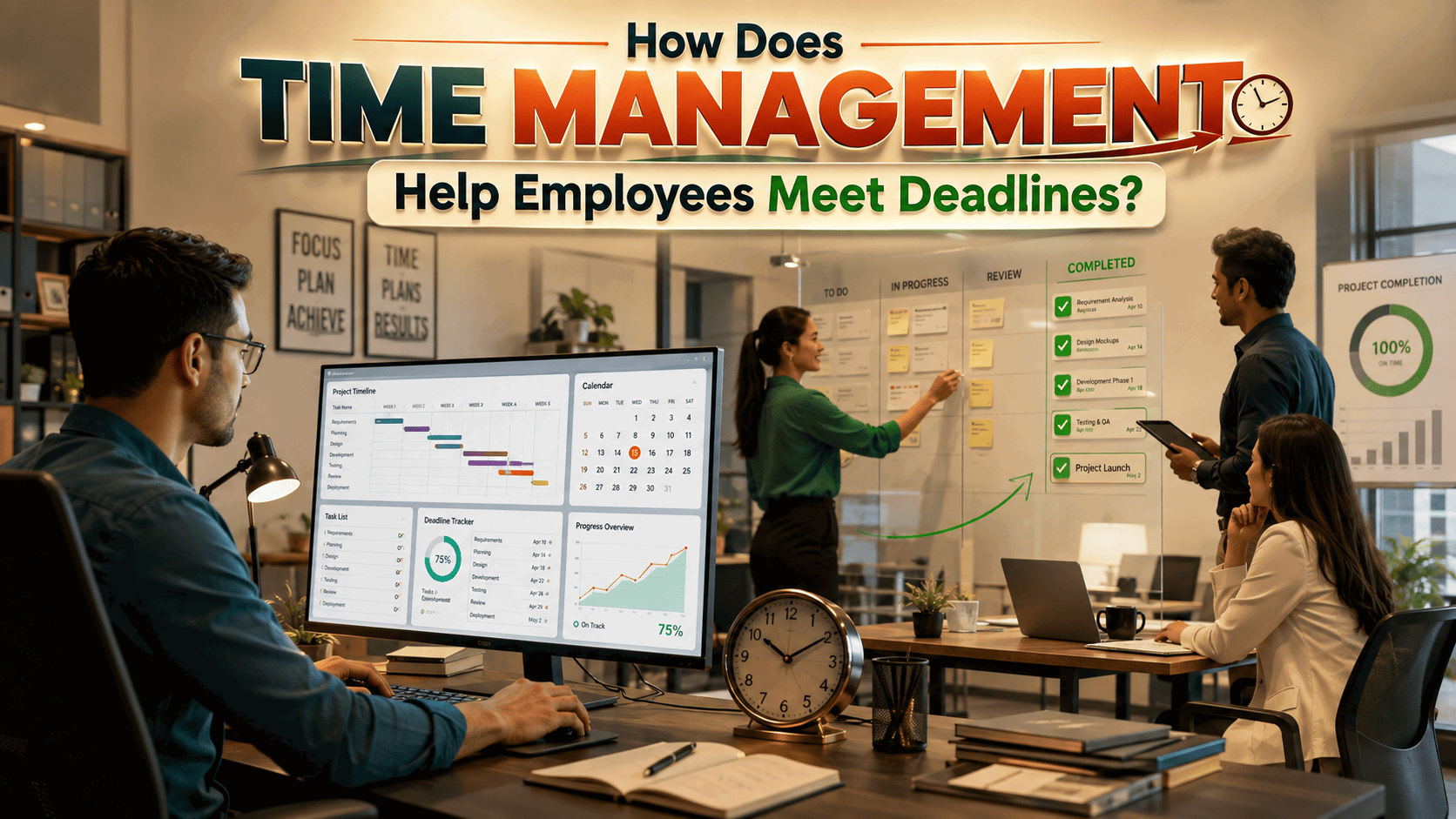
Are missed deadlines slowing down your team, increasing workplace stress, or affecting project results? Time management is one of the most practical ways employees can complete important work on schedule without sacrificing quality. By planning tasks, setting priorities, estimating workloads, and reducing distractions, employees can use their available hours more effectively.In simple terms, good time management helps employees understand what needs to be done, when it needs to be completed, and how much time should be allocated to each task. This creates a structured workflow and makes it easier to stay focused when several responsibilities compete for attention.For businesses, effective time management can also improve productivity, accountability, collaboration, and overall project performance.
Why Is Time Management Important for Meeting Deadlines?
Deadlines provide employees with clear expectations, but simply knowing a due date is not always enough to Meet Deadlines consistently. Without proper planning, employees may underestimate the time required for complex assignments or spend too much time on low-priority activities. Effective time management helps employees:
- Prioritize urgent and important tasks.
- Break large projects into manageable activities.
- Allocate realistic time for each responsibility.
- Identify potential delays before they become serious problems.
- Reduce unnecessary multitasking.
- Maintain consistent progress throughout a project.
When employees manage their schedules proactively, deadlines become part of a planned workflow rather than a last-minute source of pressure.
How Can Employees Use Time Management to Meet Deadlines?
A structured approach can make deadline management much easier. Employees can follow these practical steps.
1. Prioritize Tasks
Start by identifying which tasks have the greatest impact on current goals. Important or time-sensitive assignments should receive attention before activities that can safely wait.A simple priority system can divide tasks into:
- High priority: Must be completed soon.
- Medium priority: Important but not immediately urgent.
- Low priority: Can be scheduled for later.
This prevents employees from spending valuable time on minor tasks while critical work remains unfinished.
2. Break Large Projects Into Smaller Tasks
Large assignments can feel overwhelming when viewed as one deadline. Breaking them into smaller milestones makes progress easier to measure.For example, instead of treating a report as one task, an employee can divide it into research, outlining, drafting, editing, reviewing, and final submission. Each stage can have its own target date.
3. Estimate Work Time Realistically
Poor time estimates are a common reason projects fall behind schedule. Employees should consider the actual complexity of an assignment, interruptions, meetings, revisions, and unexpected problems.Adding a reasonable buffer can also provide flexibility when something takes longer than expected.
4. Use Calendars and Task Management Tools
Digital calendars, task lists, project management platforms, and time-tracking tools can provide greater visibility into workloads.Employees can use these tools to:
- Set reminders for upcoming milestones.
- Monitor progress.
- Organize recurring responsibilities.
- Identify overloaded schedules.
- Track time spent on different activities.
The goal is not to monitor every minute unnecessarily but to create a clearer understanding of how working hours are being used.
What Are the Best Teamwork Tips for Managing Deadlines?

Individual productivity is only one part of successful deadline management. Projects often depend on several employees completing connected tasks. Some practical teamwork tips include:
- Clearly define responsibilities from the beginning.
- Establish shared milestones instead of relying only on the final deadline.
- Communicate delays as soon as they become apparent.
- Avoid unnecessary meetings that interrupt focused work.
- Keep project information accessible to everyone who needs it.
- Review progress regularly without creating excessive reporting requirements.
Clear communication is especially important when one person's unfinished task can prevent another employee from moving forward. Teams that communicate early can redistribute workloads, adjust priorities, and solve problems before they affect the final delivery date.
How Can Managers Help Employees Manage Their Time?
Managers also have an important role in creating conditions where employees can work efficiently. Unrealistic workloads, unclear priorities, constantly changing requirements, and excessive interruptions can make even strong time-management habits difficult to maintain. Managers can support employees by:
- Setting clear expectations and priorities.
- Providing realistic deadlines based on workload.
- Identifying resource or skill gaps early.
- Reducing unnecessary administrative tasks.
- Encouraging employees to raise concerns about workload.
- Reviewing progress before a deadline becomes critical.
A healthy workplace should focus on sustainable productivity rather than simply encouraging employees to work faster.
How Does Time Management Reduce Workplace Stress?
Poor time management often creates a cycle of procrastination, rushed work, longer hours, and increased stress. Effective planning can interrupt this cycle by giving employees a clearer path from the beginning of an assignment to its completion. When work is divided into manageable steps, employees are less likely to face a large amount of unfinished work immediately before the deadline. Better planning can also create room for reviews and corrections, which improves the quality of the final result. Over time, these habits can build greater confidence because employees know what they need to accomplish and have a realistic plan for doing it.
What Is the Role of Employee Relations in Deadline Management?

Strong Employee Relations can indirectly support better deadline performance by encouraging open communication between employees and management. When employees feel comfortable discussing workload challenges, unclear instructions, or resource limitations, managers can address problems earlier. This reduces the likelihood that employees will silently struggle until a deadline is missed. A supportive workplace also encourages accountability without turning every missed deadline into a blame-focused conversation. The objective should be to understand why the delay occurred, correct the underlying issue, and improve future planning.
Best Practices for Consistently Completing Work on Time
Employees and managers can use these practices as a simple framework:
- Start important work early.
- Set milestones before the final due date.
- Eliminate avoidable distractions.
- Focus on one high-priority task at a time.
- Review progress regularly.
- Communicate potential delays immediately.
- Leave buffer time for unexpected issues.
- Learn from previous projects and improve future estimates.
Consistency matters more than occasional bursts of productivity. A reliable system makes it easier to maintain performance across multiple projects.
You can also watch this video: How To Manage & Monitor Employees Working In Multiple Shift | EmpMonitor Shift Management
Summary
Effective time management helps employees organize priorities, estimate workloads, reduce distractions, and maintain steady progress. When employees combine realistic planning with clear communication and appropriate productivity tools, they can Meet Deadlines more consistently while reducing unnecessary workplace stress.For organizations, supporting these habits requires more than simply assigning due dates. Managers should provide realistic workloads, clear priorities, useful tools, and an environment where employees can communicate challenges early. The result is a more predictable workflow, better collaboration, and stronger overall performance.
Frequently Asked Questions
What is the best way to manage a tight deadline?
Prioritize the most important tasks, divide the project into smaller steps, remove unnecessary distractions, and establish short milestones leading to the final due date.
How does prioritization help with deadlines?
Prioritization ensures that limited working time is directed toward tasks with the greatest urgency and business impact, reducing the risk of critical work being delayed.
Can time management improve employee productivity?
Yes. Effective time management helps employees spend more time on high-value activities, reduce avoidable interruptions, and create a more organized workflow.
Why do employees miss deadlines?
Common causes include unclear expectations, unrealistic workloads, poor prioritization, distractions, inaccurate time estimates, unexpected obstacles, and insufficient communication.
How can managers prevent missed deadlines?
Managers can establish clear priorities, set realistic expectations, monitor project progress, provide necessary resources, and encourage employees to communicate potential delays early.
