How to Create an Employee Development Plan That Supports Career Growth
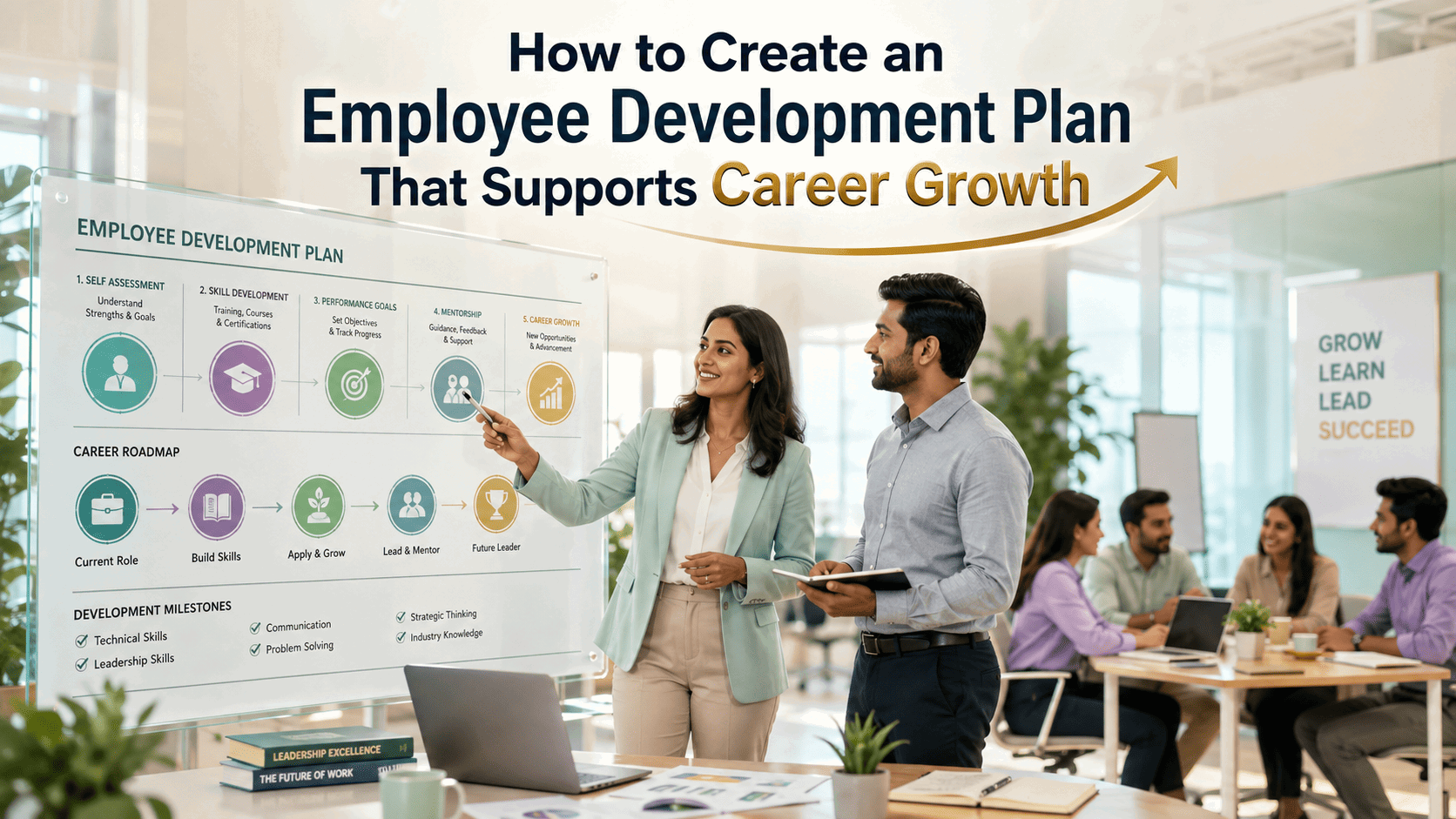
What does it take to help employees grow while keeping their skills aligned with business goals? A well-designed employee development plan gives organizations a practical way to identify career goals, strengthen capabilities, close skill gaps, and prepare employees for future responsibilities. In simple terms, an employee development plan is a structured roadmap that connects an employee's current abilities with their career aspirations and the skills they need to progress. It typically includes specific goals, learning activities, timelines, resources, and ways to measure progress. For businesses, the goal is not simply to train employees. It is to create continuous opportunities for people to become more capable, confident, productive, and prepared for their next career step.
What Is an Employee Development Plan?
An employee development plan is a documented strategy for improving an employee's professional skills, knowledge, performance, and career readiness.
A strong plan usually identifies:
- Current strengths and capabilities
- Areas requiring improvement
- Short- and long-term career goals
- Skills needed for future roles
- Training and learning opportunities
- Mentorship or coaching requirements
- Measurable milestones
- A timeline for reviewing progress
Rather than treating development as a one-time training exercise, organizations can use the plan as an ongoing framework for meaningful career conversations.
Why Is Employee Development Important for Career Growth?
Career development benefits both employees and employers. Employees gain clearer direction, while businesses build stronger internal talent pipelines. Effective development initiatives can help organizations:
- Improve employee engagement: People are more likely to remain motivated when they can see opportunities to learn and advance.
- Close skill gaps: Targeted learning helps employees develop capabilities that the organization currently needs.
- Strengthen retention: Employees who believe their employer supports career growth may be more likely to pursue long-term opportunities within the company.
- Build future leaders: Development programs can prepare high-potential employees for supervisory and leadership positions.
- Improve performance: Relevant training and coaching can help employees perform their responsibilities more effectively.
Career growth should therefore be treated as a continuous process rather than something discussed only during annual performance reviews.
How to Create an Employee Development Plan
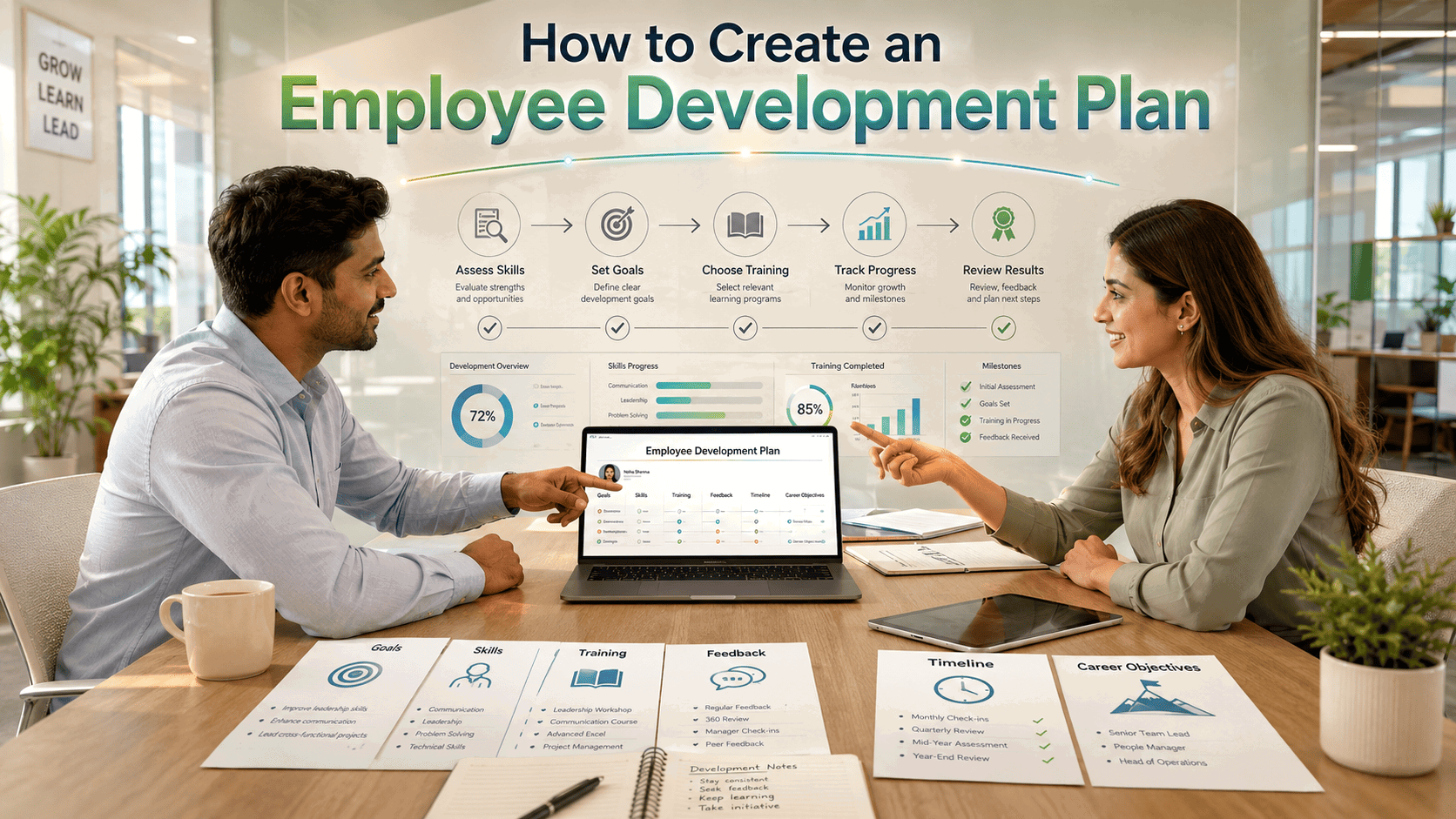
Creating an effective development roadmap does not have to be complicated. The following steps provide a practical starting point.
1. Assess Current Skills and Performance
Begin by understanding where the employee currently stands. Managers can review performance results, responsibilities, existing skills, feedback, and previous accomplishments.The assessment should be balanced. It should identify strengths worth developing as well as genuine skill gaps that may prevent future progress.
2. Define Clear Career Goals
Next, discuss where the employee wants to go.Career goals could involve:
- Moving into a leadership role
- Developing technical expertise
- Taking responsibility for larger projects
- Improving communication skills
- Transitioning into another department
- Preparing for a specialized position
Goals should be specific enough to guide action and realistic enough to remain achievable.
3. Identify the Required Skills
Once the destination is clear, determine which competencies are necessary to reach it. For example, an employee preparing for a management position may need stronger abilities in delegation, conflict resolution, strategic planning, communication, and decision-making. This step turns a general career ambition into a practical development pathway.
4. Select Appropriate Development Activities
Not every skill requires a formal course. Effective development can happen through several channels. Consider combining:
- Online courses and certifications
- Workshops and seminars
- Mentoring
- Coaching
- Job shadowing
- Cross-functional projects
- Stretch assignments
- Peer learning
- Leadership opportunities
A combination of learning methods often creates a more practical experience than relying exclusively on classroom training.
5. Establish Measurable Milestones
Goals become more useful when progress can be evaluated. Instead of saying, "Improve leadership skills," define a measurable objective such as completing a leadership course, leading a project, or receiving structured feedback from team members. A performance tracker for employees can also help managers monitor relevant progress indicators, completed objectives, project outcomes, and development milestones without relying entirely on memory or informal observations. The purpose of tracking should be to support development conversations—not to create unnecessary pressure or excessive supervision.
How Should Managers Support Employee Development?
Creating a plan is only the beginning. Managers play an important role in turning development goals into real progress.Regular one-to-one conversations can help managers:
- Review completed learning activities
- Discuss obstacles
- Adjust unrealistic goals
- Provide constructive feedback
- Recognize improvements
- Identify new opportunities
- Connect employees with mentors or resources
Managers should also give employees ownership of their development. When individuals participate in choosing their goals and learning activities, development becomes a collaborative process rather than an instruction imposed from above.
How Can Technology Improve Employee Development?
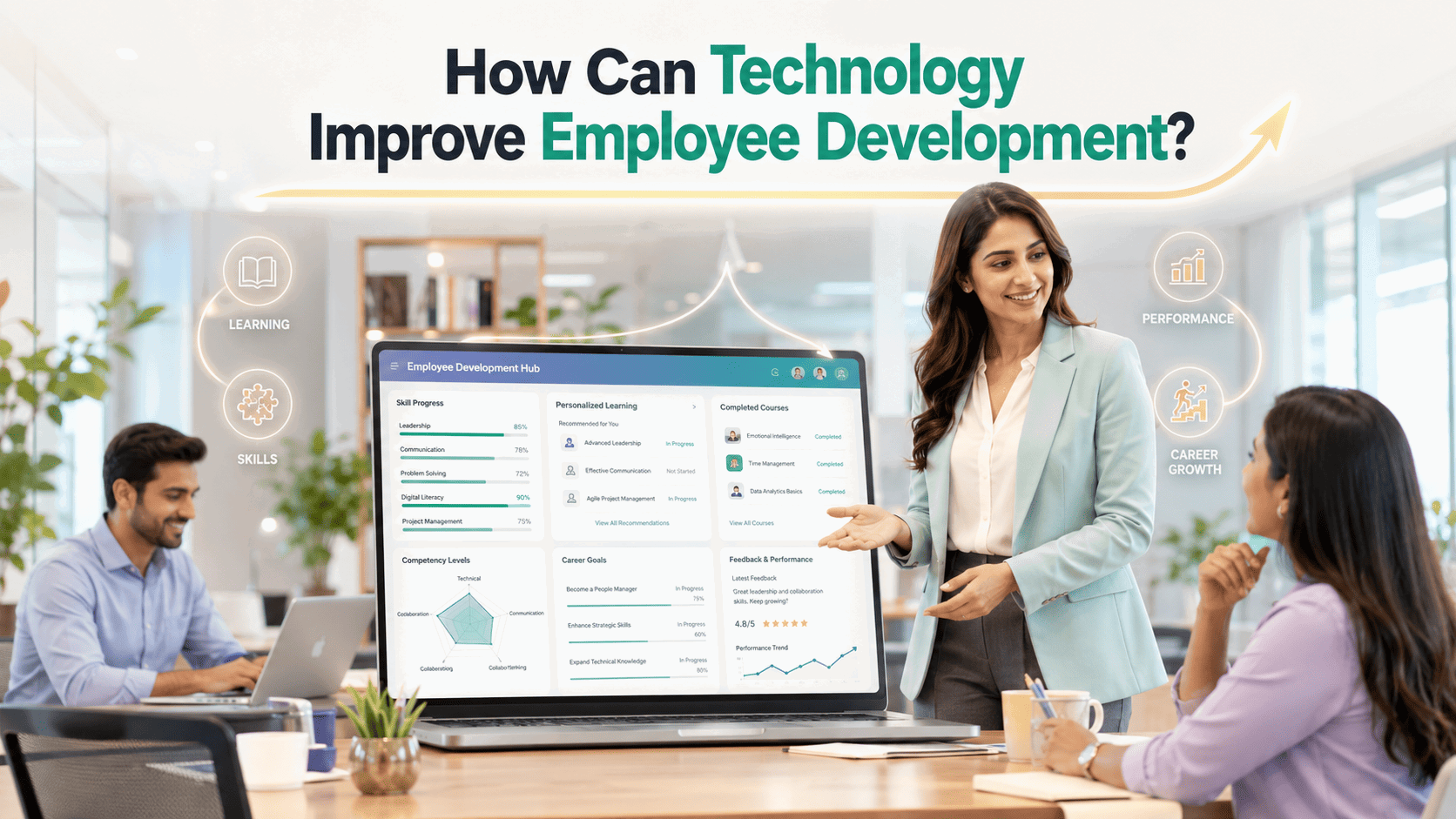
Technology can make development more organized by bringing goals, performance information, learning activities, and progress reviews into a consistent workflow. However, technology should support—not replace—human judgment. Employee Monitoring can be appropriate when organizations need visibility into work patterns, productivity indicators, or compliance-related activities, but it should be implemented transparently and responsibly. Employees should understand what information is collected, why it is collected, and how it relates to legitimate workplace objectives. For development purposes, the most valuable approach is to use workplace data as one source of insight alongside manager feedback, employee self-assessments, project results, and career discussions.
What Makes an Employee Development Strategy Effective?
An effective development strategy should be:
- Personalized: Goals should reflect the employee's role, abilities, interests, and aspirations.
- Measurable: Progress should be connected to observable outcomes.
- Flexible: Plans should evolve as business priorities and career interests change.
- Practical: Development activities should provide opportunities to apply new skills.
- Collaborative: Employees and managers should contribute to goal setting.
- Continuous: Development should happen throughout the year rather than only during reviews.
Organizations should also review development outcomes regularly. If a training activity does not produce meaningful improvement, managers can modify the approach instead of continuing with an ineffective method.
Common Mistakes to Avoid
Even well-intentioned development programs can fail when organizations overlook practical details.
Avoid:
- Setting vague goals
- Creating identical plans for every employee
- Focusing only on weaknesses
- Offering training without opportunities to apply it
- Ignoring employee career interests
- Measuring activity instead of meaningful outcomes
- Waiting until annual reviews to discuss progress
- Treating development as solely the employee's responsibility
The strongest programs combine employee ambition with organizational needs.
You can also watch this video: How to Manage Employee Reports | EmpMonitor How-To Tutorial Series
Summary
An employee development plan provides a structured path for connecting individual career ambitions with organizational growth. By assessing skills, defining clear goals, selecting relevant learning opportunities, establishing measurable milestones, and reviewing progress regularly, businesses can create a stronger culture of continuous development.The most effective approach is human-centered: technology and performance data can provide useful insights, but meaningful conversations, coaching, feedback, and opportunities to apply new skills remain essential. When employees can see a realistic path forward, development becomes more than training—it becomes a foundation for long-term career growth and organizational success.
Frequently Asked Questions
What is the main purpose of an employee development plan?
Its main purpose is to identify an employee's career goals and create a practical roadmap for developing the skills and experience needed to achieve them.
How often should development plans be reviewed?
A quarterly review is a practical starting point, although managers can check progress more frequently when employees are working toward short-term goals or major role changes.
Who is responsible for employee development?
Both managers and employees share responsibility. Employees should actively participate in their growth, while managers should provide guidance, feedback, resources, and opportunities.
What should be included in a development plan?
Common elements include career goals, current skills, skill gaps, learning activities, development resources, measurable milestones, timelines, and review dates.
