Is Live Screen Monitoring Software Worth It for Remote and Hybrid Teams?
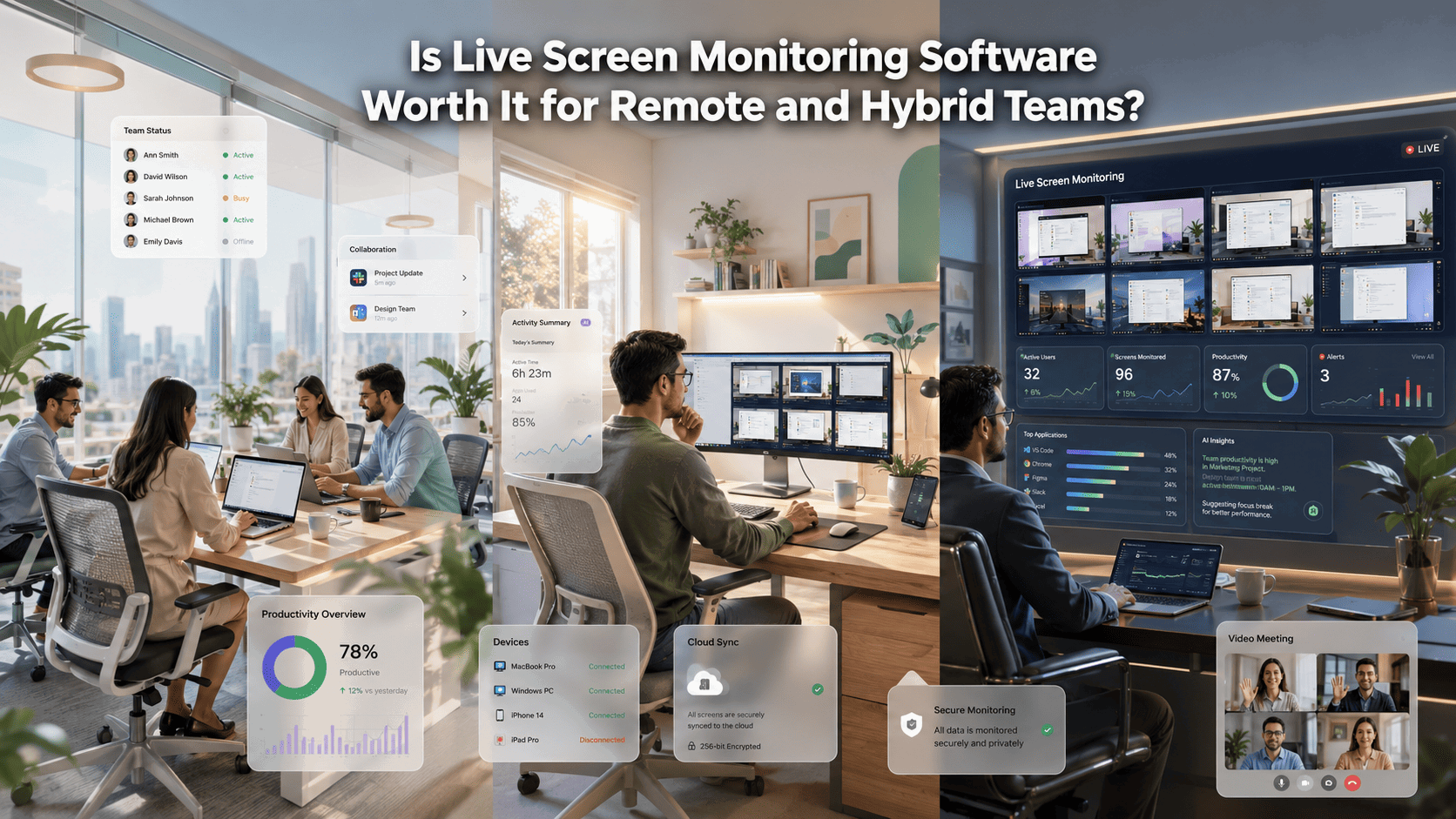
As remote and hybrid work become the standard for many organizations, managers often face one important question: How can they maintain visibility without disrupting employee trust? The answer lies in using monitoring solutions that provide real-time insights while promoting transparency and accountability. For businesses that manage distributed teams, screen monitoring helps supervisors understand workflows, identify productivity challenges, and respond quickly to operational issues. When implemented with clear policies and employee awareness, it becomes a valuable management tool rather than a surveillance mechanism.
What Is Live Screen Monitoring?
Live screen monitoring software allows authorized managers to view employee computer screens in real time. Unlike periodic screenshots, this approach provides an instant overview of ongoing activities, making it easier to support employees, improve operational efficiency, and address issues before they affect productivity. Common capabilities include:
- Real-time screen viewing
- Multi-device monitoring
- Activity dashboards
- Application and website visibility
- Productivity reports
- Role-based access controls
- Audit logs for compliance
The goal is not to micromanage employees but to create greater operational transparency while supporting business performance.
Why Do Businesses Use live screen monitoring software?
Organizations adopt live screen monitoring software to improve oversight without requiring managers to constantly check in with employees. Instead of relying on assumptions, supervisors gain accurate, real-time information that helps them make informed decisions.
Key business benefits include:
- Better visibility across distributed teams
- Faster identification of workflow bottlenecks
- Improved customer service response
- Enhanced compliance monitoring
- Stronger protection of confidential information
- More effective coaching opportunities
When employees know expectations are clearly communicated, monitoring often encourages better work habits rather than creating unnecessary pressure.
Essential Features to Look For
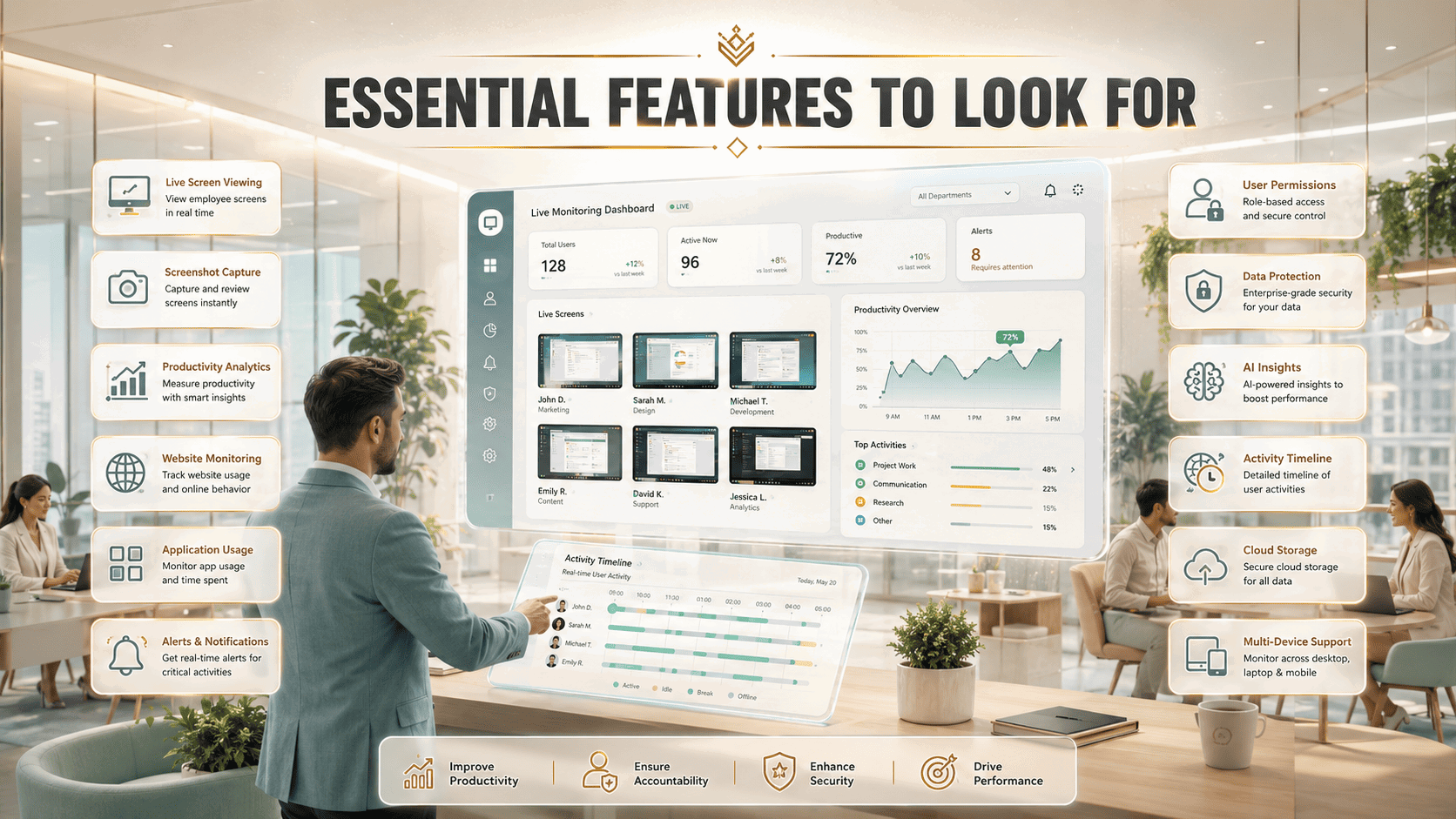
Not every monitoring solution offers the same capabilities. Before selecting a platform, organizations should evaluate features that directly support their operational goals.
Real-Time Screen Visibility
Managers should be able to monitor multiple screens simultaneously through an intuitive dashboard without affecting employee performance.
Productivity Insights
Detailed reports help identify trends instead of focusing on isolated incidents. These insights reveal:
- Productive work patterns
- Idle time
- Application usage
- Website activity
- Team performance metrics
Security and Compliance
Modern solutions should include:
- Data encryption
- Permission-based access
- Activity logging
- Secure storage
- Compliance support for industry regulations
Easy Deployment
Cloud-based deployment, minimal system requirements, and centralized administration reduce implementation complexity.
How Does Screen Monitoring Improve Remote Team Management?
Managing remote employees presents challenges that traditional office environments rarely experience. Screen monitoring helps organizations:
- Provide faster assistance during technical issues.
- Improve project visibility.
- Detect workflow interruptions early.
- Support quality assurance initiatives.
- Reduce operational inefficiencies.
- Strengthen accountability across departments.
Managers spend less time requesting status updates because they already have reliable operational insights.
Balancing Productivity with Employee Privacy
One of the biggest concerns surrounding workplace monitoring is privacy. Successful organizations focus on transparency by:
- Informing employees about monitoring practices.
- Explaining business objectives.
- Limiting monitoring to work-related activities.
- Following applicable privacy regulations.
- Restricting access to authorized personnel.
When employees understand why monitoring exists, acceptance is typically much higher.
How Does It Compare with Other Workforce Management Tools?
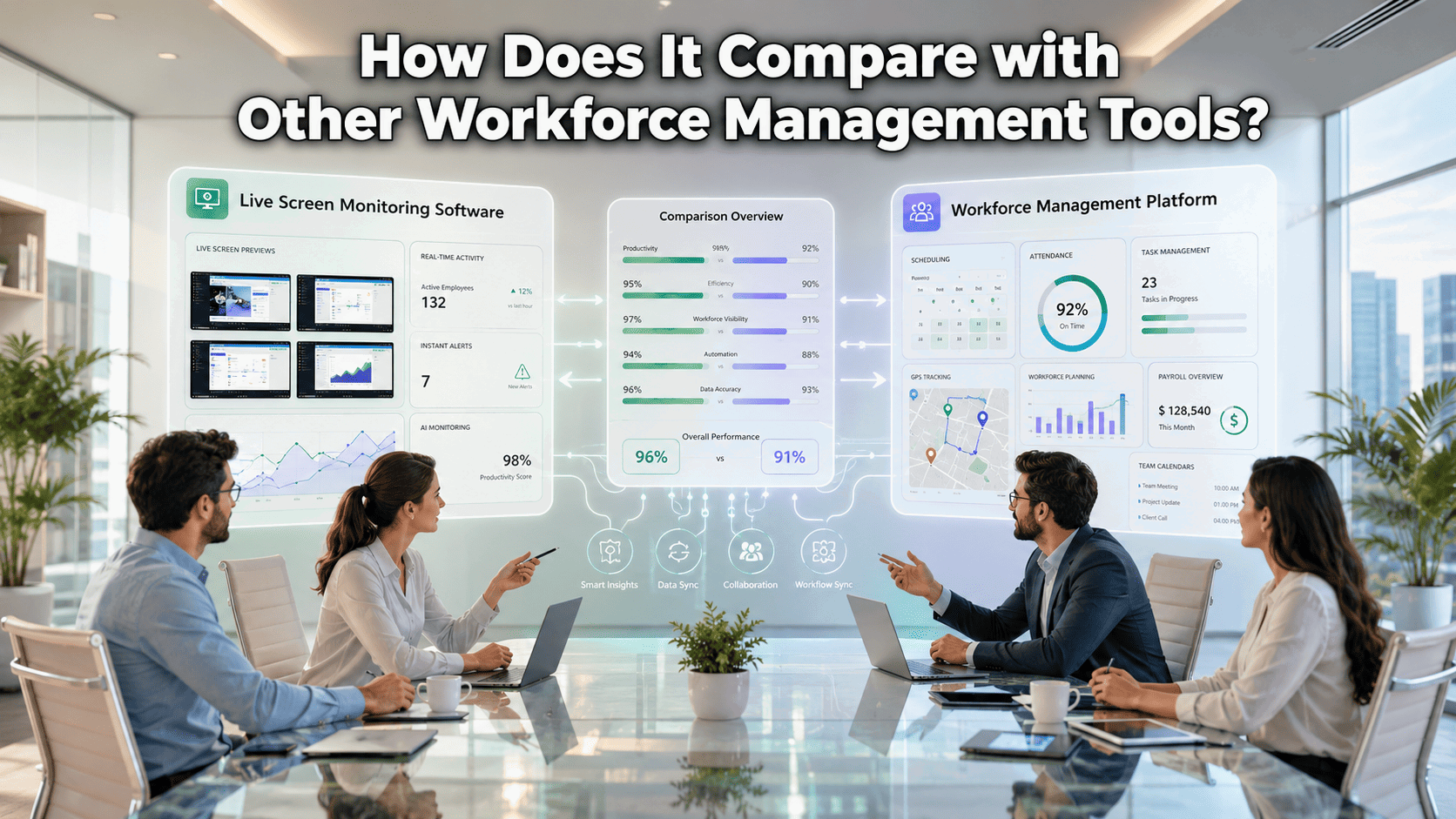
Many organizations combine monitoring with broader workforce management platforms to gain a complete picture of employee performance.
For example, employee time tracking software records attendance, work hours, breaks, and project time. While time tracking measures when work is performed, screen monitoring provides visibility into how work is progressing during those hours.
Together, these technologies help organizations improve scheduling, project planning, payroll accuracy, and operational efficiency without relying on manual reporting.
Is It Worth the Investment?
The value depends on business objectives. Screen monitoring is especially beneficial for:
- Remote-first companies
- Hybrid workplaces
- Customer support teams
- IT service providers
- Financial organizations
- Healthcare administration
- Business process outsourcing (BPO)
- Large distributed enterprises
Organizations with compliance requirements or highly collaborative workflows often experience measurable improvements in productivity, accountability, and operational consistency. However, success depends on ethical implementation, transparent communication, and responsible data management.
Best Practices for Successful Implementation
To maximize value, organizations should follow these guidelines:
- Define clear monitoring policies.
- Inform employees before deployment.
- Monitor business activities—not personal behavior.
- Review insights regularly instead of continuously watching screens.
- Use reports for coaching rather than punishment.
- Protect collected data with strong security controls.
- Periodically evaluate monitoring effectiveness.
These practices help create a healthy balance between organizational visibility and employee trust.
You can also watch this video: How to Use Live Screen Monitoring in EmpMonitor | Step-by-Step Guide
Summary
Remote and hybrid work require new approaches to workforce management. Live screen monitoring software provides organizations with real-time operational visibility, enabling managers to support employees, improve productivity, strengthen security, and make informed decisions. When implemented transparently and ethically, it becomes a valuable business tool that benefits both employers and employees by promoting accountability, efficiency, and collaboration.
Frequently Asked Questions
Is live screen monitoring legal?
Yes. In many regions, it is legal when employers follow applicable labor and privacy laws, clearly communicate monitoring practices, and use the software for legitimate business purposes.
Does screen monitoring reduce employee productivity?
When implemented transparently, it often improves productivity by increasing accountability, identifying workflow issues, and enabling faster support.
Can employees know they are being monitored?
Responsible organizations inform employees about monitoring policies, ensuring transparency and maintaining workplace trust.
Which businesses benefit the most?
Remote teams, hybrid workplaces, customer support centers, IT organizations, financial institutions, healthcare providers, and enterprises with compliance requirements often gain the greatest value.
What should businesses consider before choosing a solution?
Evaluate real-time visibility, reporting capabilities, security features, ease of deployment, scalability, compliance support, and integration with existing workforce management systems.
