What Are the Benefits of Workplace Flexibility for Employees and Employers?
What if employees could have more control over when, where, and how they work without reducing productivity? Could businesses actually improve performance by giving their workforce greater freedom? Flexible working arrangements allow organizations to adapt working patterns around employee needs while still maintaining clear goals, accountability, and business priorities. In simple terms, flexible work means giving employees reasonable choices around schedules, locations, or working patterns. Depending on the organization, this may include remote work, hybrid schedules, flexible hours, compressed workweeks, or adjusted start and finish times. When implemented thoughtfully, these options can support employee satisfaction while helping businesses attract talent, maintain productivity, and respond to changing workforce expectations.
What Are the Main Benefits of Workplace Flexibility?
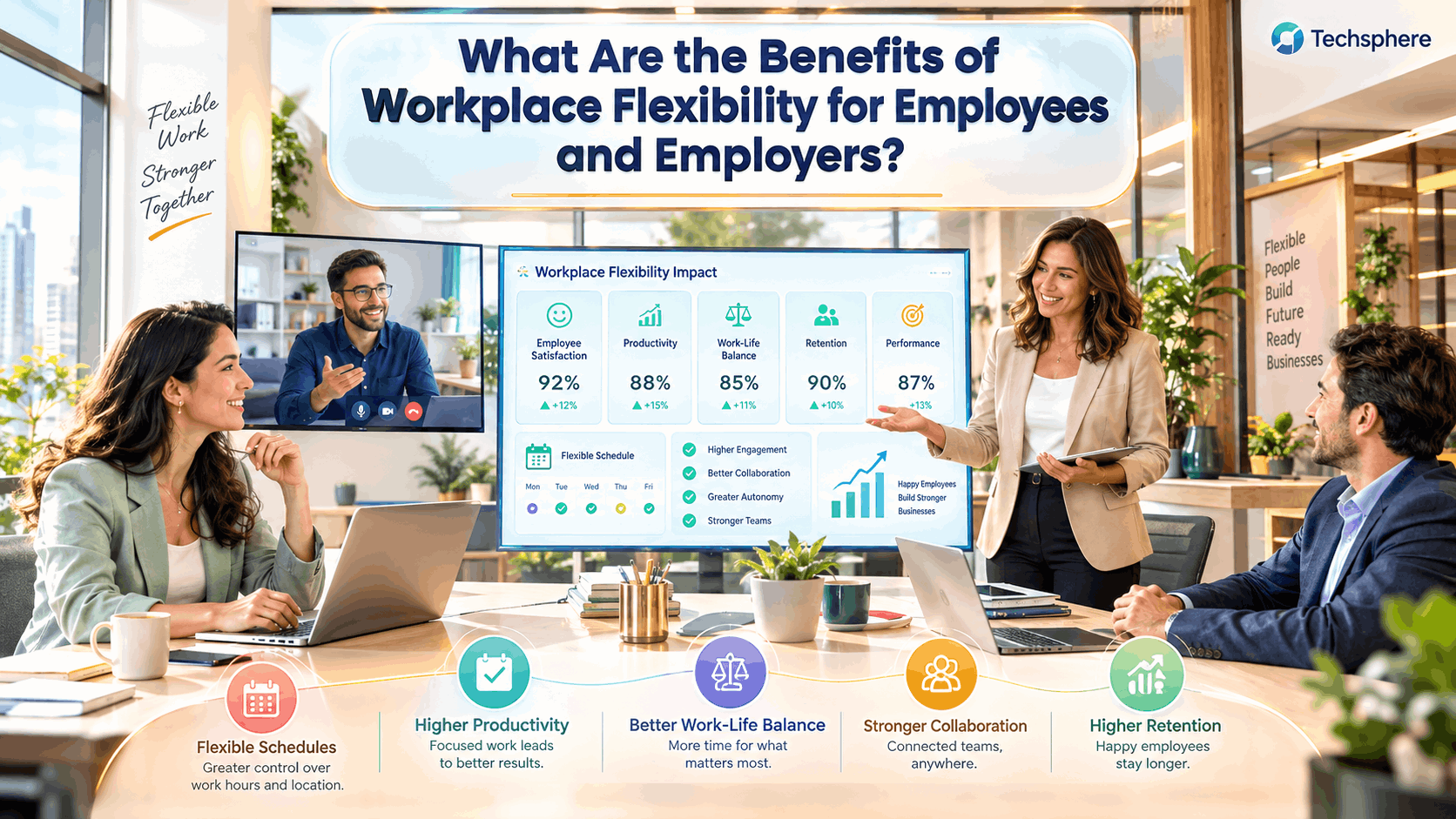
The biggest advantage of workplace flexibility is that it can create a better balance between employee needs and organizational objectives. Instead of treating every employee's working pattern identically, businesses can provide suitable options while maintaining consistent performance expectations. Key benefits include:
- Better work-life balance: Employees can manage personal responsibilities more effectively.
- Higher employee satisfaction: Greater control can improve the overall work experience.
- Improved productivity: Employees may perform better when working during their most productive hours.
- Stronger talent attraction: Flexible arrangements can make job opportunities more appealing.
- Lower employee turnover: Greater autonomy can contribute to stronger employee retention.
- Broader talent access: Remote and hybrid options can help companies recruit beyond traditional geographic boundaries.
These benefits are strongest when flexibility is supported by clear policies rather than informal or inconsistent arrangements.
How Does Flexible Work Improve Employee Productivity?
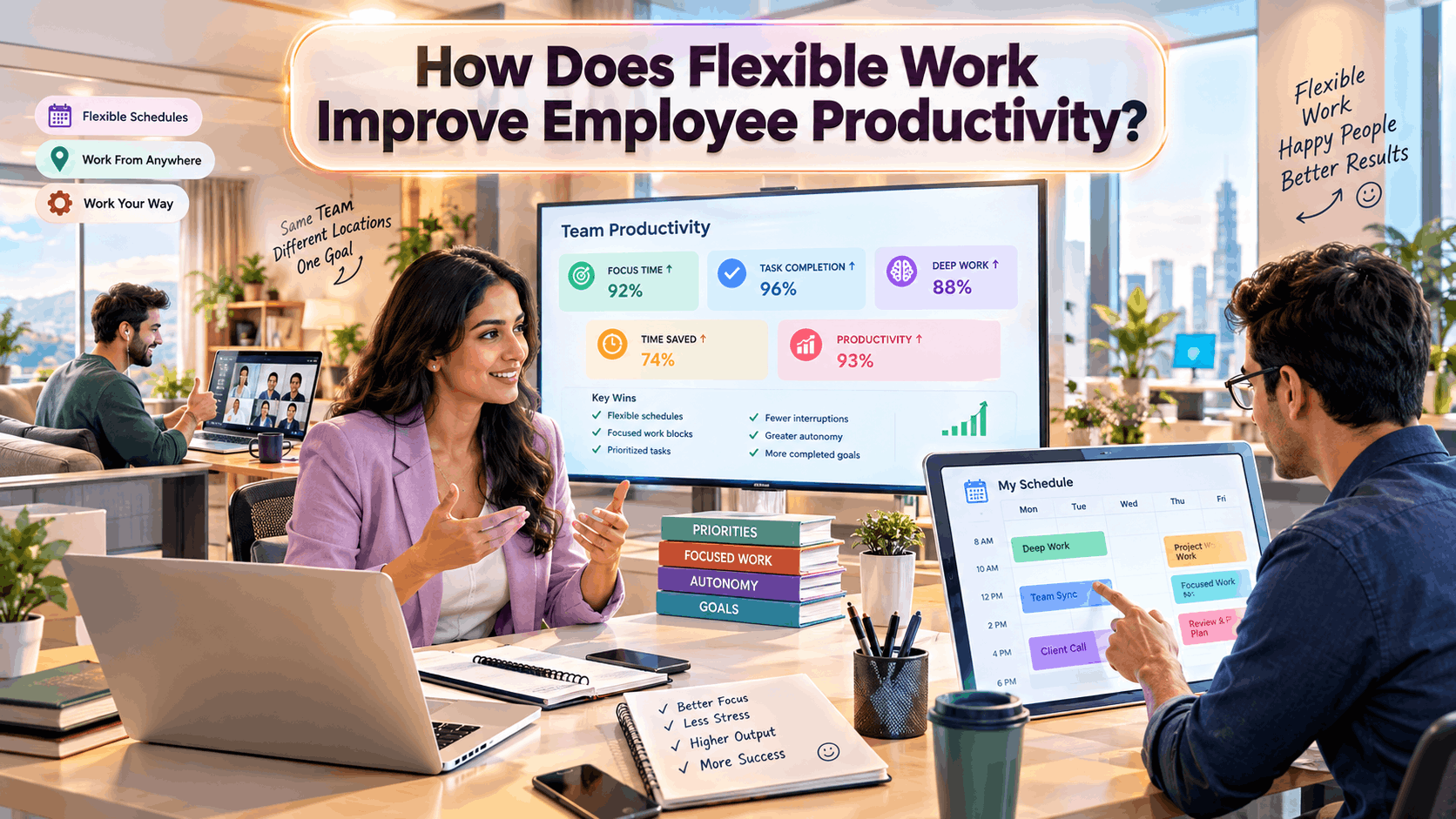
Flexibility does not mean removing accountability. Instead, it changes how work is organized while keeping attention on measurable outcomes.For example, an employee who performs highly in the morning may benefit from starting earlier, while another employee may be more productive later in the day. Allowing reasonable scheduling choices can help employees align their working hours with periods of stronger concentration.Managers can support productivity by establishing:
- Clear responsibilities and deadlines.
- Defined availability expectations.
- Measurable performance objectives.
- Regular progress reviews.
- Appropriate communication channels.
- Consistent policies across teams.
Technology also plays an important role. Project management platforms, collaboration tools, time-tracking systems, and performance dashboards can help managers understand progress without relying solely on physical presence.
Why Is Workplace Communication Important in Flexible Teams?
Flexible working arrangements can succeed only when workplace communication between employees and managers is clear and effective. When people work from different locations or schedules, misunderstandings can occur if responsibilities, deadlines, and expectations are unclear. Strong communication practices should include:
- Clearly documented responsibilities.
- Regular team check-ins.
- Shared project updates.
- Defined response-time expectations.
- Centralized access to important information.
- Appropriate use of email, messaging, video meetings, and collaboration platforms.
Managers should also avoid excessive meetings. A flexible team needs communication that keeps people aligned without creating unnecessary interruptions.Trust is equally important. Employees should understand what is expected of them, while managers should evaluate performance based on results rather than constant visibility.
How Can Businesses Implement Flexible Work Successfully?
Creating a flexible working environment requires more than allowing employees to work from home. Organizations need a structured approach that considers business requirements, employee roles, technology, security, and team collaboration.A practical implementation process can include:
1. Identify Suitable Work Arrangements
Not every role can use the same working model. Businesses should determine whether each position is better suited to remote, hybrid, flexible-hour, or office-based work.
2. Establish Clear Policies
Employees should know when flexibility is available, how schedules are approved, what availability is expected, and how performance will be evaluated.
3. Set Measurable Goals
Managers should define objectives that can be tracked through completed projects, quality standards, deadlines, customer outcomes, or other relevant metrics.
4. Provide the Right Technology
Employees need reliable collaboration, communication, scheduling, project management, and security tools to work effectively across different locations.
5. Review Performance Regularly
Organizations should monitor whether flexible arrangements are supporting productivity and employee engagement. Policies can then be adjusted based on actual results.
How Does Flexible Work Benefit Employers?
Flexible working arrangements can provide several strategic advantages for employers. Companies may become more attractive to skilled professionals who prioritize autonomy and balance when evaluating job opportunities.Flexibility can also support business continuity. If employees cannot consistently work from a central office because of travel, weather, infrastructure problems, or other disruptions, distributed working arrangements can help maintain operations.Another advantage is more efficient resource planning. Businesses may reduce unnecessary office-space requirements when employees work remotely or follow hybrid schedules. However, savings should not be the only objective. Organizations should balance financial considerations with employee experience, collaboration, security, and operational requirements.
What Role Does a Workforce Management Program Play?
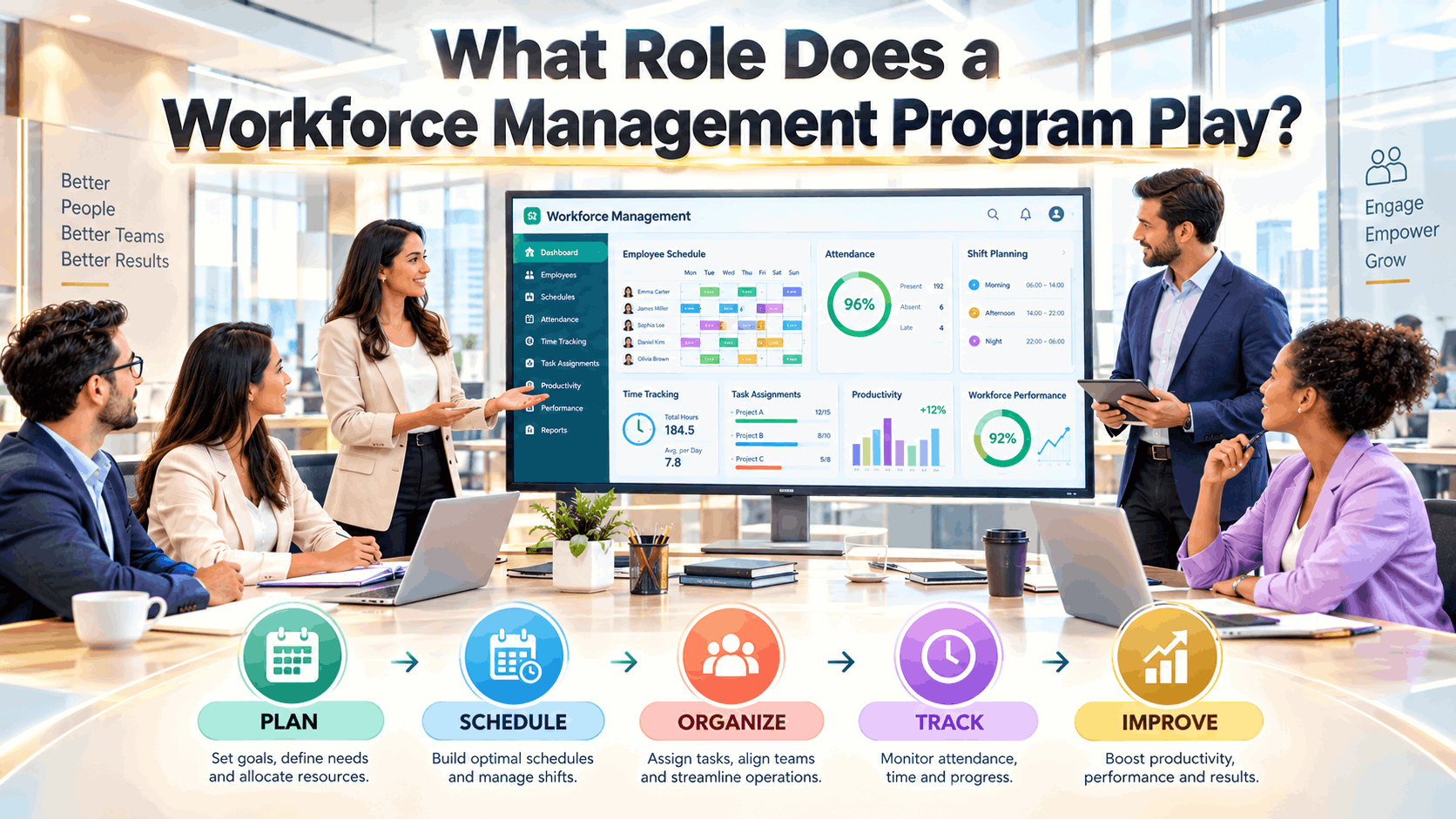
A workforce management program can help organizations coordinate flexible schedules while maintaining visibility into staffing, attendance, workload, and operational requirements. Such a system can support managers by helping them:
- Plan employee schedules.
- Track attendance and working hours.
- Identify staffing gaps.
- Monitor workload distribution.
- Coordinate different shifts.
- Analyze workforce trends.
- Maintain consistent scheduling policies.
The objective should not be to monitor employees unnecessarily. Instead, technology should provide useful operational information while respecting privacy, transparency, and employee trust.
What Are the Challenges of Flexible Working?
Although flexible work offers significant advantages, it can create challenges if poorly managed. Common issues include communication gaps, inconsistent employee availability, scheduling conflicts, reduced social interaction, cybersecurity risks, and difficulty maintaining team cohesion. Businesses can reduce these risks by combining flexibility with:
- Clear expectations.
- Strong documentation.
- Secure technology.
- Regular team interaction.
- Fair policies.
- Manager training.
- Privacy-conscious workforce practices.
The right approach depends on the organization's industry, workforce structure, customer requirements, and operational goals.
You can also watch this video: How To Manage Employee's Workplace Behaviour Analytics? | EmpMonitor How-To Tutorial
Summary
A hybrid meeting can help organizations connect office-based and remote employees while supporting collaboration, flexibility, communication, and productivity. Its effectiveness depends on more than video-conferencing technology; businesses also need inclusive participation, clear agendas, reliable tools, documented decisions, and measurable outcomes.
Frequently Asked Questions
What is the purpose of this type of meeting?
It allows employees working in different locations to participate in the same discussion and work toward shared objectives.
How can it improve productivity?
It can reduce travel, connect distributed employees, simplify communication, and support faster decision-making when meetings are well organized.
What technology is commonly required?
Businesses typically need video-conferencing software, reliable internet, microphones, cameras, screen sharing, and collaborative digital tools.
How can remote employees participate equally?
Managers can share information beforehand, invite remote employees to contribute, prevent side conversations, and document important decisions.
Should every workplace discussion use this format?
No. Some updates are better handled through email, messaging platforms, shared documents, or project-management tools. Meetings are most valuable when real-time collaboration or decision-making is needed.
