What Are the Best Strategies for Insider Threat and Data Loss Prevention?
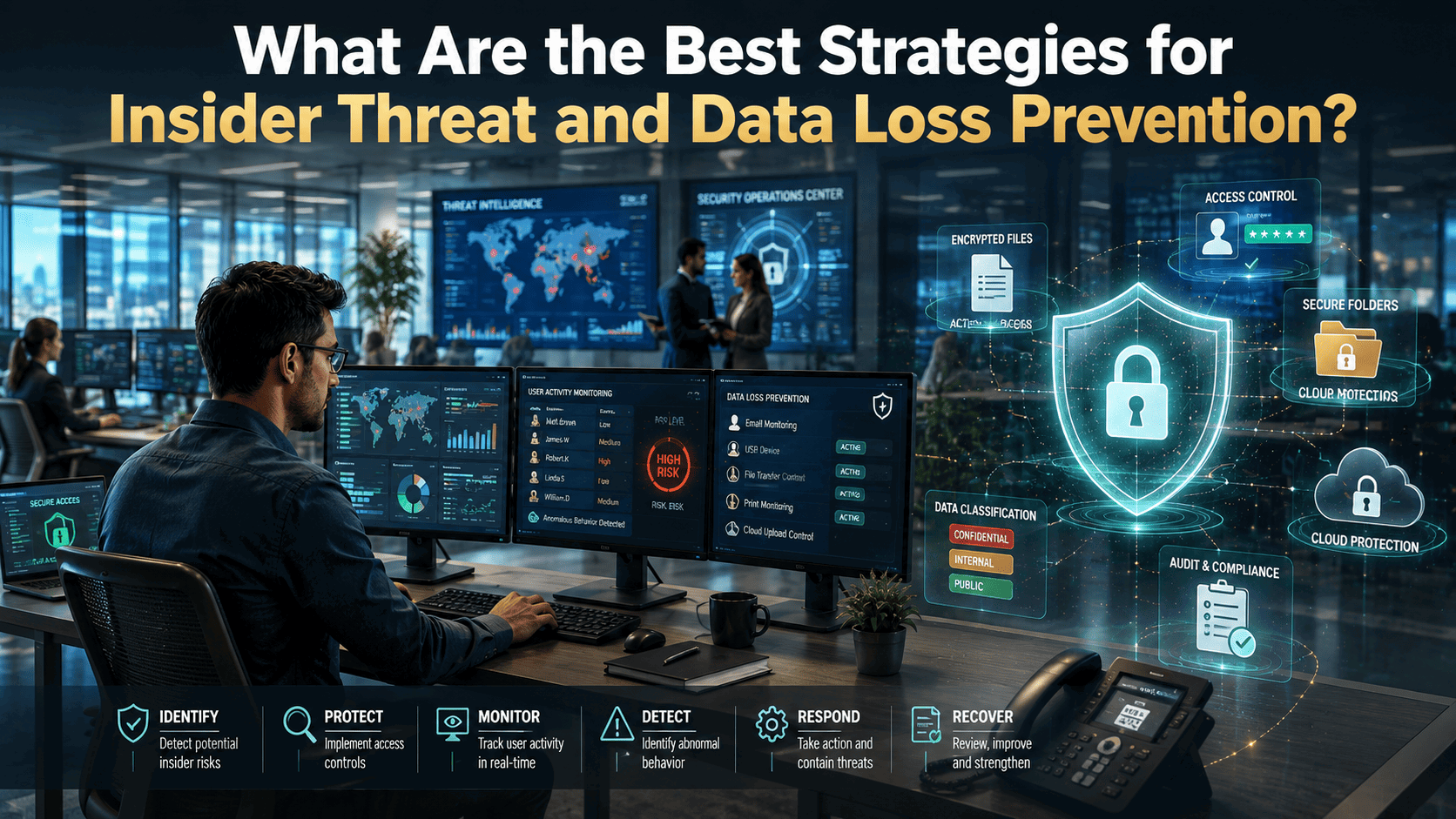
Is it possible that a trusted staff member, an accidental error, or a hacked account could put your organization’s most confidential data at risk? In many cases, the answer is yes. Insider incidents may involve employees, contractors, business partners, or any accounts that already have authorized access to company systems. Insider Threat and Data Loss Prevention work best when organizations combine identity controls, data protection, employee awareness, monitoring, and rapid response. The goal is not simply to watch employees—it is to ensure that sensitive information can only be accessed, used, and transferred in appropriate ways. An effective strategy typically includes:
- Limiting access to sensitive information based on job responsibilities.
- Monitoring unusual account and data activity.
- Applying data loss prevention policies to sensitive files and communications.
- Training employees to recognize security risks.
- Removing access promptly when employees change roles or leave.
- Investigating suspicious behavior without unnecessarily disrupting legitimate work.
What Is an Insider Threat?
An insider threat occurs when someone with authorized access to an organization’s systems or information causes, intentionally or unintentionally, a security incident. Insider threats generally fall into three categories:
1. Malicious insiders
These individuals intentionally steal, alter, or expose information for financial gain, retaliation, competitive advantage, or another motive.
2. Negligent insiders
Employees may accidentally send confidential files to the wrong recipient, use unauthorized cloud storage, or fall for phishing attacks.
3. Compromised insiders
An employee’s legitimate credentials may be stolen by an attacker. The attacker can then use the account to access systems and data while appearing to be a trusted user.Understanding these categories helps security teams create controls that address both intentional and accidental risks.
How Does Data Loss Prevention Reduce Insider Risk?
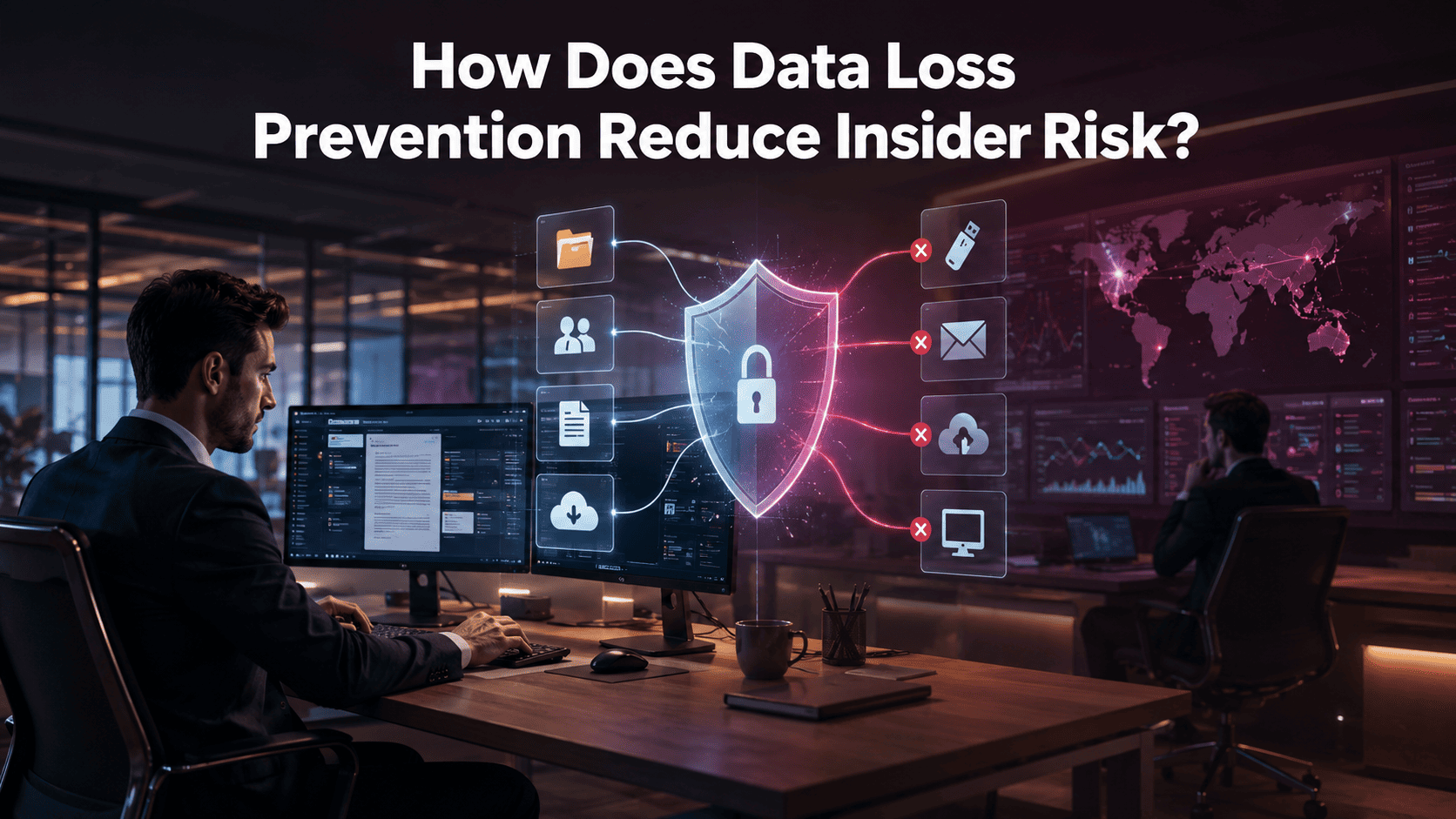
Data Loss Prevention (DLP) focuses on identifying sensitive information and controlling how it is accessed, copied, shared, transferred, or removed from an organization. A well-configured dlp solution can help security teams detect sensitive data leaving approved environments and apply policies based on factors such as file type, content, user role, destination, and activity. Common DLP controls include:
- Blocking unauthorized file transfers.
- Restricting copying to removable storage.
- Detecting sensitive information in emails and documents.
- Preventing uploads to unauthorized applications.
- Alerting security teams when unusual data movement occurs.
- Applying different protection rules to different classifications of information.
However, technology alone is not enough. DLP policies should be supported by clear data-classification standards and well-defined access permissions.
Why Is a Layered Approach More Effective?
No single security technology can identify every insider threat. Access controls may limit exposure, DLP can restrict data movement, behavioral monitoring can identify anomalies, and security awareness can reduce accidental mistakes. Together, these controls create overlapping protection. If one layer fails, another may detect or contain the activity. Organizations should also regularly test their policies. False positives, outdated permissions, poorly configured alerts, and excessive access can weaken an otherwise strong security program.
What Are the Most Effective Strategies for Preventing Insider Threats and Data Loss?
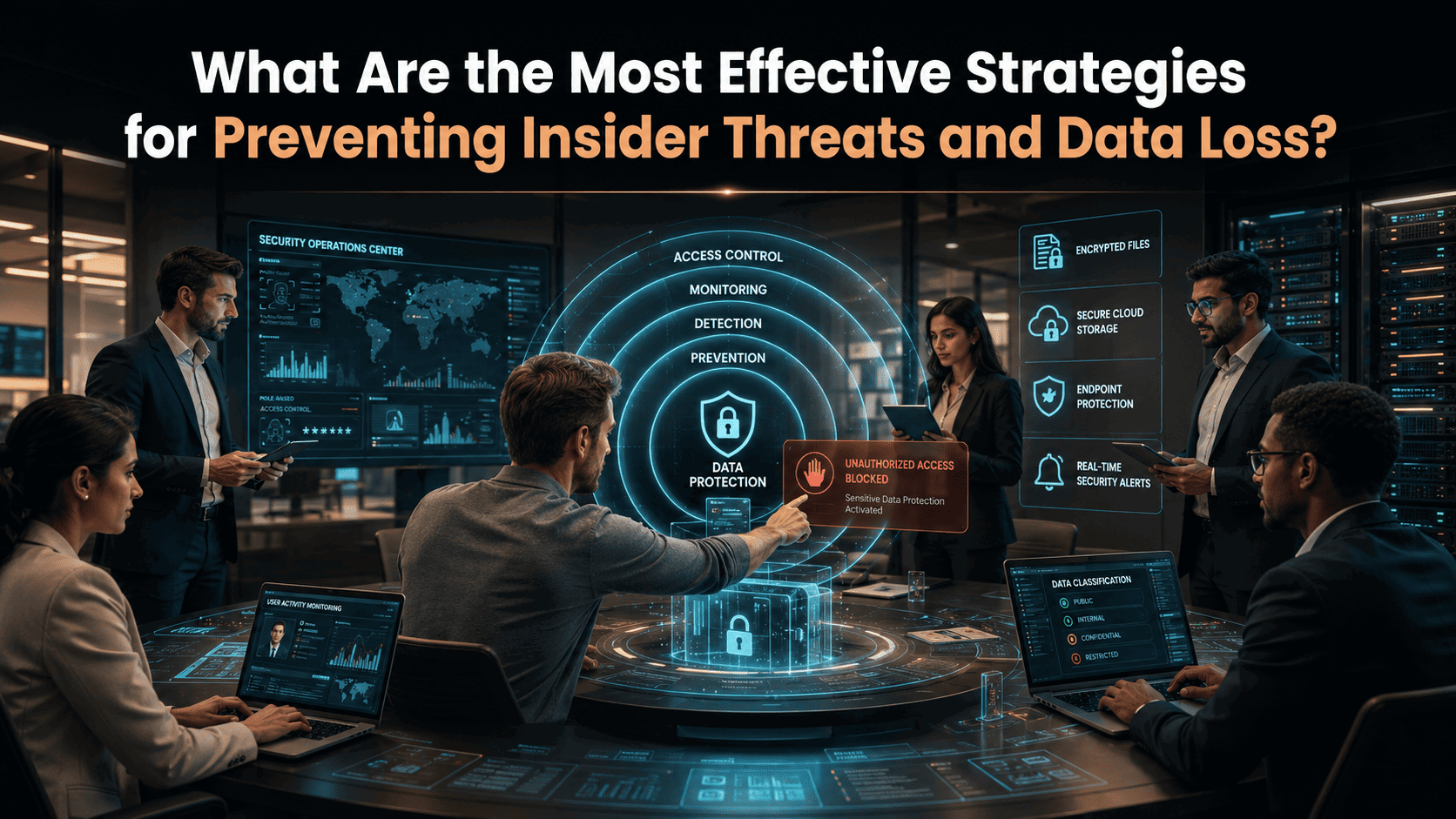
Organizations can build a stronger defense by combining multiple security layers instead of relying on a single tool.
1. Apply least-privilege access
Employees should receive only the permissions required for their responsibilities. Reducing unnecessary access limits the amount of information that can be exposed if an account is misused or compromised. Regular access reviews are also important. Permissions should change when employees move between departments, take on new responsibilities, or no longer require particular resources.
2. Classify and prioritize sensitive data
Not every file requires the same level of protection. Organizations should identify information such as:
- Customer records
- Financial information
- Intellectual property
- Authentication credentials
- Employee information
- Confidential business documents
Once sensitive information is classified, security teams can create more precise protection and monitoring policies.
3. Monitor unusual user behavior
Behavioral monitoring can help identify activity that differs significantly from normal work patterns. Examples include downloading unusually large amounts of information, accessing unfamiliar systems, or repeatedly attempting restricted actions. The objective should be risk detection rather than indiscriminate surveillance. Alerts should provide useful context so security teams can investigate potential threats efficiently.
4. Strengthen employee security awareness
Employees remain an important part of an organization’s security strategy. Regular training should cover phishing, password security, confidential-data handling, removable media, cloud applications, and reporting procedures. Short, practical training sessions are often more useful than generic annual presentations because they connect security requirements to everyday work.
5. Use employee screenshot monitoring responsibly
Employee screenshot monitoring can provide additional visibility into what is happening on company-managed devices, particularly when investigating suspicious activity or protecting sensitive workflows. However, organizations should establish clear policies before deploying this capability. Employees should understand what is monitored, why monitoring occurs, who can access collected information, and how long records are retained. Screenshot monitoring should complement—not replace—access controls, DLP, endpoint security, and behavioral analysis. Excessive monitoring can create privacy concerns and generate large amounts of information that security teams may struggle to review.
6. Establish strong employee lifecycle controls
Security should begin when an employee joins the organization and continue through role changes and departure.When someone leaves, organizations should promptly:
- Disable accounts and authentication credentials.
- Revoke application and cloud access.
- Recover company-owned devices.
- Review recent access to sensitive resources.
- Transfer ownership of business-critical files and accounts.
- Preserve relevant security evidence when an investigation is required.
7. Prepare an incident-response process
Even strong preventive controls cannot eliminate every insider-related incident. Organizations need a documented response process that defines how suspicious activity is verified, contained, investigated, and resolved. Security, IT, HR, legal, and management teams should understand their respective responsibilities before an incident occurs.
You can also watch this video: Enhance Productivity with EmpMonitor's Website Blocking DLP Feature

Summary
Insider threats can result from malicious behavior, negligence, or compromised credentials. Effective Insider Threat and Data Loss Prevention requires more than simply monitoring employees. Organizations should combine least-privilege access, data classification, DLP controls, behavioral monitoring, employee training, lifecycle management, and incident response. The strongest strategy is layered and risk-based: protect sensitive data, restrict unnecessary access, identify abnormal behavior, and respond quickly when suspicious activity appears.
Frequently Asked Questions
What is an insider threat?
An insider threat is a security risk created by someone with legitimate access to an organization’s systems or information. The activity may be intentional, accidental, or caused by compromised credentials.
How does DLP help prevent insider threats?
DLP helps identify sensitive information and control how it is accessed, copied, transferred, or shared. It can block risky actions or alert security teams when policy violations occur.
Is employee monitoring enough to prevent data loss?
No. Monitoring is only one layer of protection. Organizations should combine monitoring with access controls, DLP, endpoint security, employee training, and effective incident response.
What is the most important first step?
Start by identifying sensitive data and determining who genuinely needs access to it. From there, organizations can apply least-privilege permissions and build targeted monitoring and DLP policies.
