What Are the Warning Signs of an Insider Threat and Data Loss Risk?
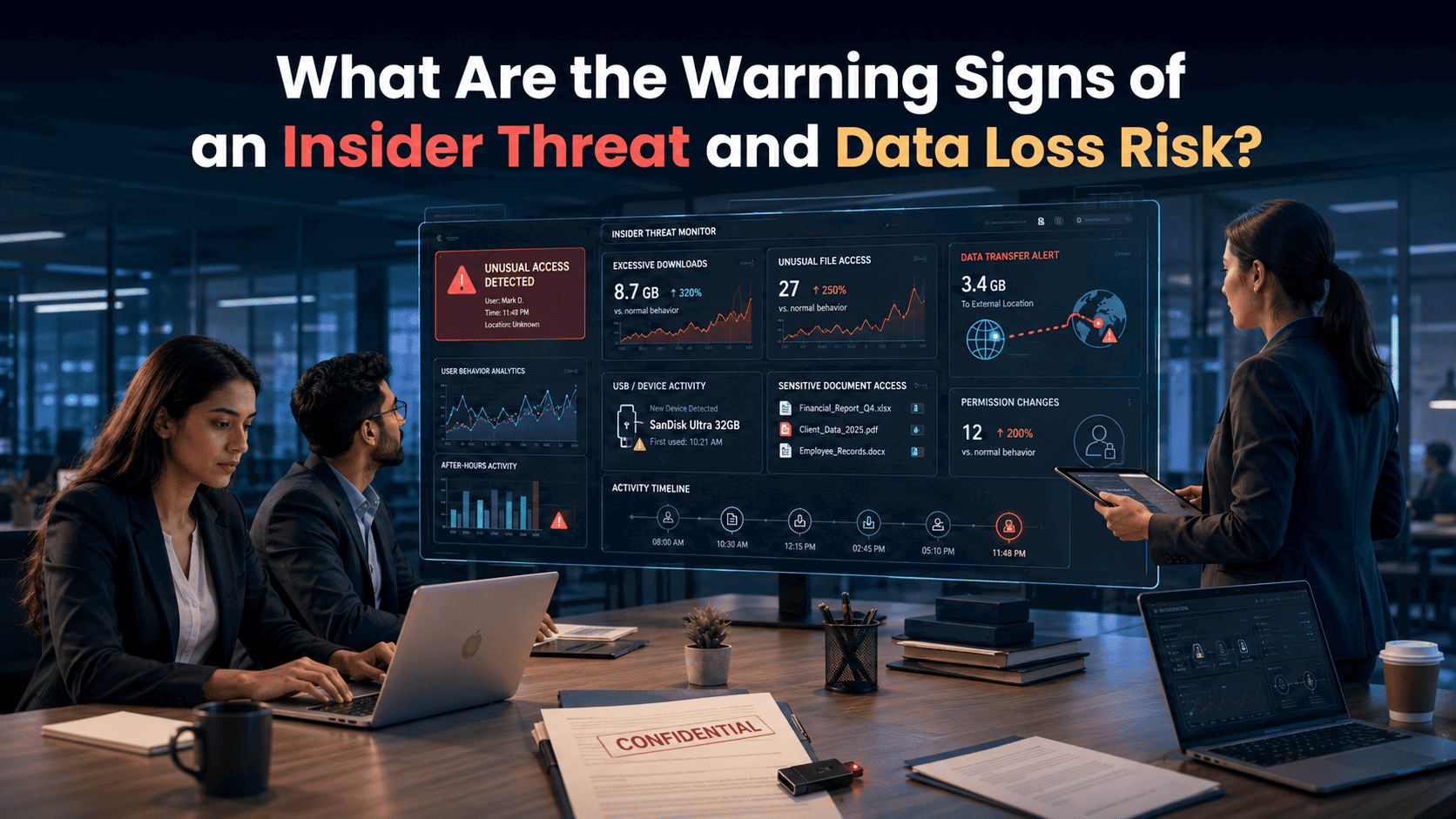
Could a trusted employee accidentally or intentionally expose your company’s sensitive data? What warning signs should security teams watch for, and how can businesses reduce the risk before valuable information leaves the organization? The key to protecting sensitive information is identifying risky user behavior, limiting unauthorized data movement, and detecting potential security issues early. Insider threats can come from malicious employees, compromised accounts, contractors, or well-intentioned workers who make mistakes. The most effective approach combines user activity monitoring, access controls, employee awareness, behavioral analysis, and automated security policies. Businesses should detect unusual activity early while ensuring legitimate employees can continue working efficiently.
What Is an Insider Threat?
In Insider Threat and Data Loss Prevention, an insider threat occurs when someone with authorized access to company systems, applications, or data uses that access in a harmful or unsafe way. Insider threats generally fall into three categories:
- Malicious insiders: Employees or contractors who intentionally steal, expose, or misuse information.
- Negligent insiders: Workers who accidentally share confidential files, use insecure devices, or bypass security procedures.
- Compromised insiders: Legitimate accounts taken over by attackers and used to access organizational resources.
Because insiders already have some level of access, traditional perimeter security alone may not be enough to identify suspicious behavior.
What Are the Warning Signs of an Insider Threat and Data Loss Risk?
Recognizing unusual behavior early can help security teams investigate potential incidents before significant damage occurs.Common warning signs include:
- Unusual file access: An employee suddenly accesses large numbers of files or sensitive information unrelated to their responsibilities.
- Abnormal downloads: Repeatedly downloading large amounts of data can indicate potential data collection.
- Unauthorized transfers: Moving company information to personal cloud storage, email accounts, or external devices deserves attention.
- Unusual login activity: Logins from unfamiliar locations, devices, or unusual working hours may indicate account compromise.
- Attempts to bypass security: Disabling security tools or repeatedly violating access policies can be a significant warning signal.
- Sudden changes in behavior: Employees preparing to leave the company may sometimes collect information they should not retain.
- Excessive privilege usage: Accessing systems or information beyond normal job requirements can increase data-loss risk.
A single warning sign does not automatically mean an employee is a threat. Security teams should evaluate patterns and context rather than relying on isolated events.
How Can Companies Prevent Insider Data Loss?
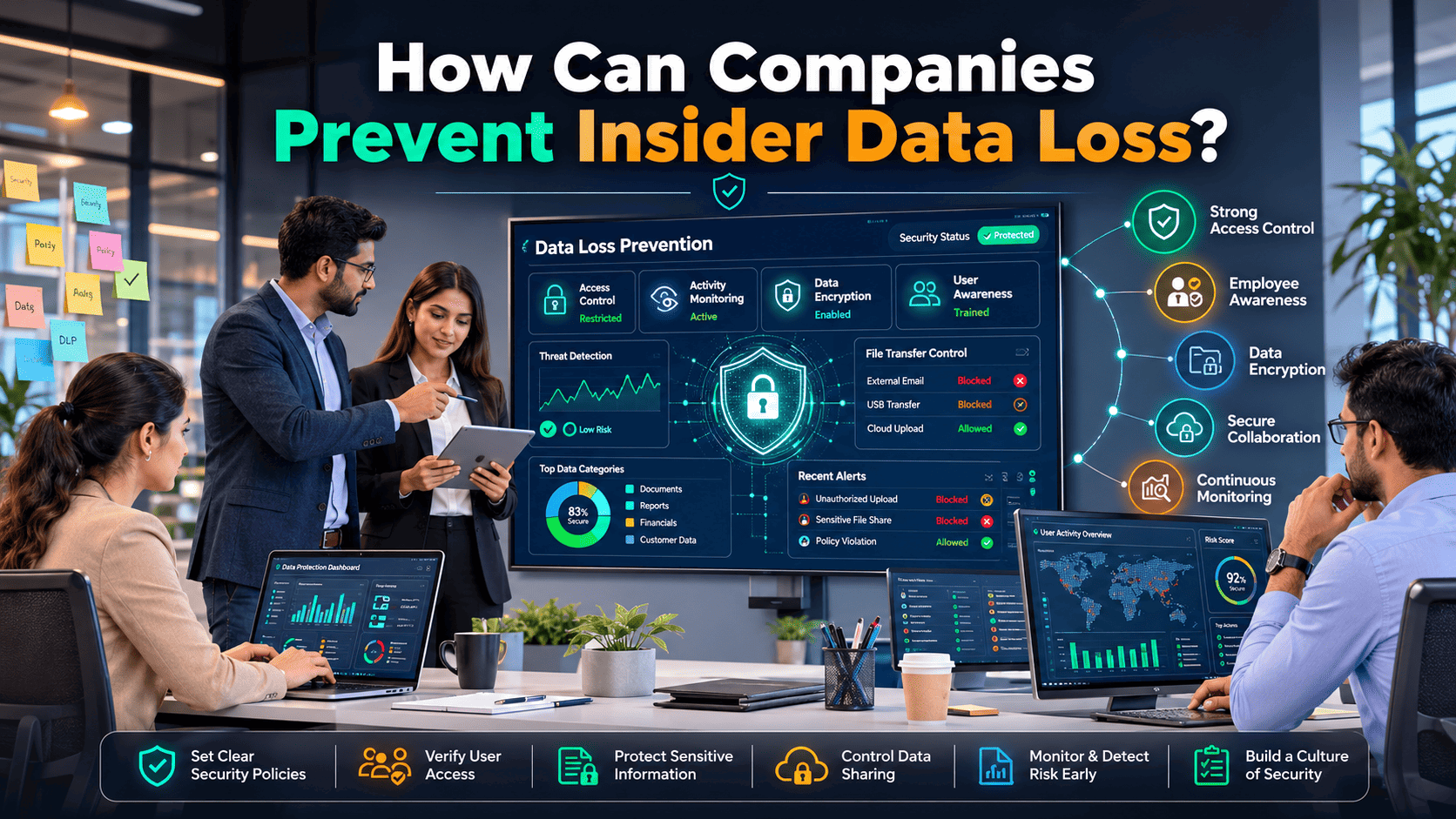
An effective prevention strategy should combine technology, processes, and employee education.
1. Apply Least-Privilege Access
Employees should receive only the permissions necessary for their roles. Limiting access reduces the amount of sensitive information that can be exposed if an account is misused or compromised.Regular access reviews are equally important. Permissions should be removed or adjusted when employees change roles or no longer require specific resources.
2. Monitor User Activity
Organizations can monitor activities such as file access, downloads, application usage, login behavior, and data transfers. Behavioral monitoring can help security teams identify unusual patterns without relying solely on manual investigation.For operational teams, a workflow tracker can also help document security-related processes, investigation steps, approvals, and follow-up actions so potential incidents are handled consistently.
3. Protect Sensitive Information
Sensitive files should be classified according to their importance and protected with appropriate controls. Encryption, authentication, access restrictions, and secure sharing policies can significantly reduce exposure.Organizations should also establish clear rules for handling customer information, intellectual property, financial records, credentials, and other confidential data.
4. Educate Employees
Not every insider incident is intentional. Employees may accidentally expose information through phishing emails, incorrect file permissions, unsafe downloads, or personal storage services.Security awareness training should therefore explain:
- How to identify phishing attempts
- How to handle confidential information
- Which applications and devices are approved
- How to report suspicious activity
- Why security policies matter
How Does Data Loss Prevention Software Help?
Data loss prevention software helps organizations identify, monitor, and control sensitive information as it moves through endpoints, networks, applications, and cloud environments.Depending on the solution, organizations may use it to:
- Detect sensitive information leaving approved environments
- Monitor suspicious file transfers
- Restrict unauthorized copying or sharing
- Apply policies to sensitive documents
- Identify unusual data movement
- Generate alerts for security teams
- Support compliance and audit requirements
The technology becomes more effective when policies are carefully configured. Excessive alerts can create unnecessary workload, while overly restrictive policies may interfere with legitimate business activities.
How Can Businesses Build a Stronger Prevention Strategy?
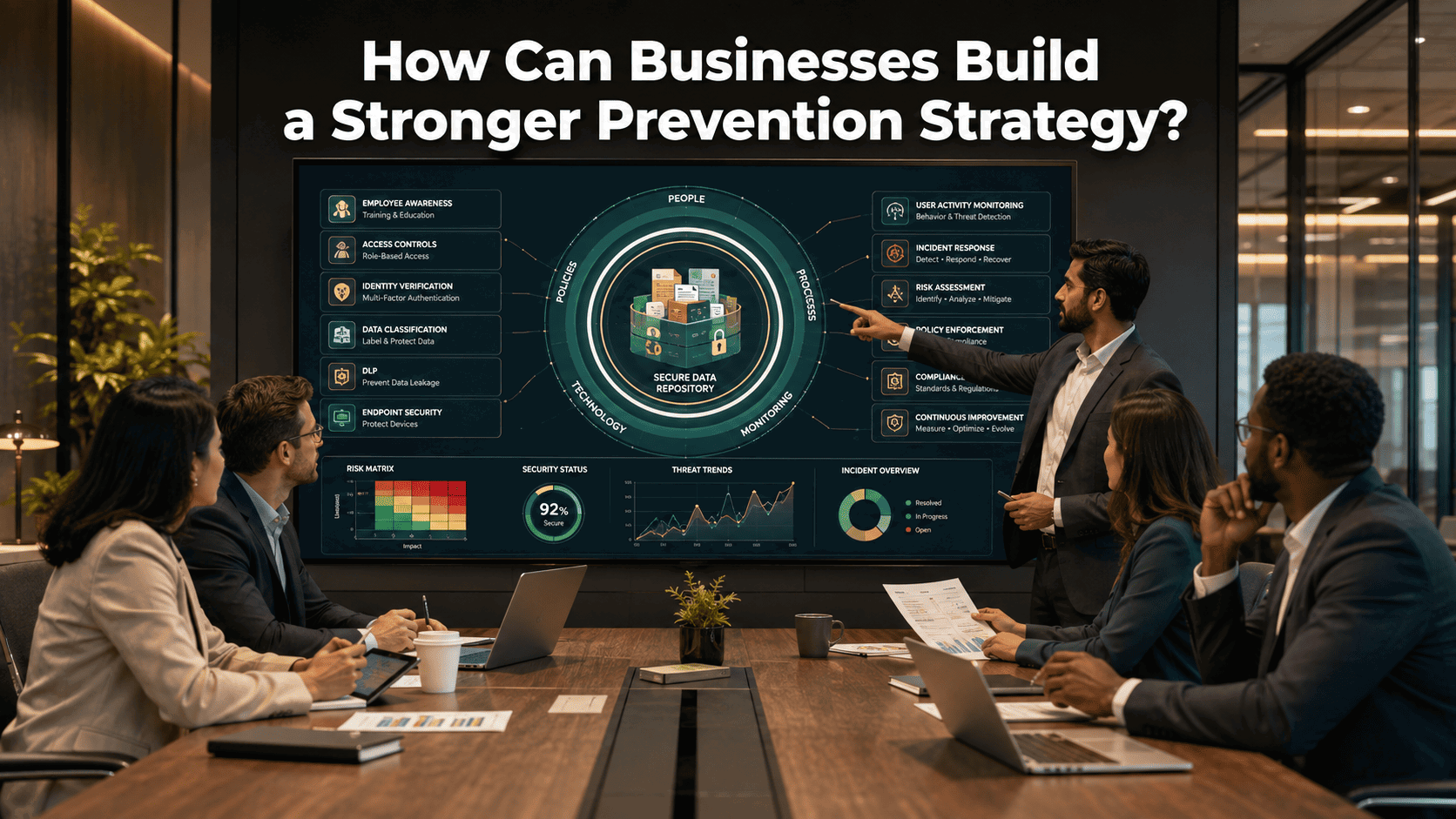
A practical approach should focus on continuous improvement rather than one-time implementation.
Start with data discovery: Identify where sensitive information is stored and who can access it.
Review permissions: Remove unnecessary privileges and regularly reassess access requirements.
Establish behavioral baselines: Understand normal user activity so unusual patterns are easier to identify.
Create response procedures: Define what security teams should do when suspicious activity is detected.
Combine security tools: Integrate identity management, endpoint security, activity monitoring, and data protection technologies.
Review incidents: Analyze completed investigations to identify policy weaknesses and improve future detection.
Why Is Early Detection Important?
The longer suspicious activity continues, the greater the potential impact. Early detection gives security teams an opportunity to investigate unusual behavior, restrict access, secure affected accounts, and prevent sensitive information from spreading further. However, monitoring should always be balanced with employee privacy and transparency. Companies should clearly communicate what is monitored, why it is monitored, and how security information is handled.
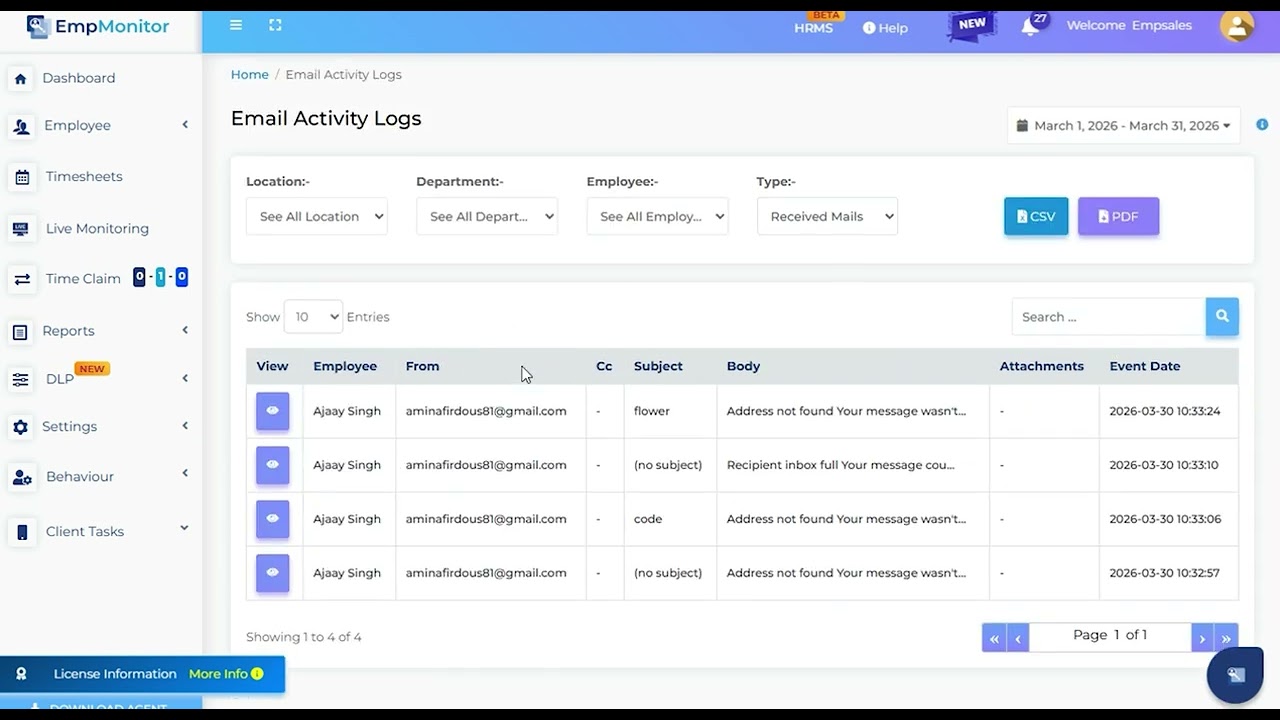
You can also watch this video: Secure Your Business Data: Ultimate Guide to EMP-Monitor’s DLP Feature!
Summary
Effective Insider Threat and Data Loss Prevention requires more than simply installing a security tool. Businesses need a layered strategy that combines least-privilege access, employee education, behavioral monitoring, sensitive-data controls, and clearly defined incident-response procedures. The goal is not to assume employees are threats. Instead, organizations should identify unusual activity early, protect critical information, and create security processes that reduce both intentional and accidental data exposure.
Frequently Asked Questions
What is an insider threat?
An insider threat occurs when an authorized user intentionally or accidentally causes harm by misusing access to company systems, applications, or sensitive information.
What is the biggest warning sign of an insider threat?
Unusual access or data-transfer behavior is often an important warning signal, especially when it differs significantly from an employee’s normal work pattern.
Can insider threats be accidental?
Yes. Employees can unintentionally cause data loss through phishing, incorrect sharing permissions, unsecured devices, or improper handling of confidential information.
How can companies reduce insider data-loss risks?
Companies can reduce risk through least-privilege access, employee training, activity monitoring, strong authentication, data classification, security policies, and automated data-protection controls.
Is employee monitoring enough to prevent insider threats?
No. Monitoring can help identify suspicious behavior, but it should be combined with access controls, security awareness, data protection, and an effective incident-response strategy.
