What Is Performance Management and How Can It Improve Employee Performance?
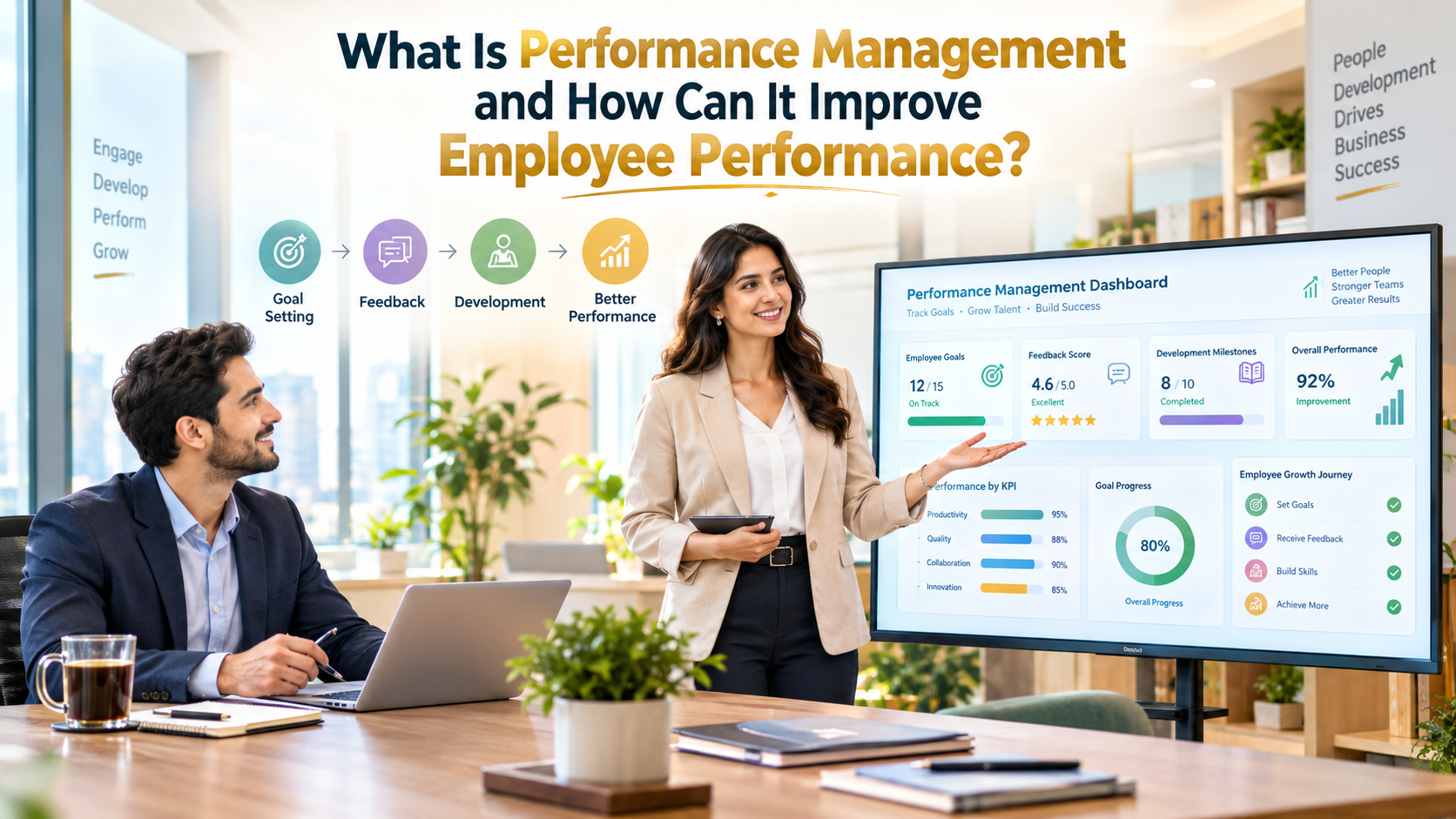
How can businesses help employees perform better while ensuring their individual goals support broader organizational objectives? A structured approach provides a way to set expectations, monitor progress, give feedback, recognize achievements, and support employee development. In simple terms, it is an ongoing process that connects employee performance with business goals. Rather than relying only on annual reviews, organizations can use regular conversations, measurable objectives, coaching, and performance data to identify strengths and address challenges early.
What Is Employee Performance Management?
Employee performance management is a continuous process designed to help employees understand what is expected of them, measure their progress, and improve their capabilities over time. An effective process typically includes:
- Setting clear and measurable objectives
- Defining responsibilities and expectations
- Monitoring progress
- Providing regular feedback
- Identifying performance gaps
- Recognizing accomplishments
- Supporting professional development
- Reviewing and adjusting goals
The focus should not simply be on evaluating employees. Instead, the process should help employees understand how they can improve and contribute more effectively to organizational success.
Why Is Managing Employee Performance Important?
Businesses need clear processes to ensure employee efforts remain aligned with organizational priorities. Without measurable expectations, employees may struggle to understand what success looks like.A structured approach can help organizations:
1. Improve Productivity
When employees have clearly defined goals, they can prioritize important tasks and focus their efforts on activities that contribute to business objectives.
2. Increase Accountability
Clearly documented responsibilities make it easier for employees and managers to understand expectations. Objective performance information can also make workplace discussions more transparent.
3. Encourage Continuous Feedback
Feedback is most useful when it is timely. Regular conversations allow managers to recognize achievements and address problems before they become larger issues.
4. Identify Development Opportunities
Performance discussions can reveal skill gaps and areas where employees would benefit from training, mentoring, or additional resources.
5. Strengthen Employee Engagement
Employees are more likely to remain engaged when they understand how their contributions matter. Recognition, constructive feedback, and career development can strengthen their connection with the organization.
What Are the Key Components of an Effective Performance Process?
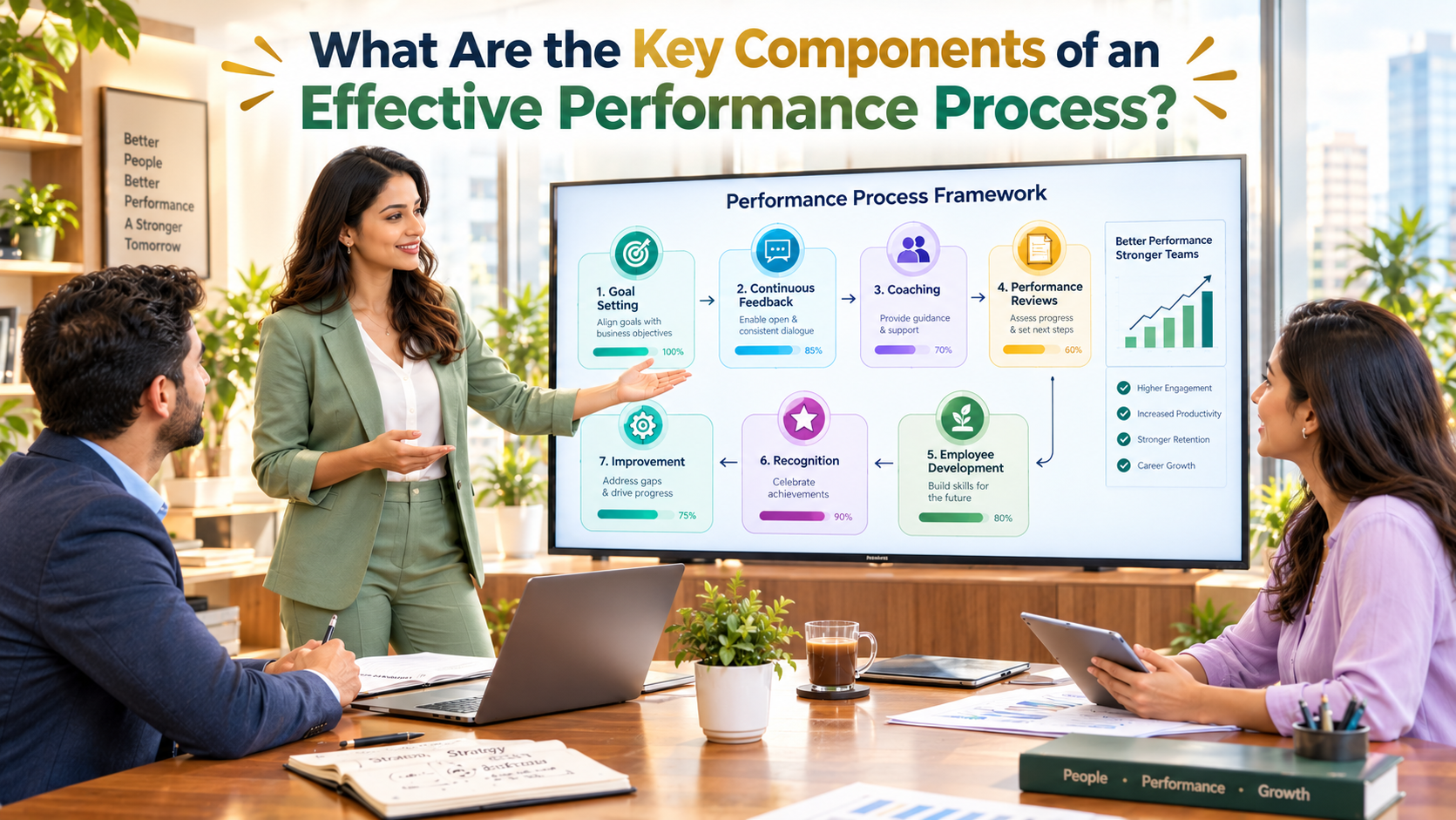
An effective process should combine measurable results with communication and employee development.
Clear Goal Setting
Goals should be specific, measurable, achievable, relevant, and time-bound. Employees should know exactly what they are expected to accomplish and when.
Regular Reviews
Organizations can conduct weekly check-ins, monthly discussions, quarterly assessments, or another schedule that fits their workplace structure.
Continuous Feedback
Managers should provide feedback throughout the year instead of waiting for formal reviews. This gives employees more opportunities to improve.
Employee Development
Performance conversations should include discussions about skills, career interests, training requirements, and future responsibilities.
Recognition
Recognizing strong contributions can reinforce positive behavior and encourage employees to maintain high standards. Recognition can include appreciation, professional opportunities, additional responsibilities, or financial rewards.
How Can Technology Help Track Employee Performance?
Modern technology can simplify performance tracking, especially for remote and hybrid teams. A performance tracker for employees can help managers organize goals, milestones, completed tasks, productivity indicators, and other relevant information. However, performance data should not be interpreted without context. A temporary decline in output may result from changing priorities, technical problems, workload fluctuations, insufficient resources, or the learning curve associated with a new responsibility.
For this reason, technology should support managerial decision-making rather than replace human judgment.
How Should Businesses Implement an Employee Performance Strategy?
Organizations can follow a structured process to build an effective approach:
- Identify business priorities: Determine what the organization needs to accomplish.
- Create individual goals: Translate organizational objectives into employee-specific targets.
- Define measurement criteria: Establish how progress and outcomes will be evaluated.
- Schedule regular check-ins: Give managers and employees opportunities to discuss progress.
- Document performance: Maintain accurate records of achievements, challenges, and development.
- Address performance gaps: Identify the cause of problems and provide appropriate support.
- Recognize achievements: Reward meaningful contributions and improvements.
- Review objectives: Adjust goals when business priorities or employee responsibilities change.
This approach makes performance discussions more consistent and encourages employees to focus on continuous improvement.
What Is a Performance Tracking System?
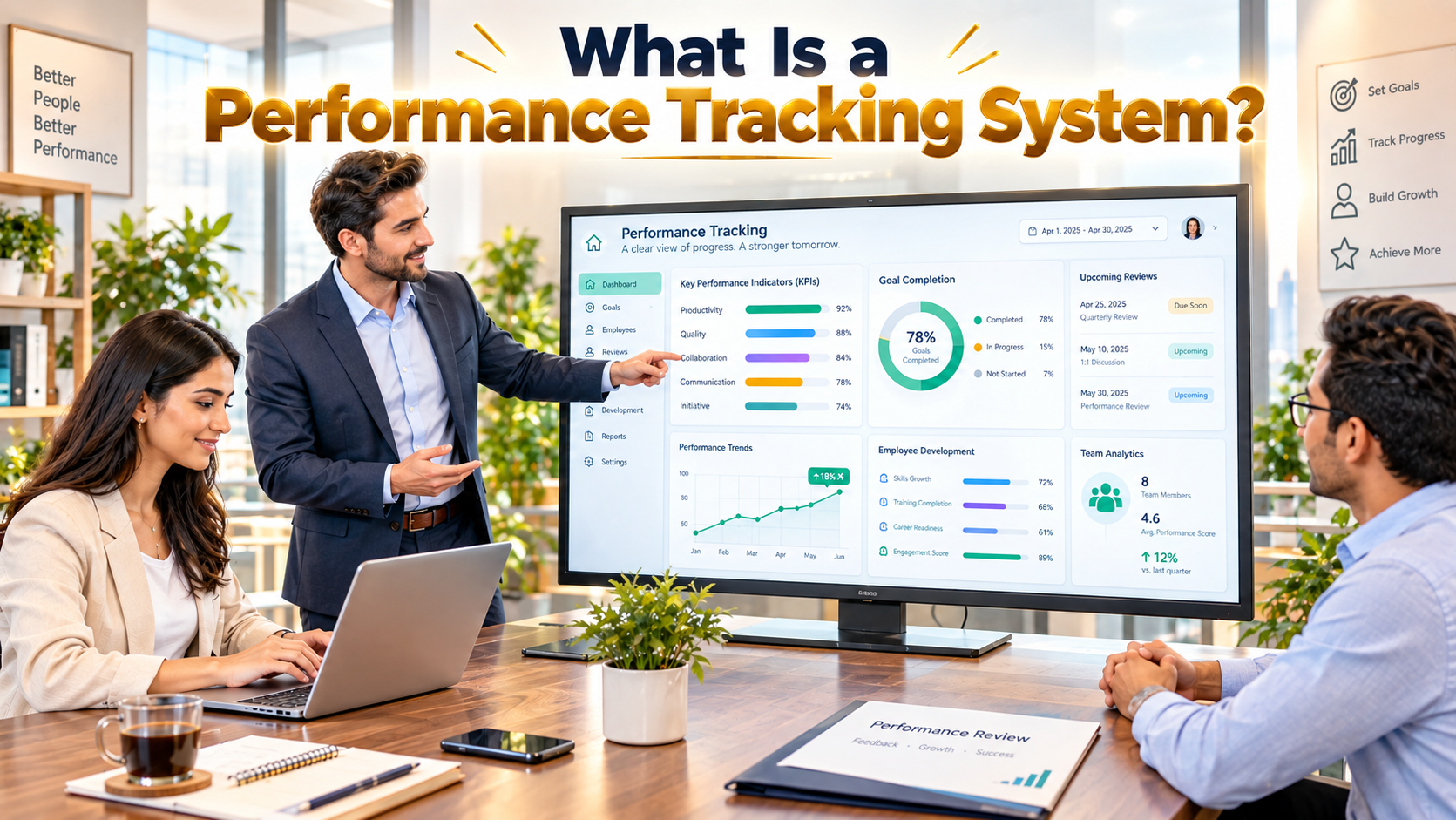
A Performance Tracking System is a technology-based solution that helps organizations collect, organize, monitor, and analyze employee performance information. Depending on the platform, these systems may provide features such as:
- Goal and milestone tracking
- Performance reports
- Feedback management
- Employee evaluations
- Productivity analytics
- Progress monitoring
- Attendance information
- Performance dashboards
These capabilities can give managers better visibility into employee progress while reducing manual reporting. When choosing a system, businesses should consider:
- Ease of use
- Reporting and analytics
- Goal tracking
- Feedback capabilities
- Integration with existing HR software
- Data security and privacy
- Customization
- Scalability
Organizations should also establish clear policies explaining what information is collected, why it is collected, and how performance data will be used.
Best Practices for Improving Employee Performance
Technology alone cannot improve performance. Organizations also need a workplace culture that encourages communication, learning, and accountability.
Consider these best practices:
- Set expectations before evaluating results.
- Use realistic and measurable goals.
- Provide feedback regularly.
- Focus on coaching rather than punishment.
- Recognize individual and team contributions.
- Provide opportunities for professional development.
- Apply evaluation criteria consistently.
- Protect employee information.
- Analyze performance trends instead of isolated incidents.
- Encourage employees to participate in goal setting.
Employee involvement is particularly important because employees who understand and contribute to their objectives may develop stronger ownership of their work.
You can also watch this video: How to Monitor Employee Screens in Real-Time with EmpMonitor
Summary
Performance Management is most effective when organizations treat it as a continuous cycle of goal setting, measurement, feedback, coaching, recognition, and development. A successful approach goes beyond simply evaluating employees. It helps connect individual contributions with organizational objectives while creating opportunities for employees to improve their skills and achieve better results.
Frequently Asked Questions
What is the main purpose of managing employee performance?
The main purpose is to align employee goals with business objectives while providing feedback, coaching, recognition, and development opportunities.
How often should employee performance be reviewed?
Performance should be discussed regularly throughout the year. The ideal frequency depends on the employee's role, organizational structure, and business requirements.
How does performance tracking improve productivity?
Performance tracking provides visibility into progress, helps identify obstacles, and allows managers to determine where employees may need additional guidance or resources.
What makes an employee performance process effective?
Clear goals, consistent evaluation criteria, regular feedback, employee development, recognition, transparency, and effective communication are essential.
Can technology replace performance reviews?
No. Technology can organize information and identify trends, but managers still need context, communication, coaching, and human judgment to evaluate employees fairly.