What Is the Connection Between Insider Threats and Data Loss Prevention?
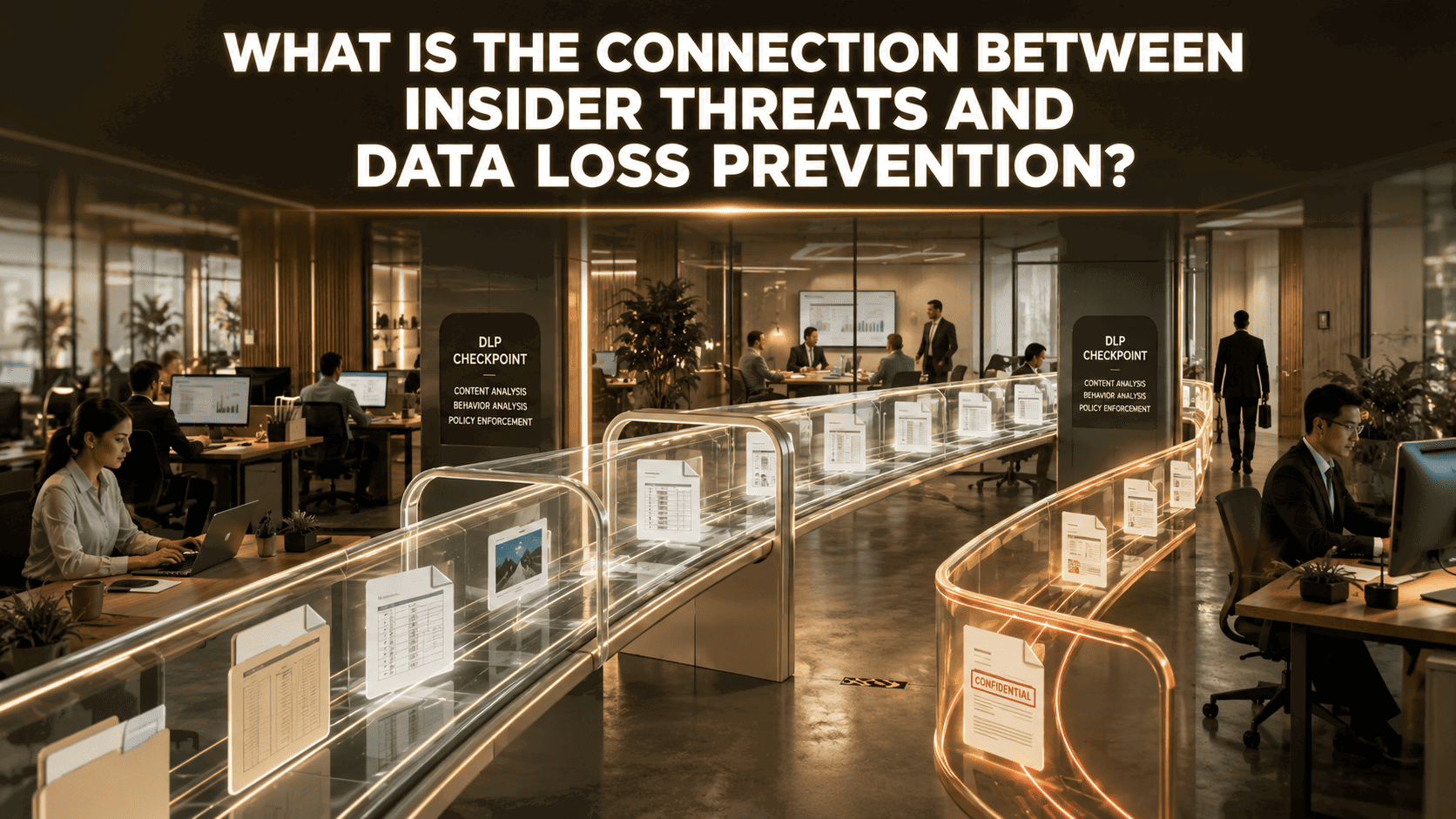
Can employees, contractors, or even compromised accounts you trust become an unseen route for sensitive data to exit your organization? Yes, they can. Insider-related security incidents may arise from deliberate misuse, accidental mistakes, or stolen login credentials, which makes traditional perimeter-based defenses alone insufficient. Internal security risk management and information protection strategies work together by addressing both human-related vulnerabilities that can lead to data exposure and the technical safeguards that help prevent sensitive information from being misused, copied, or transferred without authorization. In simple terms, user behavior monitoring helps identify risky actions, while data protection controls help secure and regulate access to critical information. When combined, these approaches enable organizations to detect suspicious activity earlier, enforce proper access rules, and reduce the likelihood of costly data breaches.
What Is an Insider Threat?
An insider threat and Data Loss Prevention (DLP) concern occurs when someone with legitimate access to an organization's systems, applications, or data uses that access in a harmful or unsafe way. Insider threats generally fall into three categories:
- Malicious insiders: Employees or contractors intentionally steal, expose, or destroy information.
- Negligent insiders: Users accidentally share confidential files, misconfigure systems, or send information to the wrong recipient.
- Compromised insiders: Attackers use stolen credentials or hijacked accounts to operate inside trusted environments.
Because insiders already have some level of authorized access, their activity can be harder to identify than conventional external attacks.
What Is Data Loss Prevention?
Data loss prevention is a collection of policies, technologies, and processes designed to prevent sensitive information from being improperly accessed, shared, copied, or transferred. DLP can monitor information across:
- Email and messaging platforms
- Cloud applications
- Endpoints and workstations
- Removable storage devices
- Web uploads and downloads
- Corporate file repositories
Depending on organizational policies, DLP controls can alert security teams, block risky actions, encrypt information, or require additional authorization.
What Is the Connection Between Insider Threats and Data Loss Prevention?
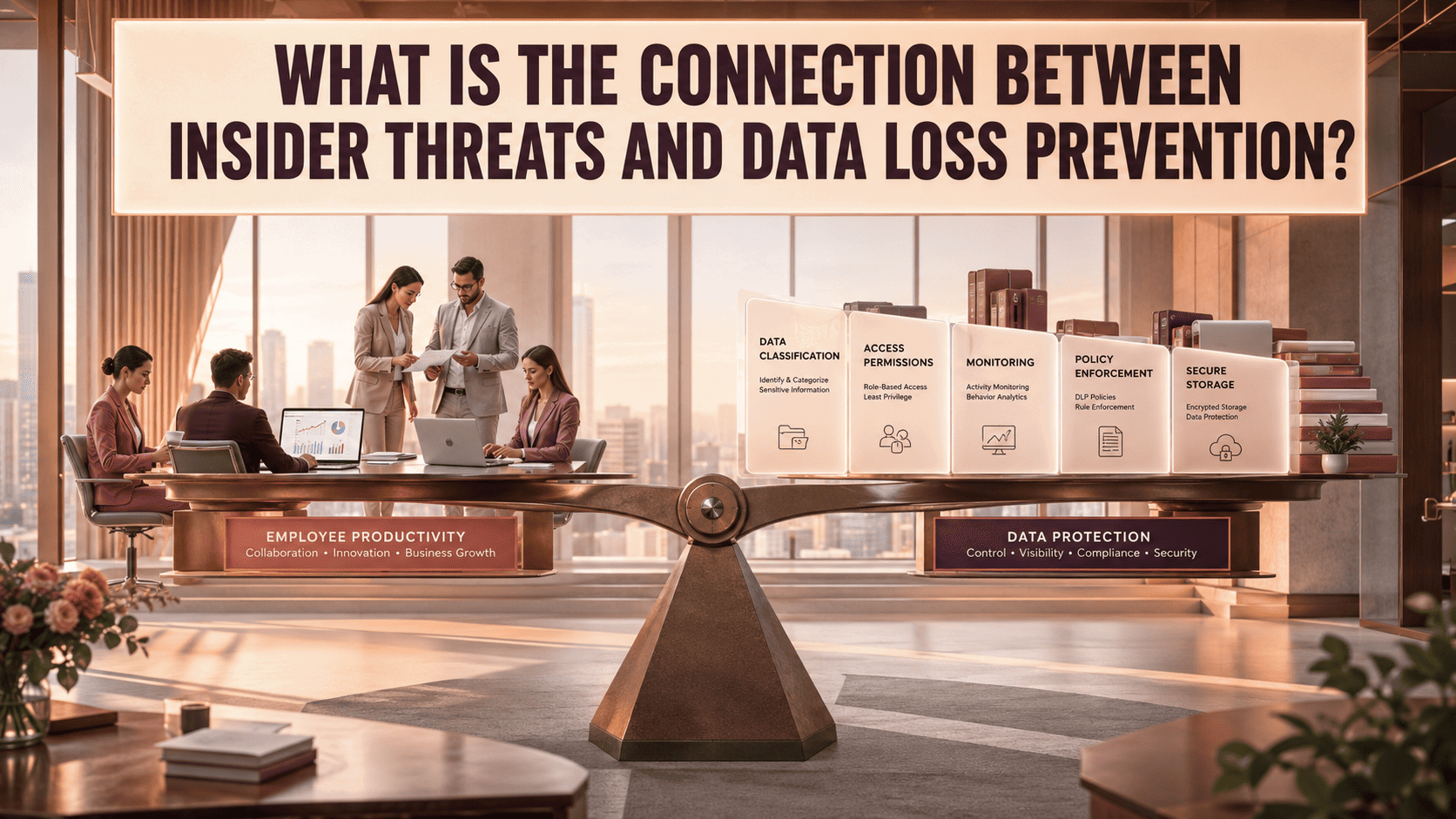
The connection is straightforward: insider threats describe the risk, while DLP provides important controls for reducing the risk of sensitive information leaving the organization. For example, imagine an employee attempts to upload a confidential customer database to a personal cloud account. An insider-threat monitoring system may identify unusual behavior, while a DLP policy can recognize sensitive information and prevent or flag the transfer. This combination creates multiple layers of protection:
- User monitoring identifies unusual behavior.
- Access controls limit unnecessary data exposure.
- DLP policies identify sensitive information.
- Security alerts notify analysts about suspicious actions.
- Incident response teams investigate and contain potential threats.
How Can Organizations Prevent Insider-Related Data Loss?
A strong prevention strategy should combine technology, policies, and employee awareness.
1. Apply Least-Privilege Access
Employees should receive only the permissions necessary to perform their responsibilities. Limiting access reduces the amount of information that can be exposed if an account is misused or compromised. Regular access reviews are equally important. When employees change roles, permissions should be adjusted accordingly.
2. Monitor User and Data Activity
Security teams should establish a baseline of normal activity and investigate meaningful deviations. Useful signals can include:
- Unusual file downloads
- Access to sensitive repositories outside normal working patterns
- Large-scale file transfers
- Repeated attempts to bypass security controls
- Transfers to unauthorized external destinations
Organizations can also evaluate the best insider threat detection software based on capabilities such as behavioral analytics, real-time alerts, risk scoring, endpoint visibility, and integration with existing security systems.
3. Create Strong DLP Policies
DLP policies should focus on the organization's most sensitive information rather than attempting to block every possible action. Common protected data includes:
- Customer information
- Financial records
- Intellectual property
- Authentication credentials
- Employee records
- Confidential business documents
Policies should define what information requires protection, where it can be stored, who can access it, and which transfer methods are permitted.
4. Strengthen Employee Security Awareness
Technology cannot eliminate every insider-related risk. Employees should understand how everyday actions can create security problems.Security training should cover:
- Phishing and credential theft
- Safe file sharing
- Password security
- Handling confidential information
- Approved cloud applications
- Reporting suspicious activity
Training should be ongoing rather than limited to a single annual session.
How Does Employee Activity Monitoring Support Data Protection?
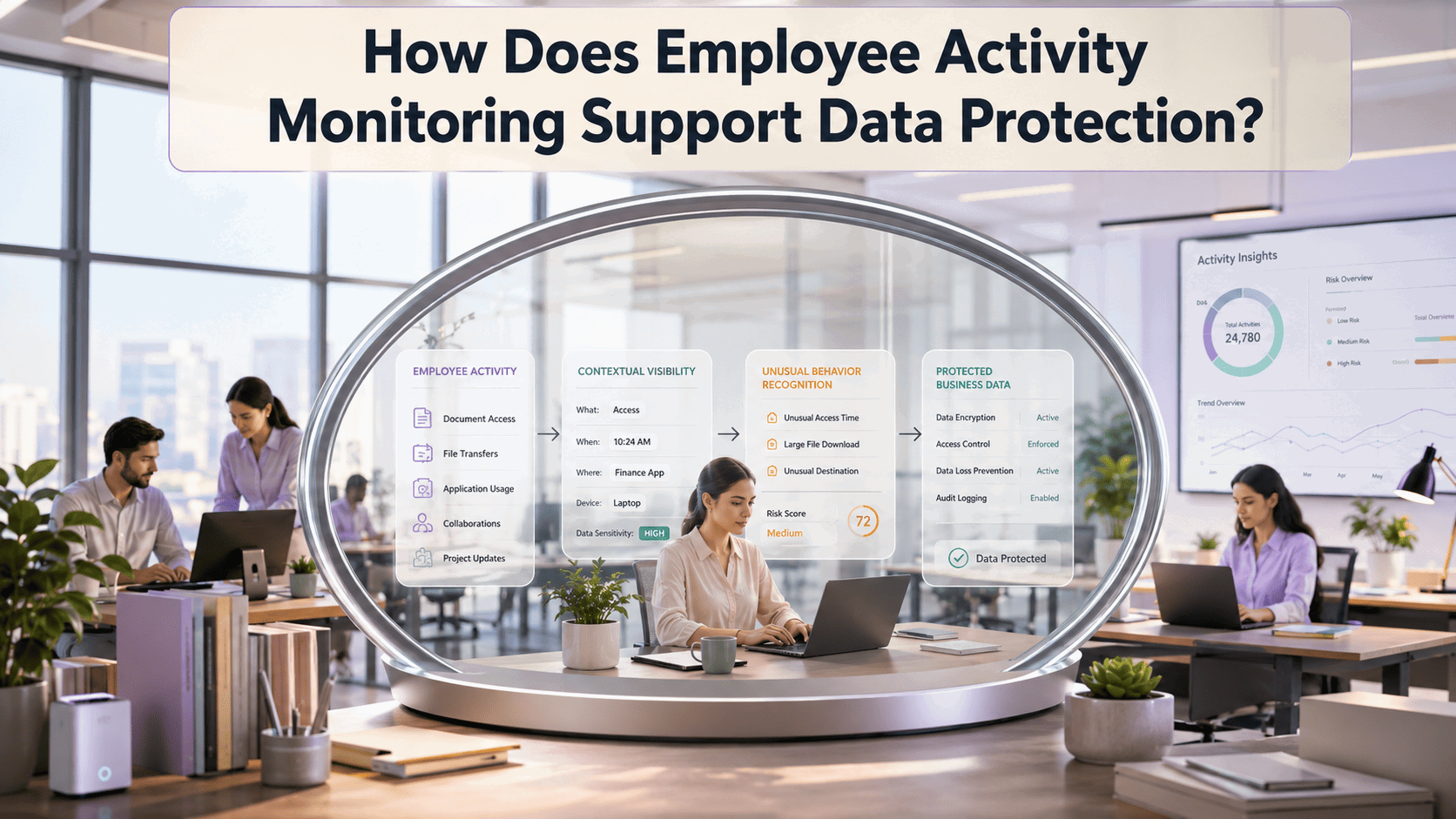
Employee activity monitoring can provide useful context when implemented responsibly and transparently. For example, security teams can correlate application usage, file activity, access events, and unusual transfers to determine whether an incident requires investigation. Organizations may also use employee time tracking software to understand work patterns, attendance, and time allocation. However, productivity information should not automatically be treated as evidence of malicious behavior. Monitoring programs should have clearly defined purposes, appropriate access controls, and transparent policies. The goal is not to watch employees indiscriminately. It is to identify meaningful security signals while respecting privacy and maintaining a healthy workplace environment.
Why Are Insider Threats Difficult to Detect?
Insider threats are challenging because legitimate users can perform activities that resemble normal business operations. For instance, downloading a large number of files may be reasonable for an employee preparing a project, but suspicious if the same behavior occurs shortly before an unauthorized transfer. Effective detection therefore requires context, including:
- User role and responsibilities
- Data sensitivity
- Historical behavior
- Access patterns
- Device information
- Destination of transferred information
- Timing and frequency of activity
This context helps security teams distinguish ordinary business activity from potentially dangerous behavior.
Best Practices for Combining Insider Threat Detection and DLP
Organizations can improve their overall security posture by following a layered approach:
- Classify sensitive data accurately.
- Enforce least-privilege access.
- Monitor high-risk activity.
- Establish clear DLP policies.
- Use behavioral analytics to identify anomalies.
- Integrate alerts with security operations workflows.
- Review employee access regularly.
- Train employees on secure data handling.
- Create an incident response process for suspected data exposure.
- Continuously evaluate and refine security controls.
You can also watch this video: How to Monitor Employee Screens in Real-Time with EmpMonitor
Summary
Insider Threat and Data Loss Prevention are closely connected because preventing data exposure requires organizations to understand both who is accessing information and how that information is being used or transferred. Insider threats may result from malicious intent, negligence, or compromised credentials. DLP helps organizations control sensitive information and prevent unauthorized movement. When combined with least-privilege access, behavioral monitoring, employee awareness, and effective incident response, these measures create a stronger defense against data loss.
Frequently Asked Questions
What is the main purpose of insider threat prevention?
Its primary purpose is to identify and reduce risks caused by authorized users who intentionally or unintentionally put organizational data and systems at risk.
How does DLP prevent data loss?
DLP identifies sensitive information and applies policies that can alert, restrict, or block unauthorized access and transfers.
Can DLP detect insider threats?
DLP can identify suspicious data-handling activities, but it is most effective when combined with user behavior monitoring, access controls, and other security technologies.
Why is employee awareness important?
Employees can unintentionally expose sensitive information through phishing, incorrect sharing, unsafe applications, or other everyday mistakes. Regular security education helps reduce these risks.
