What Metrics Should Companies Track for Employee Productivity?
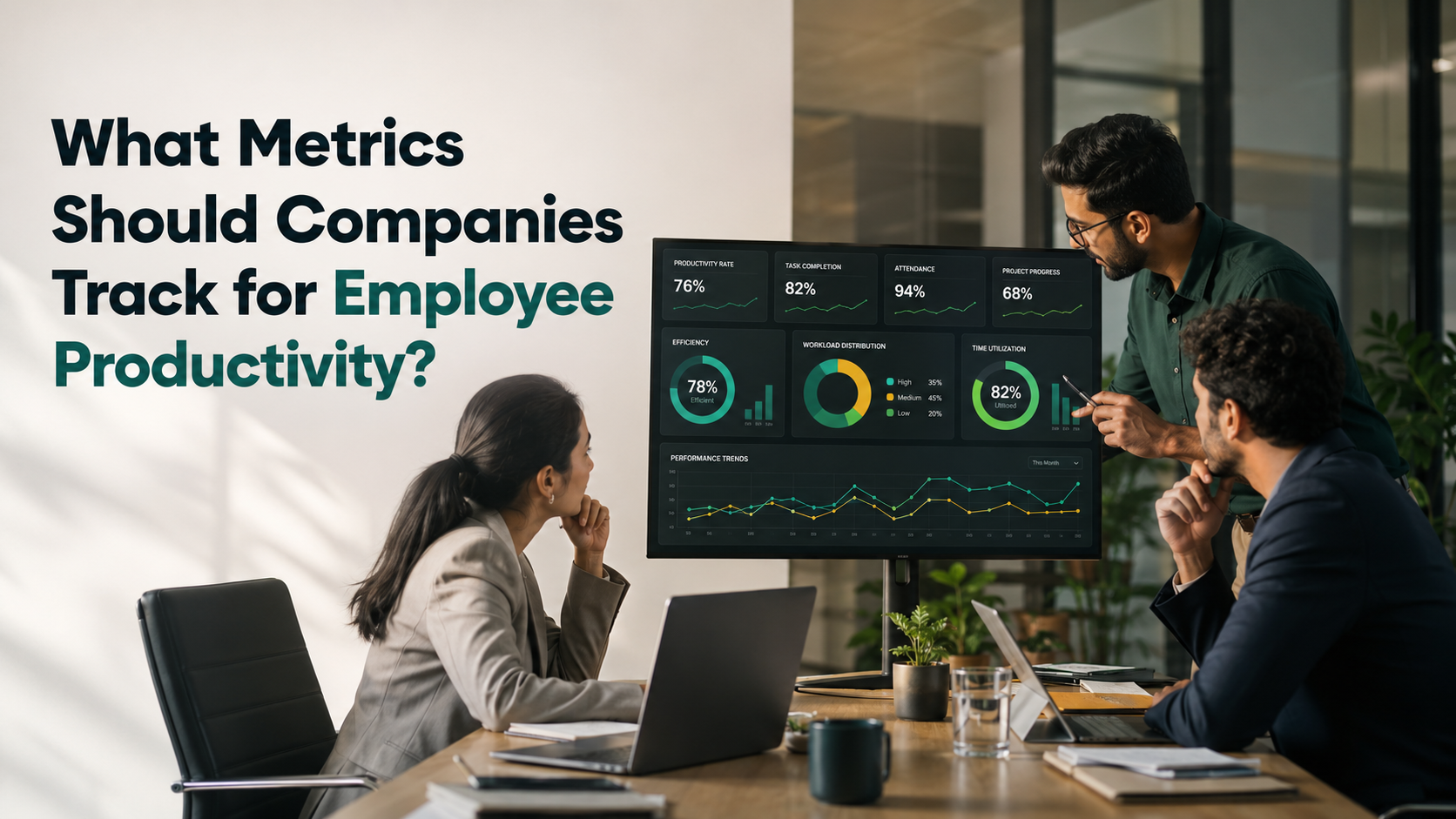
Are your employees busy all day but not necessarily productive? How can companies determine whether time, effort, and resources are actually contributing to meaningful business results? Employee Productivity Measurement helps organizations answer these questions by evaluating how efficiently employees turn their time and resources into completed work and business outcomes.In simple terms, employee productivity is measured by comparing output with the resources used to produce it. Depending on the role, output may include completed tasks, projects delivered, sales generated, customer issues resolved, or other measurable outcomes. Effective measurement combines quantitative metrics with qualitative factors such as work quality, collaboration, and goal achievement.
What Is Employee Productivity Measurement?
Employee productivity measurement is the process of assessing how effectively employees use their available time, skills, and resources to accomplish assigned objectives. A useful approach does not simply count hours worked. Instead, it considers factors such as:
- Task completion rates
- Quality of completed work
- Project deadlines
- Goal achievement
- Time spent on productive activities
- Revenue or business outcomes
- Collaboration and communication
- Customer satisfaction
The right metrics depend on the employee's role. For example, measuring a developer by the number of lines of code may produce misleading results, while project completion, code quality, and delivery timelines may provide more meaningful insights.
Why Is Productivity Measurement Important?
Why should businesses invest time in measuring productivity? Because reliable data can reveal where teams are performing well and where improvements are needed. Effective measurement can help organizations:
- Identify bottlenecks: Managers can discover processes, tasks, or workflows that slow employees down.
- Improve resource allocation: Data can show where additional staff, training, or technology may be required.
- Set realistic goals: Historical performance data helps organizations establish achievable targets.
- Recognize strong performance: Objective metrics can support meaningful employee recognition.
- Improve workflows: Companies can eliminate unnecessary processes and reduce wasted effort.
- Support business decisions: Productivity insights provide evidence for workforce and operational planning.
The goal should not be to monitor employees constantly. Instead, organizations should use measurement to understand work patterns and create conditions where employees can perform effectively.
Which Metrics Should Companies Track?
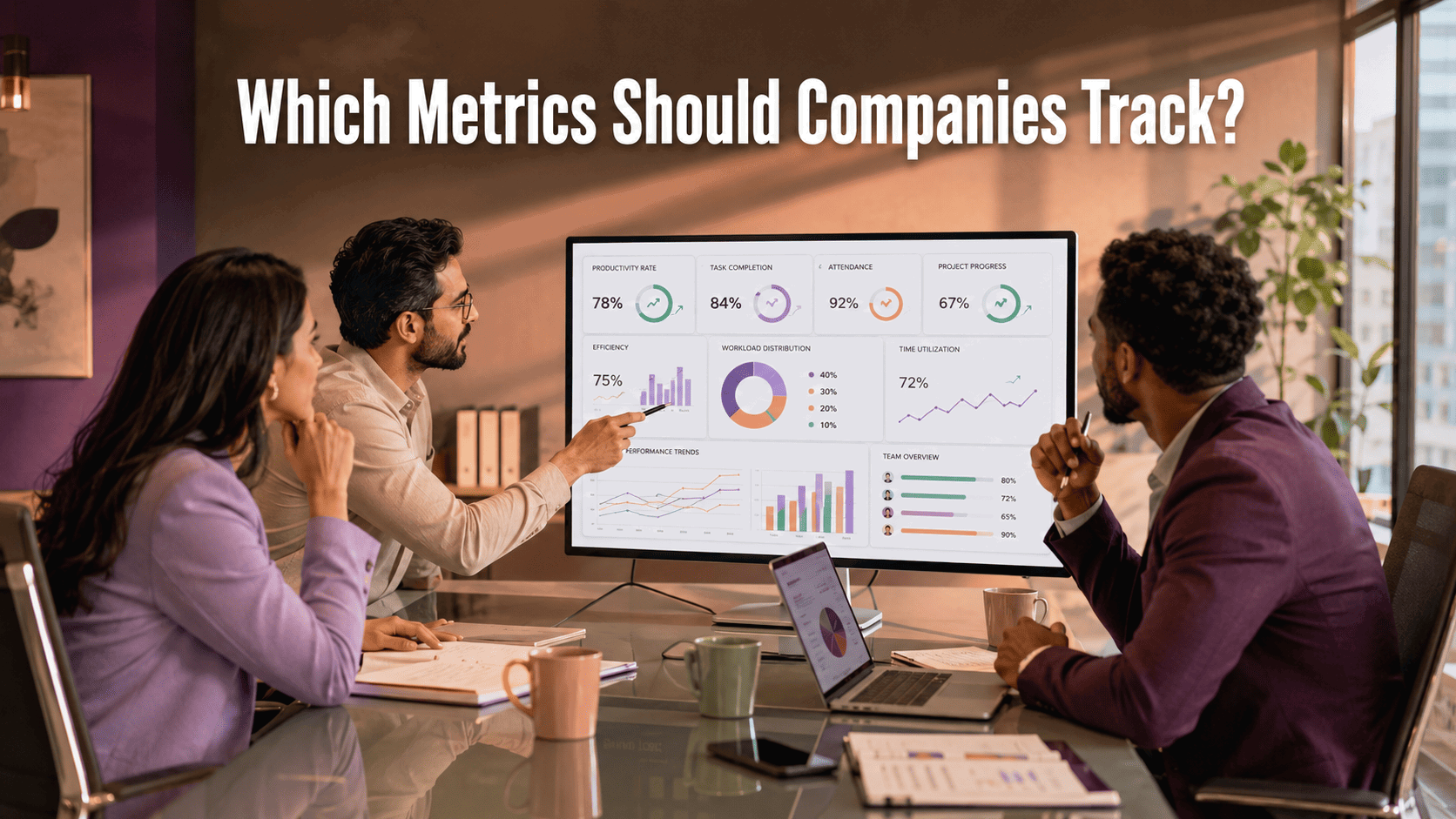
There is no universal productivity metric that works for every organization. Companies should select indicators that align with specific roles and business objectives.
Task Completion
Track how efficiently employees complete assigned responsibilities without compromising quality. Completion rates can be particularly useful for project-based teams.
Quality of Work
High output is not valuable if the work contains frequent errors. Businesses should therefore combine quantity-based measurements with accuracy, quality scores, customer feedback, or revision rates.
Goal Achievement
Individual and team objectives provide a direct connection between employee activities and organizational priorities. Tracking progress against defined goals makes performance discussions more objective.
Time Utilization
Understanding how employees allocate working time can uncover excessive meetings, repetitive administrative work, or workflow interruptions.
Business Outcomes
Where possible, connect productivity metrics to outcomes such as revenue, customer retention, project delivery, service response times, or cost savings.
How Can a Productivity Dashboard Help?
A productivity dashboard brings important performance information into one centralized view. Instead of reviewing scattered reports, managers can monitor trends, identify unusual changes, and compare progress against established objectives. A well-designed dashboard may display:
- Project progress
- Task completion
- Work trends
- Goal status
- Attendance patterns
- Efficiency indicators
- Team performance trends
However, dashboards should provide context rather than encourage unnecessary competition between employees. Managers should interpret the data alongside job responsibilities, workload complexity, and other relevant factors.
How Should Companies Improve Their Measurement Strategy?
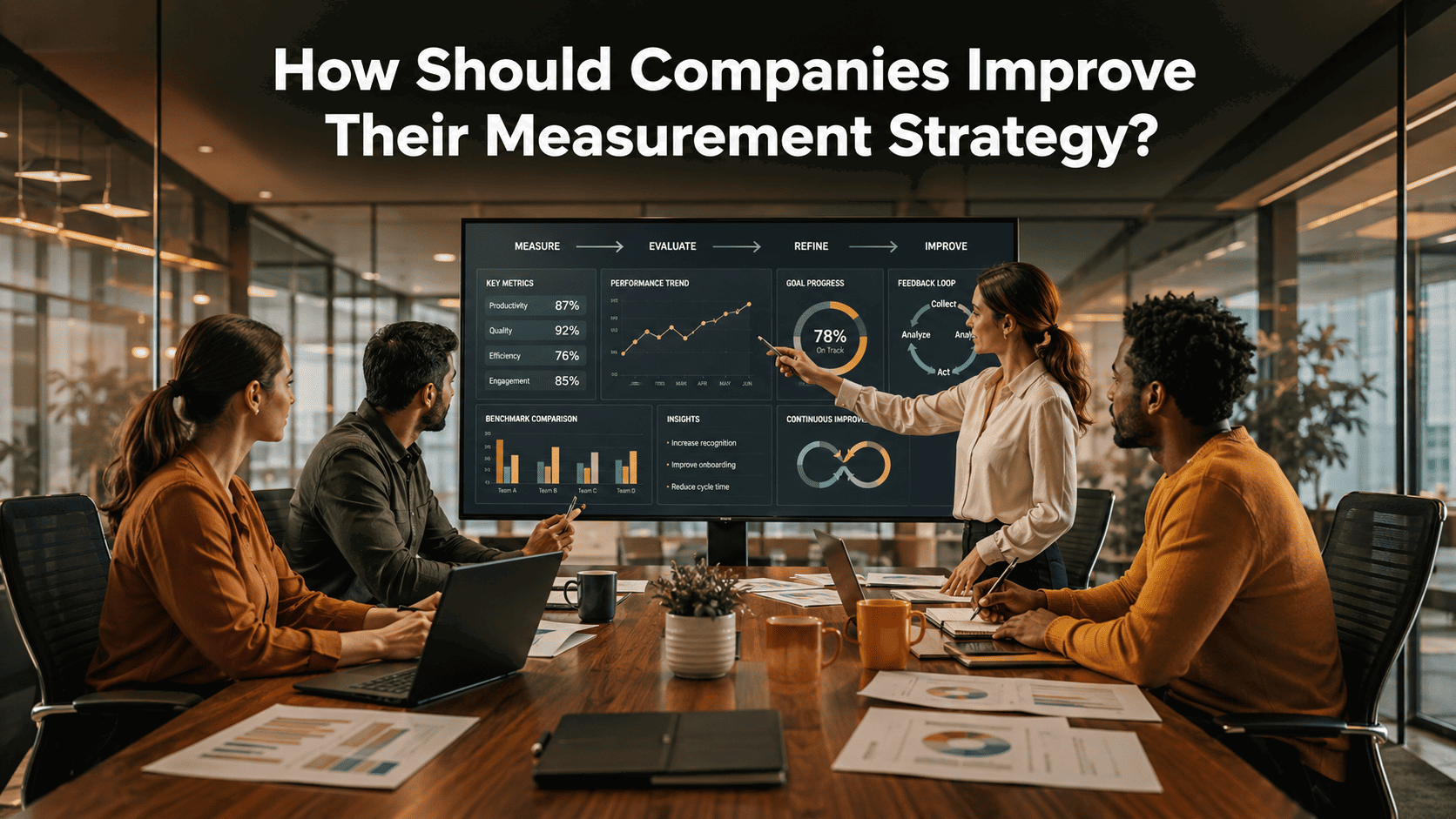
Simply collecting data does not automatically improve productivity. Organizations need a structured approach.
Define Clear Objectives
Start by identifying what the company wants to improve. Is the goal faster project delivery, better service quality, reduced operational costs, or improved employee efficiency?
Choose Relevant Metrics
Avoid tracking every available metric. Select a small set of indicators that directly relate to business goals and employee responsibilities.
Establish Baselines
Measure current performance before introducing changes. A baseline allows companies to determine whether a new process or technology is actually producing improvement.
Review Data Regularly
Productivity should be evaluated over time rather than based on isolated events. Regular reviews help managers identify trends and distinguish temporary changes from persistent problems.
Combine Data With Human Insight
Numbers cannot explain everything. Managers should discuss performance trends with employees to understand workload challenges, process issues, training requirements, and other factors affecting results.
How Does Technology Support Productivity Measurement?
Technology can simplify data collection and reduce manual reporting. Employee Time Tracking Software can help organizations understand how working hours are allocated across projects, tasks, and activities.When used responsibly, time-tracking technology can provide valuable information for project planning, workload management, payroll processes, and productivity analysis. Companies should clearly communicate what information is collected, why it is collected, and how it will be used.Technology should support employees rather than create a culture of constant surveillance. Transparent policies and appropriate privacy safeguards are essential for maintaining trust.
What Are Common Challenges?
Productivity measurement can become ineffective when companies focus on the wrong indicators.Common problems include:
- Measuring hours instead of meaningful outcomes
- Using identical metrics for different roles
- Ignoring work quality
- Over-monitoring employees
- Setting unrealistic targets
- Treating productivity data as a complete performance evaluation
- Failing to explain how metrics are used
A balanced strategy focuses on outcomes, quality, efficiency, and employee context rather than relying on a single number.
Best Practices for Better Measurement
For sustainable results, businesses should:
- Align productivity metrics with organizational goals.
- Use role-specific performance indicators.
- Combine quantitative and qualitative data.
- Review metrics regularly and adjust them when necessary.
- Protect employee privacy.
- Explain measurement policies clearly.
- Use data to improve processes rather than punish employees.
- Give employees opportunities to provide feedback.
- Focus on long-term trends instead of isolated measurements.
You can also watch this video: How to Manage Employee Reports | EmpMonitor How-To Tutorial Series
Summary
Effective Employee Productivity Measurement is not about determining who is busiest. It is about understanding whether employees have the resources, processes, and support required to produce valuable results. Companies can improve productivity by selecting meaningful metrics, using technology responsibly, analyzing trends, and connecting individual performance with broader business objectives. When measurement is transparent and focused on improvement, it can help organizations eliminate inefficiencies, support employees, and build more effective workplaces.
FAQs
What is the best way to measure employee productivity?
The best approach combines output, quality, efficiency, goal achievement, and business outcomes rather than relying on hours worked alone.
Why is productivity measurement important?
It helps businesses identify inefficiencies, allocate resources, improve workflows, set realistic goals, and make better workforce decisions.
What tools can help measure productivity?
Time-tracking platforms, project management systems, performance management tools, analytics platforms, and productivity dashboards can help organizations collect and interpret relevant data.
Should employee productivity be measured by hours worked?
Not necessarily. Hours worked indicate time investment but do not automatically represent valuable output. Quality, completed objectives, and business results should also be considered.
How can companies avoid over-monitoring employees?
Organizations should collect only relevant information, communicate policies transparently, protect privacy, and use productivity data primarily to improve workflows and employee support.
