What Strategies Make Flexible Work Schedule Management More Effective?

Can employees have more control over their working hours without creating confusion for managers? Yes. A well-designed flexible scheduling approach can give employees greater autonomy while helping businesses maintain accountability, collaboration, and productivity.The key is not simply allowing workers to choose when they work. Organizations need clear expectations, reliable communication, appropriate technology, and consistent scheduling rules. When these elements work together, flexibility can support both employee needs and business objectives.Flexible schedules can include adjusted start and finish times, compressed workweeks, staggered shifts, or arrangements that allow employees to select working hours within defined limits. The right approach depends on the organization's workload, team structure, customer requirements, and employee roles.
What Strategies Make Flexible Work Schedule Management More Effective?
Flexible work schedule management becomes more effective when businesses combine employee choice with clear operational boundaries. Employees should understand when they have flexibility, what availability is expected, and how schedule changes should be communicated.Businesses can strengthen their approach by:
- Defining core working hours
Establish specific periods when employees should be available for meetings, collaboration, and customer-related activities. - Setting clear scheduling policies
Document eligibility, approval procedures, attendance expectations, and rules for changing scheduled hours. - Using scheduling technology
Digital workforce tools can help managers monitor schedules, identify coverage gaps, and coordinate working hours without relying on spreadsheets or manual updates. - Measuring outcomes instead of presence
Productivity should be evaluated through completed work, deadlines, quality, and team objectives rather than simply counting hours spent online. - Reviewing schedules regularly
Managers should examine whether flexible arrangements are supporting productivity, employee needs, and operational coverage.
This balance allows flexibility to become a structured workplace practice rather than an informal arrangement that varies from employee to employee.
How Can Businesses Build a Practical Flexible Scheduling Policy?

A successful policy should be simple enough for employees to understand and detailed enough to prevent misunderstandings.
1. Identify Which Roles Can Support Flexibility
Not every position has identical scheduling requirements. Businesses should consider customer-facing responsibilities, collaboration needs, time-sensitive tasks, and required coverage before introducing flexible hours.
2. Establish Core Collaboration Hours
Core hours create a predictable window for meetings and teamwork. For example, employees might have flexibility around their start and finish times while remaining available during the middle of the workday.
3. Create a Transparent Approval Process
Employees should know who approves schedule changes and how far in advance requests should be submitted. A consistent process reduces confusion and helps managers plan workloads.
4. Maintain Accountability
Flexibility should remain connected to measurable responsibilities. Employees can be given autonomy over working hours while still being expected to meet deadlines, attend essential meetings, and complete assigned tasks.
What Is a Pitman Schedule and When Can It Help?
A pitman schedule is a shift pattern commonly associated with continuous operations where teams rotate through different work periods. One version uses groups of employees working across rotating shifts, including day and night coverage, with scheduled days off built into the rotation.This type of arrangement can be useful for organizations that operate beyond traditional business hours, such as:
- Manufacturing facilities
- Security operations
- Healthcare services
- Customer support centers
- Transportation operations
- 24-hour service environments
Before adopting such a pattern, businesses should evaluate staffing requirements, employee preferences, overtime rules, fatigue considerations, and applicable labor regulations.The main lesson is that flexibility does not have to mean completely individual schedules. Structured shift patterns can also provide predictability while accommodating extended operating hours.
How Can Technology Support Flexible Scheduling?
Technology can make flexible scheduling easier to coordinate by giving managers and employees a shared view of working arrangements.Useful capabilities may include:
- Employee availability tracking
- Schedule planning
- Time tracking
- Attendance records
- Shift management
- Work-hour reporting
- Task and deadline monitoring
- Team communication
A centralized system can reduce manual coordination and make schedule information easier to access. It can also help managers identify recurring coverage problems and adjust staffing plans based on actual operational needs.However, technology should support the scheduling policy rather than replace good management practices. Employees still need clear communication, reasonable expectations, and opportunities to discuss scheduling concerns.
How Does a Flex Schedule Support Employee Autonomy?
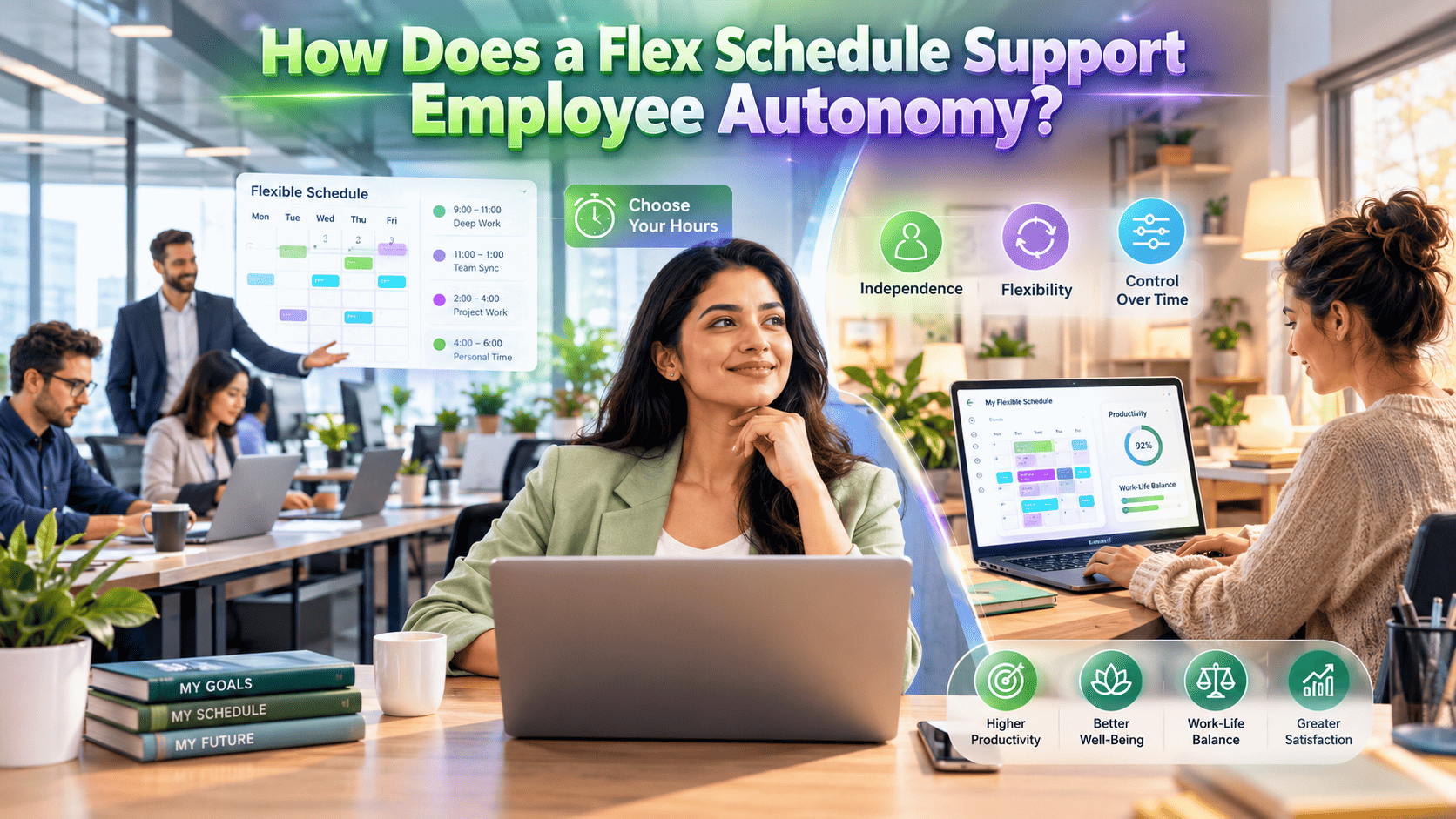
A Flex schedule allows employees to adjust their working hours within established organizational guidelines. Instead of requiring everyone to begin and finish work at exactly the same time, employers may provide a range of acceptable start and end times. For example, an organization could allow employees to begin between 7:30 a.m. and 9:30 a.m., provided they complete their required working hours and remain available during designated collaboration periods. This approach can help employees manage responsibilities outside work while maintaining predictable business coverage. For managers, the focus should remain on coordination and outcomes. Teams need agreed communication windows, documented responsibilities, and dependable availability for important activities.
What Are the Common Challenges of Flexible Scheduling?
Flexible scheduling can create challenges when expectations are unclear. Common problems include:
- Difficulty coordinating meetings
- Gaps in customer or team coverage
- Inconsistent availability
- Communication delays
- Uneven workload distribution
- Confusion about schedule changes
Businesses can reduce these issues by combining flexibility with clear policies, shared calendars, defined availability windows, and regular manager-employee communication. It is also useful to review arrangements periodically rather than assuming one scheduling model will work permanently.
You can also watch this video: How To Manage & Monitor Employees Working In Multiple Shift | EmpMonitor Shift Management
Summary
A successful Hybrid Work Environment requires more than allowing employees to alternate between working remotely and working from an office. It depends on clear expectations, outcome-based performance management, effective communication, appropriate technology, inclusive collaboration, and continuous employee support.
Frequently Asked Questions
What is a hybrid work model?
It is a working arrangement that allows employees to divide their time between a physical workplace and another location, commonly their home.
How can managers improve hybrid team productivity?
Managers can establish measurable goals, clarify responsibilities, maintain consistent communication processes, provide feedback, and evaluate results rather than physical presence.
How can businesses prevent communication problems?
Organizations can define communication channels, document important decisions, maintain shared project information, and establish predictable collaboration schedules.
Are hybrid meetings always necessary?
No. Meetings are most useful when real-time discussion or collaboration is required. Routine updates can often be handled asynchronously.
What technology can support hybrid teams?
Video conferencing, project management platforms, shared documents, communication tools, digital calendars, scheduling systems, and appropriate workforce-management software can support distributed teams.
