Why Is Workplace Flexibility Important for Employee Retention?
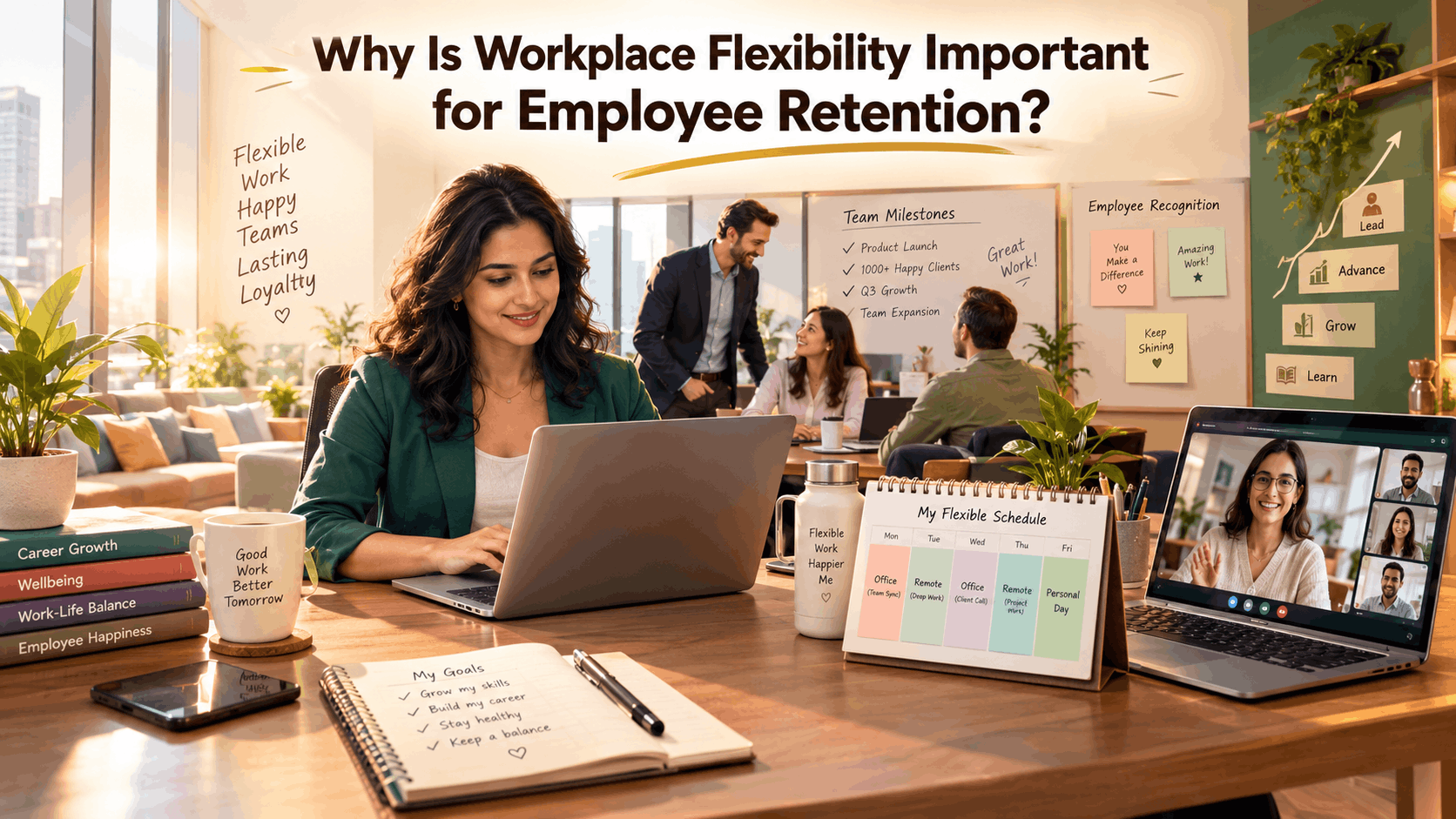
Could giving employees more control over where, when, and how they work make them more likely to stay with a company? For many modern organizations, the answer is yes. Workplace Flexibility allows employees to manage professional responsibilities alongside personal needs while continuing to meet business expectations. In simple terms, workplace flexibility refers to work arrangements that give employees greater control over their schedules, locations, or working patterns. Examples include remote work, hybrid schedules, flexible working hours, compressed workweeks, and flexible start and finish times. For employers, flexibility can support stronger employee satisfaction, reduce burnout, improve engagement, and make it easier to retain skilled professionals. However, successful flexibility requires clear expectations, effective collaboration, measurable goals, and trust.
What Are the Main Types of Workplace Flexibility?
Workplace Flexibility can take several forms depending on the organization's industry, workforce, and operational requirements. Common approaches include:
- Flexible working hours: Employees can adjust their start and finish times within agreed boundaries.
- Remote work: Employees perform their responsibilities outside a traditional office.
- Hybrid work: Employees divide their time between home and the workplace.
- Compressed workweeks: Employees complete their standard hours across fewer working days.
- Job sharing: Two employees share responsibilities for one role or position.
- Location flexibility: Employees may work from different approved locations when their role allows it.
Organizations do not necessarily need to offer every option. The most effective approach is to match flexibility with business requirements and employee needs.
How Does Flexibility Improve Employee Retention?
Employee retention depends heavily on whether people feel supported, valued, and able to maintain a sustainable working routine. Flexible arrangements can strengthen all three areas.
1. It Improves Work-Life Balance
Rigid schedules can make everyday responsibilities difficult to manage. Flexible working arrangements can help employees accommodate family commitments, appointments, commuting challenges, and personal priorities without sacrificing their professional responsibilities. A healthier balance can reduce unnecessary stress and make employees more comfortable staying with their employer over the long term.
2. It Builds Trust and Autonomy
Flexibility demonstrates that an organization trusts employees to manage their responsibilities. Instead of focusing exclusively on physical presence, managers can emphasize outcomes, deadlines, quality, and accountability. This greater sense of autonomy can increase motivation because employees have more control over how they organize their working day.
3. It Can Reduce Burnout
Long commutes, inflexible schedules, and excessive pressure can contribute to workplace fatigue. Flexible arrangements may give employees greater control over their time, helping them create more sustainable routines. Companies should still monitor workloads because flexibility cannot compensate for unrealistic expectations or understaffing.
4. It Strengthens Employee Engagement
Employees are more likely to remain engaged when they believe their organization understands their needs. Flexibility can contribute to a more positive employee experience, particularly when managers provide consistent support and employees understand what is expected of them.
How Does Workplace Communication Support Flexible Work?
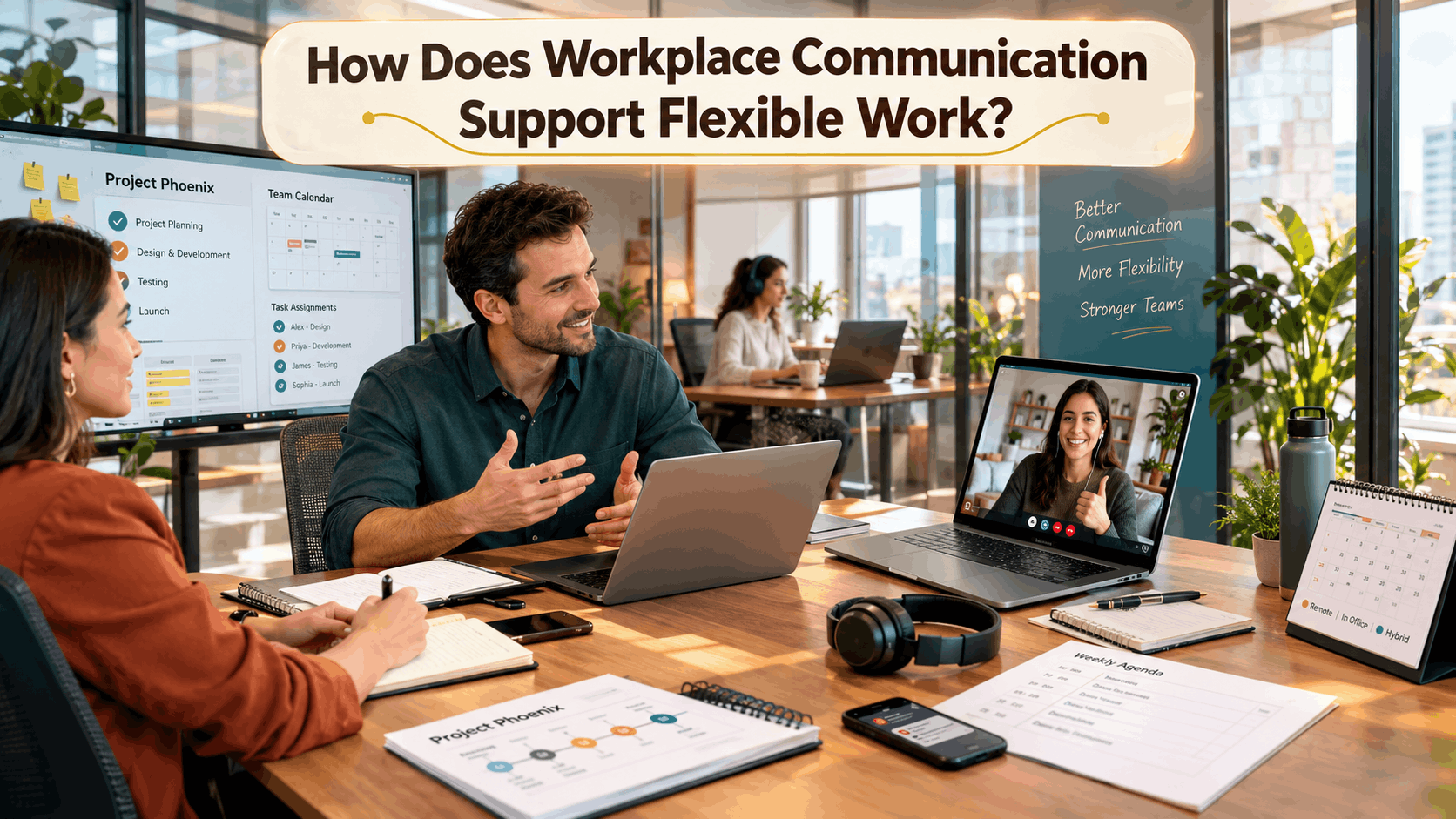
Flexible teams need strong workplace communication because employees may not always work in the same location or follow identical schedules. Managers should establish clear communication standards covering:
- Which platforms should be used for different types of communication
- When employees are expected to be available
- How quickly messages should receive a response
- How meetings should be scheduled
- Where important documents and updates should be stored
- How employees can escalate urgent issues
Good communication prevents flexible work from becoming disconnected work. Regular one-to-one meetings, team check-ins, shared documentation, and clear project ownership can keep employees aligned without creating unnecessary meetings.
How Can Companies Maintain Productivity With Flexible Work?
Flexibility should provide freedom without removing accountability. Companies can maintain performance by focusing on measurable outcomes rather than simply tracking hours or physical presence. Effective practices include:
- Set clear goals: Every employee should understand their priorities and expected results.
- Define deadlines: Clear timelines make accountability easier across different schedules.
- Measure outcomes: Evaluate completed work, quality, customer results, and project progress.
- Use appropriate technology: Collaboration and project-management platforms can keep distributed teams organized.
- Review workloads: Managers should regularly check whether responsibilities are realistic.
- Maintain fairness: Flexible policies should be applied consistently while recognizing that different roles may require different arrangements.
The goal is not to eliminate structure. It is to create a structure that supports both employee autonomy and organizational performance.
What Role Does a Daily Work Tracker Play in Flexible Teams?
A daily work tracker can help employees and managers maintain visibility into priorities, completed tasks, deadlines, and ongoing projects without relying on constant supervision. Used appropriately, it can support:
- Better task prioritization
- Clearer workload visibility
- More accurate progress reporting
- Easier identification of bottlenecks
- Stronger accountability
- Better planning for upcoming work
However, tracking should focus on meaningful work activity rather than invasive surveillance. Employees are more likely to accept monitoring tools when organizations clearly explain what is collected, why it is needed, and how the information will be used.
What Are the Challenges of Flexible Work?

Although flexible arrangements offer significant benefits, they also introduce challenges that companies need to manage.
Communication Gaps
Employees working different schedules may miss important updates. Shared documentation and agreed communication practices can reduce this problem.
Collaboration Difficulties
Teams may struggle to coordinate when everyone has different working hours. Organizations can establish core collaboration hours when employees are generally expected to be available.
Performance Management
Managers may find it harder to evaluate performance when employees are not physically present. Outcome-based goals and regular reviews can provide a more reliable approach.
Maintaining Company Culture
Remote and hybrid employees can sometimes feel disconnected. Virtual team activities, regular meetings, recognition programs, and occasional in-person gatherings can help maintain belonging.
How Can Businesses Build an Effective Flexible Work Policy?
A practical policy should balance employee choice with operational needs. Businesses can follow these steps:
- Identify which roles can support flexible arrangements.
- Define acceptable schedules and working locations.
- Establish communication and availability expectations.
- Set measurable performance standards.
- Train managers to lead flexible teams.
- Provide appropriate collaboration and security tools.
- Collect employee feedback regularly.
- Review results and update the policy when business needs change.
A successful policy should be clear enough to prevent confusion but flexible enough to accommodate reasonable individual circumstances.
Why Is Workplace Flexibility Important for Long-Term Business Success?
Workplace Flexibility is no longer simply an employee perk. When designed properly, it can become a strategic approach to improving retention, engagement, productivity, and workforce resilience. Employees gain greater control over their working lives, while employers can benefit from stronger loyalty and access to a broader talent pool. The key is finding the right balance between freedom, collaboration, accountability, and business performance.
You can also watch this video: Emp Monitor | Boost Workplace Productivity with Employee Monitoring Software
Summary
Flexible work arrangements can play an important role in employee retention because Workplace Flexibility supports autonomy, work-life balance, engagement, and sustainable working practices. Companies can make Workplace Flexibility successful by establishing clear expectations, strengthening communication, measuring outcomes, and providing employees with the right tools.
Frequently Asked Questions
What is workplace flexibility?
It is an approach that gives employees greater control over their working hours, location, or work patterns while maintaining agreed responsibilities and performance expectations.
How does flexibility improve employee retention?
It can improve work-life balance, reduce workplace stress, increase autonomy, and create a more positive employee experience.
Does flexible work reduce productivity?
Not necessarily. Productivity can remain strong when companies use clear goals, measurable outcomes, effective collaboration, and appropriate accountability.
What is an example of flexible work?
Hybrid work, remote work, flexible start and finish times, and compressed workweeks are common examples.
What is the biggest challenge of flexible work?
Maintaining communication, collaboration, accountability, and team connection can be challenging, particularly when employees work different schedules.
