How Does a Performance Tracking System Improve Employee Performance?
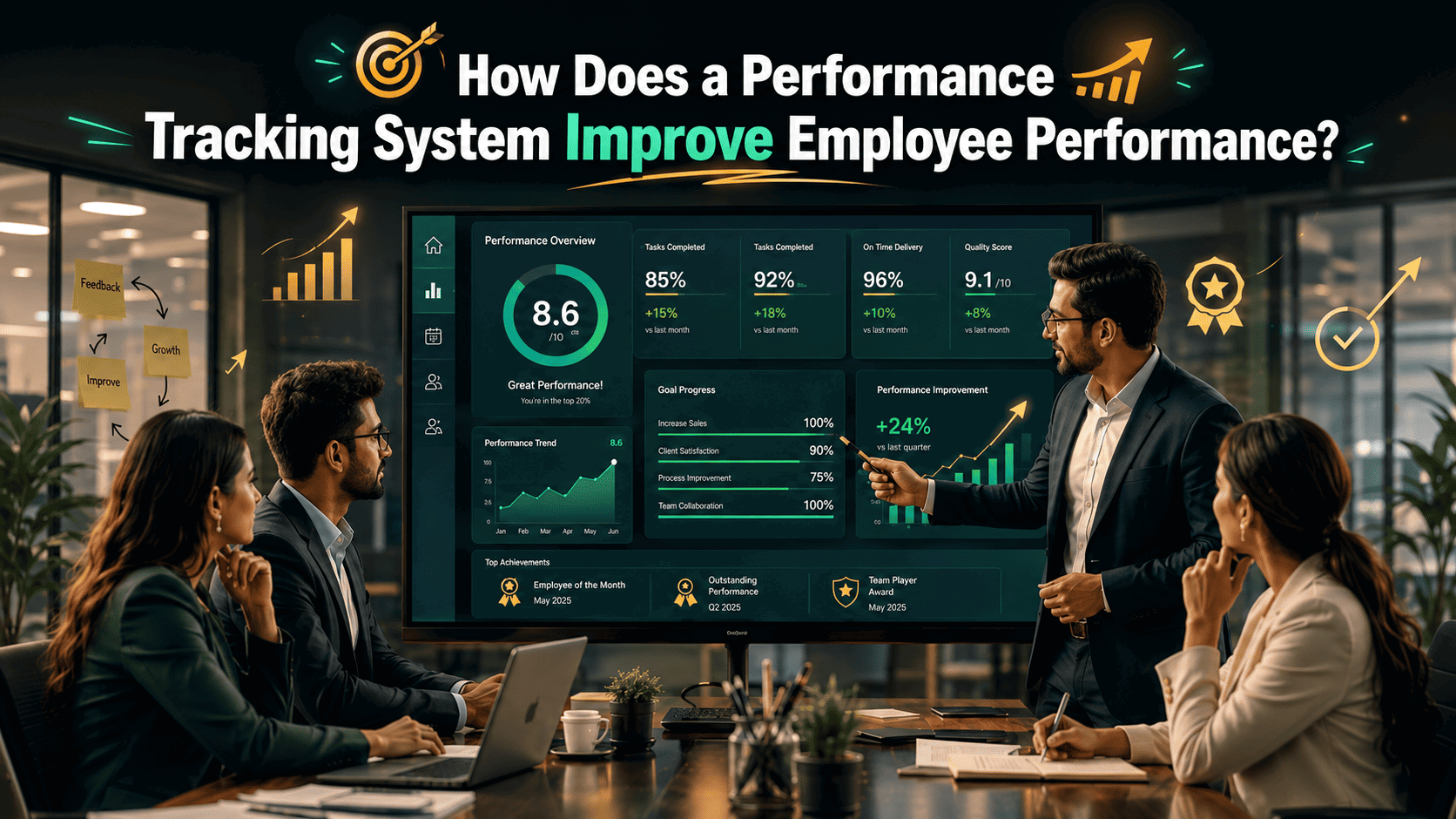
Are employees meeting their goals, staying productive, and contributing effectively to business objectives? If you cannot answer these questions with reliable data, your organization may need a better way to evaluate workplace performance. A performance tracking system helps businesses monitor goals, progress, productivity, work quality, and key performance indicators in a structured way. Instead of relying entirely on subjective reviews or occasional check-ins, managers can use real-time and historical performance information to identify strengths, address challenges, and support continuous improvement. In simple terms, it gives managers and employees a clearer picture of what is working, what needs improvement, and how individual contributions connect to broader business goals.
What Is a Performance Tracking System?
A performance tracking system is a technology-based solution used to measure, monitor, and analyze employee or team performance against predefined goals and metrics. Depending on the organization, it may track:
- Individual and team goals
- Project progress
- Task completion
- Productivity trends
- Quality and accuracy
- Attendance and work patterns
- Key performance indicators (KPIs)
- Deadlines and milestones
- Performance review outcomes
The goal is not simply to collect employee data. The real value comes from turning that information into actionable insights that help employees perform better and help managers make informed decisions.
How Does a Performance Tracking System Improve Employee Performance?
A performance tracking system can improve employee performance by creating greater visibility, accountability, and alignment. Employees understand what is expected of them, while managers can identify performance gaps before they become larger problems. Here are the most important ways it supports better performance.
1. Sets Clear and Measurable Goals
Employees perform more effectively when they understand exactly what they are expected to achieve. Performance tracking tools allow managers to establish measurable objectives and monitor progress toward them. Goals can be connected to deadlines, KPIs, projects, or departmental priorities. Clear goals help employees:
- Prioritize important work
- Understand performance expectations
- Measure their own progress
- Stay focused on business priorities
2. Provides Continuous Performance Visibility
Traditional performance reviews often happen monthly, quarterly, or annually. By that point, an issue may have already affected productivity or project results. Continuous tracking gives managers a more current view of performance. They can recognize positive trends quickly and intervene when performance begins to decline. This makes performance management more proactive rather than reactive.
3. Encourages Employee Accountability
When goals and responsibilities are clearly documented, employees have greater ownership of their work. Tracking progress makes it easier to determine whether tasks are being completed on schedule and whether objectives are being achieved. This creates accountability while also giving employees an opportunity to demonstrate their contributions. However, tracking should be transparent and focused on meaningful outcomes rather than unnecessary surveillance.
4. Identifies Training and Development Needs
Performance data can reveal recurring challenges that may not be obvious during casual conversations. For example, an employee may consistently struggle with a particular task because they lack the necessary training rather than motivation. Managers can use performance information to identify these gaps and provide targeted coaching, mentoring, or learning opportunities. This turns performance tracking into a development tool instead of simply an evaluation mechanism.
5. Helps Managers Make Data-Driven Decisions
Managers often have to make decisions about workload distribution, promotions, coaching, resource allocation, and project assignments. Reliable performance information provides evidence for these decisions. Rather than depending entirely on personal impressions, managers can evaluate measurable trends alongside qualitative feedback.
What Role Does a Productivity Dashboard Play?
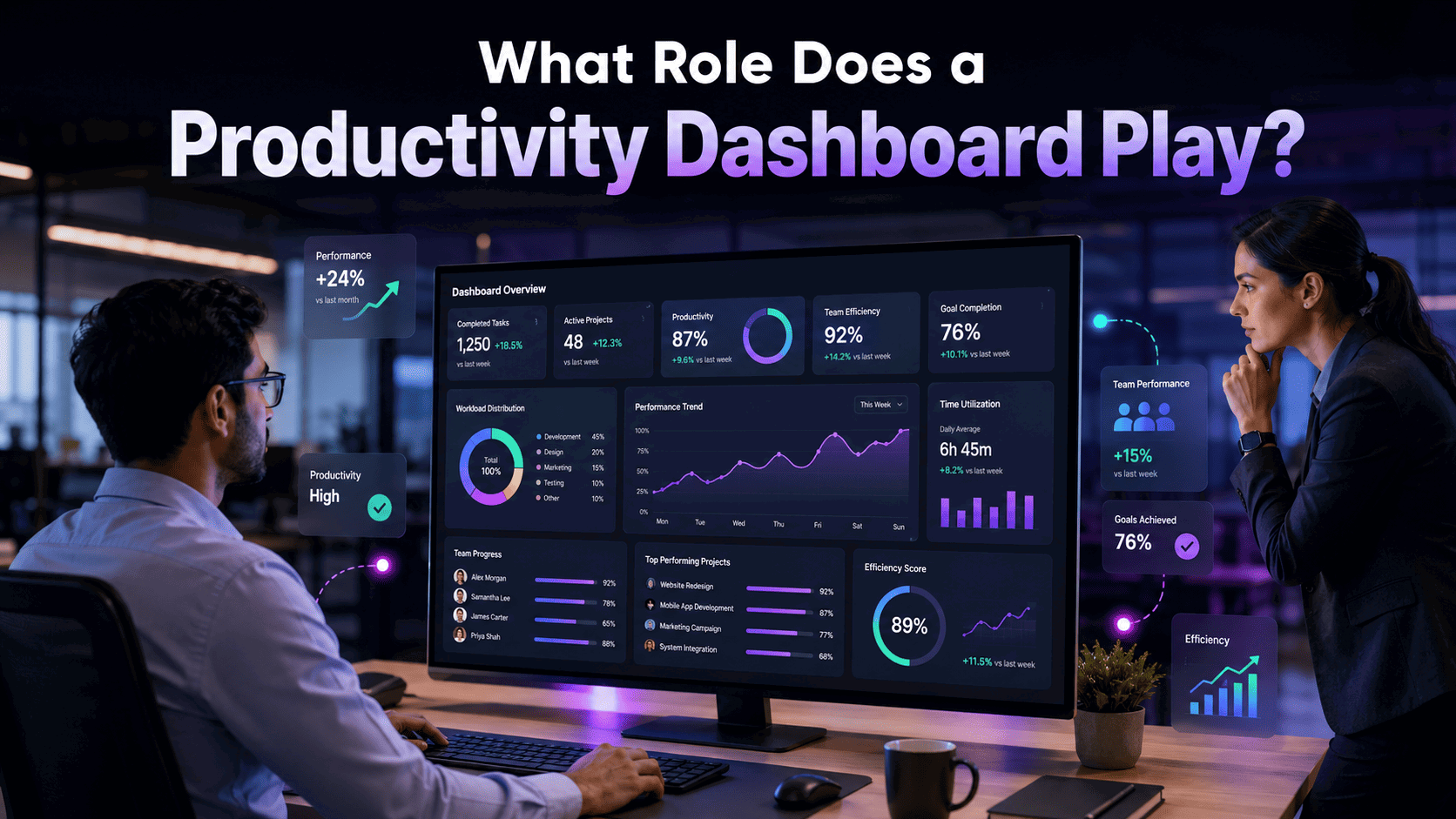
A productivity dashboard brings important performance information into one centralized view. Instead of reviewing multiple spreadsheets, applications, or reports, managers can quickly examine relevant indicators and identify trends. A useful dashboard may display:
- Goal completion rates
- Project status
- Task progress
- Productivity trends
- Team performance
- Workload distribution
- KPI progress
The best dashboards focus on actionable information. Too many metrics can overwhelm managers and employees, so organizations should prioritize measurements that directly support business objectives.
How Can Performance Tracking Support Employee Engagement?
Performance management is not only about measuring output. Done correctly, it can also strengthen employee engagement. Employees are more likely to remain engaged when they understand how their work contributes to organizational goals and receive timely recognition for meaningful achievements. Regular performance conversations can help managers:
- Recognize strong contributions.
- Discuss obstacles and challenges.
- Clarify expectations.
- Set realistic development goals.
- Provide constructive feedback.
- Adjust priorities when business needs change.
This creates a continuous feedback loop rather than making performance management an annual event.
What Is Employee Productivity Measurement and Why Does It Matter?
Employee Productivity Measurement involves evaluating how effectively employees use their available resources, time, skills, and effort to produce meaningful results. It should not be reduced to simply counting hours worked or tracking activity. A more useful approach considers outcomes, quality, efficiency, deadlines, and business impact. For example, an employee completing fewer tasks may still demonstrate stronger performance if those tasks are complex and produce greater business value. Organizations should therefore combine quantitative metrics with qualitative factors such as collaboration, creativity, customer satisfaction, problem-solving, and quality of work.
Best Practices for Using Performance Tracking Tools
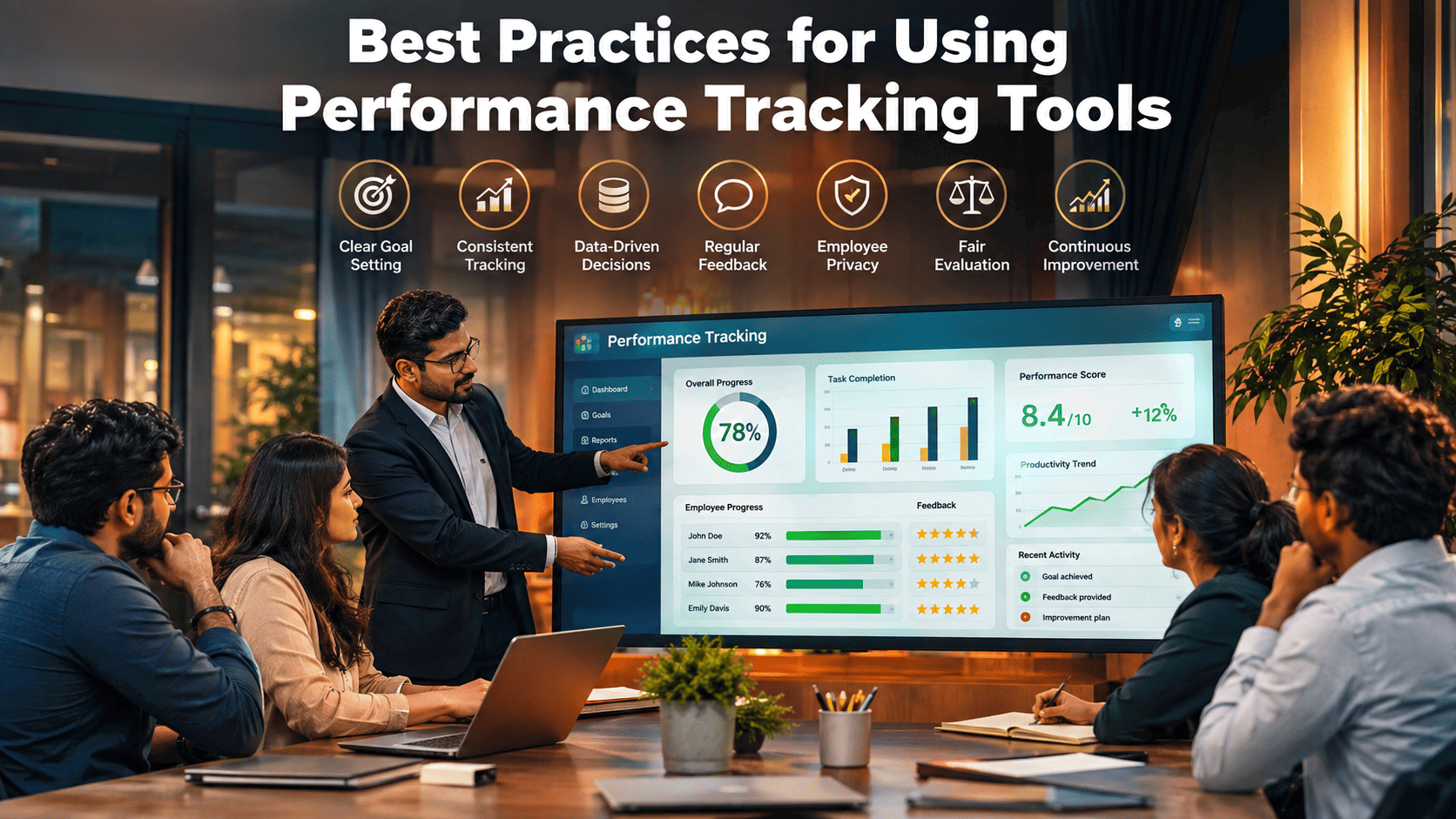
To get meaningful results, businesses should follow several best practices:
Define Relevant Metrics
Choose metrics that directly relate to job responsibilities and organizational goals. Avoid collecting data simply because it is available.
Communicate Clearly
Employees should understand what is being measured, why it is being measured, and how the information will be used.
Combine Data With Human Feedback
Performance data provides useful evidence, but it does not explain every situation. Managers should consider employee feedback, project complexity, workload, and external circumstances.
Review Trends Instead of Isolated Numbers
One unusual result does not necessarily indicate poor performance. Looking at trends over time provides a more reliable picture.
Protect Employee Privacy
Performance tracking should follow applicable privacy requirements and internal policies. Transparent, proportionate monitoring helps maintain employee trust.
What Are the Main Benefits for Businesses?
When implemented responsibly, performance tracking can provide several organizational benefits:
- Better goal alignment
- Improved accountability
- Faster identification of performance gaps
- More effective coaching
- Better workload management
- Stronger data-driven decision-making
- Greater visibility into team performance
- More consistent performance reviews
The biggest benefit is improved clarity. Employees know what success looks like, managers have better information for supporting their teams, and organizations can connect individual performance with strategic objectives.
You can also watch this video: How To Get EmpMonitor Up & Running On Your System - EmpMonitor How-To Tutorial
Summary
A performance tracking system gives organizations a structured way to monitor goals, measure progress, identify challenges, and support employee development. Its effectiveness depends on how the organization uses the data. When performance tracking emphasizes meaningful outcomes, transparency, coaching, and continuous improvement, it can become a powerful part of modern performance management.
Frequently Asked Questions
What is the main purpose of a performance tracking system?
Its primary purpose is to monitor employee and team progress against defined goals, KPIs, and performance expectations.
Can performance tracking improve productivity?
Yes. By identifying bottlenecks, clarifying priorities, and providing timely feedback, performance tracking can help employees and managers improve productivity.
Should employee performance be tracked continuously?
Continuous monitoring can be useful, but organizations should focus on relevant performance indicators and avoid excessive surveillance.
What metrics should companies track?
Common metrics include goal completion, project progress, quality, deadlines, KPIs, productivity trends, and other measures directly related to specific roles.
Is performance tracking the same as employee monitoring?
Not necessarily. Performance tracking focuses primarily on outcomes, goals, and progress, while employee monitoring can involve broader activity or behavior monitoring. A responsible approach should prioritize useful performance insights while respecting employee privacy.